


NEW DELHI : The Bajaj Riki C4005 (eCart) significantly reduces operating costs per km. When combined with Delhivery’s automated route optimisation, delivery partners can complete more drop-offs per trip.
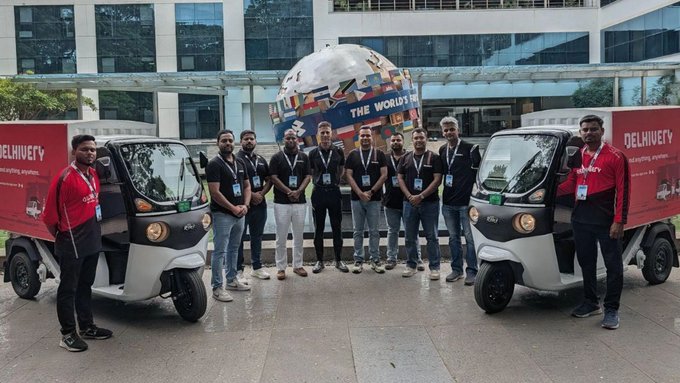
Logistics company Delhivery and Bajaj Auto have signed an agreement to deploy Bajaj RIKI eCarts across Delhivery’s last-mile delivery network, extending electrification to Tier-2 and Tier-3 cities.
The deployment will occur in three phases, with the first phase kicking off with the flag-off of the first lot of 200 EVs from Bajaj Auto’s Akurdi plant on Tuesday. Over 2026 and 2-27, a total of 1,500 Bajaj electric three-wheelers (L3 and L5) will be deployed.

Samardeep Subandh, President of Intra-City Business at Bajaj Auto, stated that this partnership marks the launch of the Bajaj Riki C4005 (eCart). The Bajaj Riki C4005 offers a range of 100 km on a single charge, providing reliability as well as improved comfort and ergonomics for drivers.
He said that partnering with Delhivery has the potential to impact last-mile logistics not only in metropolitan areas but also in Tier-2 and Tier-3 cities.
The Bajaj Riki C4005 (eCart) significantly reduces operating costs per km. When combined with Delhivery’s automated route optimisation, delivery partners can complete more drop-offs per trip. This increased operational efficiency directly contributes to a sustainable and reliable increase in daily earnings for last-mile delivery partners.
Prashant Gazipur, Chief Operating Officer of In-City Operations at Delhivery, said that by integrating their intelligent routing systems with highly efficient cargo electric vehicles, they are creating a more profitable model for riders while offering clients a cleaner, lower-carbon supply chain.
Delhivery posted on social media : ‘ Here is how this partnership is moving us forward:
1. Boosting Rider Earnings: By eliminating volatile fuel costs and reducing vehicle maintenance costs, we are significantly reducing daily operational overheads. Coupled with our proprietary route optimization, our delivery partners across metros and regional city hubs can deliver more efficiently and take home higher daily earnings.
2. Enhancing Safety & Comfort: We are integrating these weather-protected 3W EVs into our existing fleet mix specifically for high-density, heavy-payload runs. This protects our riders from harsh weather conditions, reduces fatigue, and removes the physical strain of carrying heavy cargo backpacks on these demanding routes.
3. Advancing Shared ESG Goals: Electrifying our last-mile transit eliminates both metropolitan and regional tailpipe emissions. This directly lowers our carbon footprint on a national scale and helps our enterprise clients meet their own Scope 3 emissions targets, creating a cleaner supply chain for everyone.’