



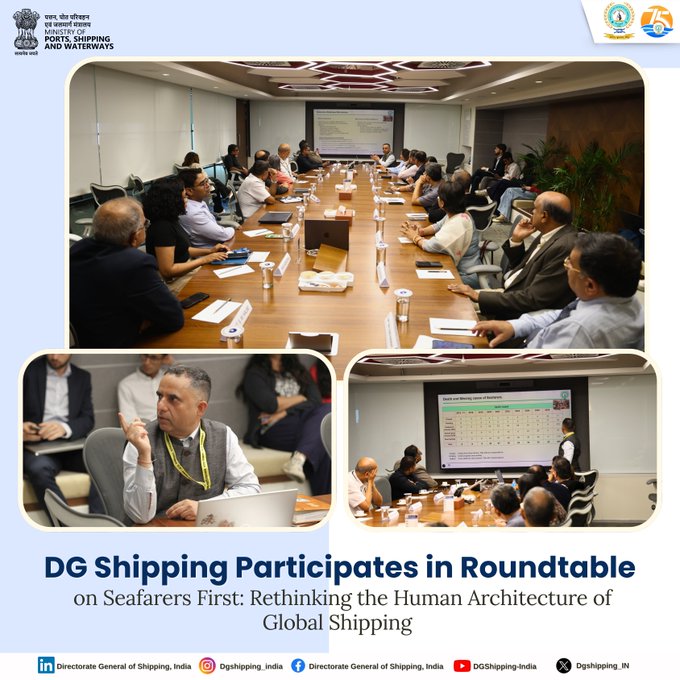
MUMBAI : The Directorate General of Shipping (DGS) reaffirmed India’s commitment to advancing seafarer welfare and strengthening the country’s position as a global maritime workforce leader during a high-level roundtable discussion titled “Seafarers First: Rethinking the Human Architecture of Global Shipping,” organised by the Observer Research Foundation (ORF) in collaboration with the International Seafarers’ Welfare and Assistance Network (ISWAN) at ORF Mumbai ahead of the International Day of the Seafarer.
Representing the Directorate General of Shipping, Capt. Bipin participated in the deliberations alongside senior government officials, maritime unions, welfare organisations, training institutions, policy experts, industry representatives and seafarers. The roundtable served as an important platform to explore policy measures aimed at building a more resilient, inclusive and people-centric maritime sector.
During the discussions, the Directorate General of Shipping highlighted the significant progress made by India in strengthening its maritime workforce and enhancing the welfare ecosystem for Indian seafarers. India continues to consolidate its position as one of the world’s leading suppliers of qualified seafarers, supported by sustained growth in the number of certified maritime professionals. Notably, the participation of women in the seafaring profession has also witnessed a steady increase, reflecting the country’s commitment to promoting diversity and inclusivity within the maritime sector.
The Directorate showcased a series of policy and regulatory reforms undertaken to improve accountability, transparency and seafarer welfare. These include the establishment of a round-the-clock grievance redressal mechanism with a consistently high resolution rate, strengthened measures to address cases of vessel abandonment, stricter regulatory norms for Recruitment and Placement Service License (RPSL) agencies, enhanced bank guarantee requirements to safeguard seafarers’ interests, and expedited compensation processing for affected personnel.
Emphasising the role of digital transformation in maritime governance, the Directorate also highlighted initiatives such as the digitisation of the Continuous Discharge Certificate (CDC) and the Seafarer Identity Document (SID), which have streamlined service delivery, improved accessibility and enhanced convenience for Indian seafarers. Reforms relating to shore leave and other welfare measures were also discussed as part of the Government’s broader efforts to improve the quality of life and working conditions of seafarers.
The roundtable also examined emerging challenges confronting the global maritime workforce. Participants expressed concern over the safety and security of seafarers operating in conflict-prone regions and noted the absence of a comprehensive, binding international framework to address such situations. The discussions underscored the need for institutionalised crisis response mechanisms, including the establishment of an inter-ministerial coordination framework, enhanced cooperation among maritime stakeholders and greater sensitisation of consular authorities to support seafarers during emergencies.
While acknowledging the progress made in expanding shore leave opportunities, participants observed that practical implementation challenges, particularly immigration and port clearance procedures in several jurisdictions, continue to restrict seafarers’ access to shore leave and welfare facilities.
Looking ahead, the discussions focused on the evolving nature of the maritime profession in the era of digitalisation, automation and technological innovation. Participants emphasised the importance of continuous skill development, building resilience, promoting lifelong learning and creating alternative career pathways to equip seafarers for the changing demands of the global shipping industry.
The roundtable concluded with a shared commitment to place seafarers at the centre of maritime policy and governance. The Directorate General of Shipping reaffirmed that safeguarding the welfare, safety and professional growth of seafarers remains fundamental to India’s vision of becoming a leading global maritime nation and to ensuring the sustainable growth and competitiveness of the country’s maritime sector.