



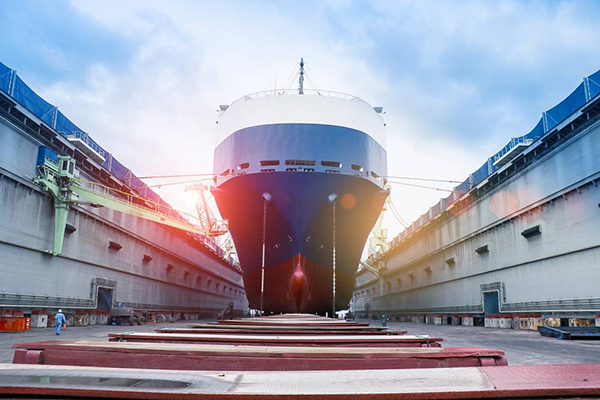
ISLAMABAD : Pakistan has started building its first commercial container ship since the early 1980s, an official said on Thursday, implementing a state-backed strategy to modernize the country’s ports, overhaul customs and revive its defunct shipbuilding and ship-recycling industries.
The project at the Karachi Shipyard & Engineering Works (KS&EW), executed under a contract with the state-run Pakistan National Shipping Corporation (PNSC), ends a four-decade pause in commercial manufacturing of ships. It serves as one of the key elements of a push by the Prime Minister’s Task Force on Maritime Reforms, established in August 2024, to tap into the country’s underutilized blue economy that officials estimate stands at $1billion.
“For the first time since the early ‘80s, commercial container ship construction has started there [Karachi Shipyard] under a contract signed with the PNSC,” Vice Admiral (retired) Iftikhar Ahmad Rao, the task force’s chairman, said during a press briefing.
“Construction has already begun, the steel cutting has been completed, and its cost is several million lower than the market rate.”
The task force identified 99 bottlenecks to maritime issues, Rao said, out of which the task force has implemented 84 of its recommendations within a year. Citing one of them, he said heavy fiscal barriers previously forced private Pakistani shipowners to register vessels with foreign countries such as Panama or Liberia.
To counter regional competitors such as India, which provides a 30 percent subsidy on shipbuilding, Pakistan has abolished a 22 percent domestic sales tax on vessel purchases and shipbuilding materials, Rao said.
The overarching goal of these reforms by the task force is to tap into an estimated $100 billion annual blue economy potential by 1947, he said.
Pakistani officials have said that while the maritime sector currently contributes less than 1 percent to the national GDP, the country aims to enhance this share through modernized ports and more fleets.
Officials have said that logistical upgrades brought about by the task force’s recommendations have already boosted Pakistan’s standing in the global maritime indexes. Over the past five years, Karachi Port Trust climbed 30 places to 69 in the World Bank’s Container Port Performance Index, while Port Qasim ranked fifth among the world’s fastest-improving container ports.
These recommendations include reducing average customs clearance times toward a 12-hour target by deploying advanced container scanners, introducing round-the-clock shift structures, and relocating third-party testing laboratories directly inside port premises.
Pakistan is also moving to revive its once-dominant shipbreaking sector at Gadani, a coastal town in southwestern Pakistan, Rao said. The shipbreaking industry collapsed after failing to meet modern environmental mandates.
Following Pakistan’s accession to the International Maritime Organization’s Hong Kong Convention for safe ship recycling, five local yards have achieved full compliance, the official said.
Commercial shipbuilding will allow Pakistan to save foreign exchange earnings that it usually spends on importing ships. This would also create manufacturing jobs and help the South Asian country potentially export ships to other countries in the future.