


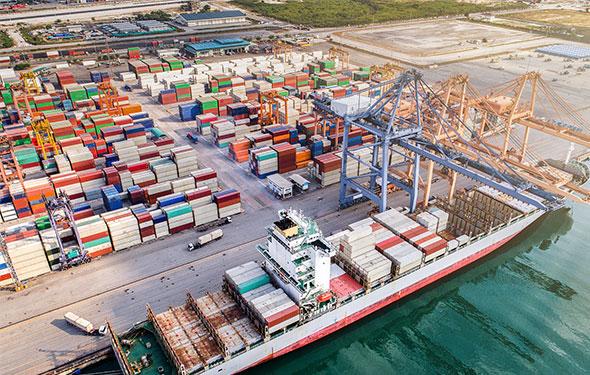
NEW DELHI : Indian Exporters are facing a fresh wave of disruption in container logistics as congestion at two of Asia’s most important transshipment hubs — Singapore and Colombo — begins to put additional pressure on vessel schedules, feeder availability and container flows.
The emerging situation has created a challenging operating environment for exporters whose cargo moves through these hubs before reaching destinations across Asia, Europe, Africa and other international markets. Industry reports indicate that the congestion is resulting in delays and tighter availability of feeder vessels for Indian-bound and Indian-origin cargo.
Singapore–Colombo bottleneck
Singapore and Colombo occupy a critical position in the regional container shipping network. Singapore serves as one of the world’s largest transshipment hubs, while Colombo is a key gateway for South Asian cargo, particularly for shipments connected with the Indian subcontinent.
The pressure on both hubs has been building amid continuing adjustments to global shipping networks and the redistribution of vessels and containers across major trade lanes. Industry observers point to stronger China–US container demand as one factor drawing equipment and vessel capacity towards those routes, leaving comparatively tighter availability for some India-linked services.
The situation at Colombo has also included pressure on container yards and inter-terminal transfer operations. Earlier reports indicated that vessels were experiencing berthing delays of around two to three days, highlighting the operational strain created by the accumulation and repositioning of containers.
Indian exporters feel the impact
For Indian exporters, the disruption is particularly significant because transshipment remains an important component of international container connectivity. When a hub experiences congestion, the consequences can extend well beyond the port itself — affecting feeder connections, connecting-vessel schedules, equipment availability and the overall transit time of cargo.
The shortage of feeder vessels can make it more difficult for cargo to secure timely connections from the transshipment hubs to Indian ports. This can result in longer transit times, missed connections, rolled cargo and uncertainty over delivery schedules.
Exporters may also face higher logistics costs as carriers and freight forwarders adjust routings, equipment positioning and service schedules to manage the disruption.
Global shipping network under pressure
The latest developments underline how quickly congestion at a major transshipment hub can cascade through interconnected global supply chains.
Singapore itself has been strengthening its resilience against prolonged shipping disruptions. Singapore’s Ministry of Transport said in May that additional berths at Tuas Port were scheduled to come into operation during 2026, while authorities and PSA were working to ensure adequate manpower and capabilities to manage fluctuations in demand. The port has also been using digital coordination mechanisms to optimise vessel arrivals and reduce the risk of vessel bunching and congestion.
The broader shipping market has already experienced substantial volatility during 2026. Data from Xeneta earlier this year showed elevated congestion at several Asian transshipment hubs, including Colombo and Singapore, illustrating the vulnerability of the regional network to sudden changes in vessel deployment and cargo flows.
Rerouting and schedule reliability become critical
Shipping lines and logistics providers are now having to balance several competing priorities — managing congested hubs, repositioning empty containers, maintaining feeder connections and recovering schedules after earlier disruptions.
For exporters, the immediate priority is greater visibility of vessel schedules and alternative routing options. Cargo owners may increasingly need to assess whether their shipments should continue through traditional transshipment hubs or be routed through alternative gateways, depending on destination, available services and overall transit economics.
The developments also highlight the growing importance of India’s own transshipment infrastructure. The emergence of facilities such as Vizhinjam and the planned development of other deep-water transshipment gateways could, over time, provide Indian cargo owners with greater routing flexibility and reduce excessive dependence on overseas hubs.
A warning for the peak shipping season
The Singapore–Colombo congestion comes at a crucial time for global trade, when exporters are closely watching vessel availability, freight rates and equipment supply.
If congestion persists, the impact could extend from port operations to the wider logistics chain, affecting inventory planning, delivery commitments, production schedules and export competitiveness.
For Indian exporters, the current container crunch is therefore more than a port-congestion issue. It is a reminder of the strategic importance of reliable transshipment capacity, adequate container availability, diversified shipping routes and resilient maritime infrastructure.
As shipping lines continue to rebalance their networks, the performance of Singapore and Colombo will remain closely watched by Indian trade and logistics stakeholders. The coming weeks will determine whether the present bottleneck remains a temporary operational disruption or develops into a more prolonged constraint on regional container supply chains.