




SOP videos from written procedures can help shipping teams teach one task clearly. The difficult part is helping a new coordinator, warehouse colleague, or vessel-side partner follow the right step when a document is dense or a situation changes. A short video can explain the sequence, but it must stay tied to the approved procedure.
SOP videos from written procedures start with one operational decision.
Before turning a procedure into scenes, write the decision the learner must make. It might be whether a shipment is ready for handover, which document to check when a seal does not match, or whom to notify when a delivery window changes. A video that tries to teach an entire logistics manual will be hard to review and harder to update.
Take a fictional export-desk procedure as an example. It includes booking confirmation, document checks, carrier handover, exception reporting, and close-out. The first lesson could cover only the handover check. The example is a planning device, not a report from a customer operation.
Mark the source document, version date, process owner, and escalation contact. If any item is unknown, pause the draft. A polished explanation cannot compensate for an unapproved instruction or an unknown escalation owner.
Use maritime guidance as context, not as a script
The International Maritime Organization’s Model Courses are tools that maritime institutes and instructors can adapt when developing training programmes. They include course frameworks, outlines, instructor material, and evaluation sections. That structure is useful when planning an internal lesson, but a company must still use its own current procedures and applicable requirements.
The U.S. Coast Guard Training System Standard Operating Procedures provide a separate training-system reference. Use such institutional guidance to shape review questions, not as a substitute for the company’s current manual or a universal checklist for every port or cargo.
For an SOP video, keep the external reference in the research record and explain the company-specific action in plain language. A viewer should know which local manual controls the decision and where to ask when the case falls outside it.
Break the procedure into teachable scenes
Use a table before writing narration:
| Scene | Learner action | Evidence to show | Review owner |
| Prepare | Open the current shipment record | Version/date field | Operations |
| Check | Compare key identifiers | Redacted example record | Documentation |
| Handover | Confirm the receiving party | Sign-off example | Shift lead |
| Exception | Stop and escalate a mismatch | Contact route | Safety or compliance |
| Close | Record the outcome | Log entry example | Process owner |
Keep identifiers in examples fictional or redacted. Do not display customer names, booking numbers, personal information, or sensitive cargo details simply to make a scene look authentic. Show the structure that the learner needs.
Create a reviewable first draft
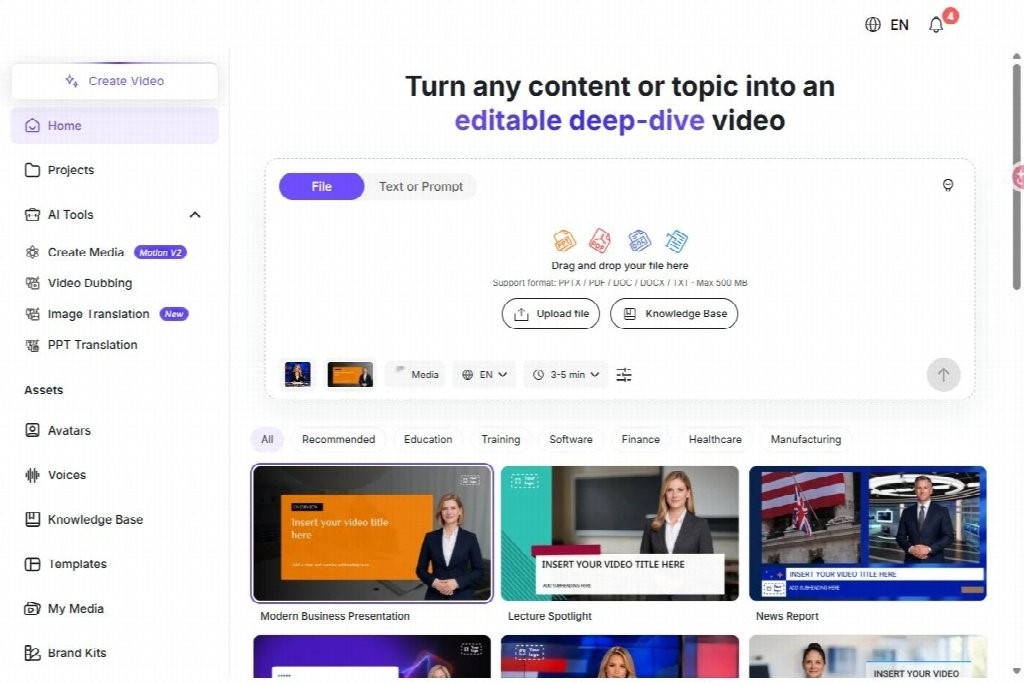
Once the text is approved, create SOP videos from written procedures with Leadde.ai as a draft-production step. The target page describes turning written procedures into structured videos. This article does not claim a completed product test or an operational result.
Review the draft against the source one scene at a time. Check that a condition has not disappeared, that “may” has not become “must,” and that an escalation contact remains visible. Listen for abbreviations that sound similar when spoken. Keep the written procedure beside the video so the reviewer can point to the controlling sentence.
Test the handoff with a realistic exception
Ask someone who did not write the procedure to watch the lesson. Give them a controlled scenario: one identifier on the receiving record does not match the shipment record. Ask what they would do first, who they would tell, and what they would record.
If the person continues instead of stopping, the exception scene is too weak. If the person cannot find the owner, add the role and contact route. If the person quotes a number without its unit or condition, revise the on-screen text. Do not mark the lesson complete because the viewer reached the final frame.
For multilingual crews, use a reviewer who knows the operational language and the local process. Names, port references, time zones, and document labels need deliberate checking. Keep the source language version and translated version linked by a version number.
Separate training from authorisation
An SOP video can prepare someone for a supervised task. It does not grant a certification, replace a required drill, or prove that a person can perform a safety-critical action. The manager responsible for the operation decides what evidence and supervision are required.
Keep the SOP video current
Store the source document, script version, approver, review date, publication location, and replacement trigger together. A process owner should know whether a changed cutoff time, carrier requirement, or escalation role requires a new render.
Review the video on the same cadence as the underlying procedure, with an additional check after a material incident or process change. Avoid putting an unstable date in narration when a controlled notice can carry it. If the date must be spoken, assign someone to replace the scene before the next shift uses it.
Should every shipping procedure become a video? No. A searchable reference may be better for a long list of codes, while a supervised demonstration may be necessary for physical work.
What is a useful first lesson?
Choose one handoff or exception that new colleagues repeatedly misunderstand. Define the evidence, reviewer, and escalation route before producing the draft.The value of SOP video production is traceable understanding. Start with an approved procedure, show the decision and exception, let an independent colleague try the handoff, and keep one owner responsible for the next update.