
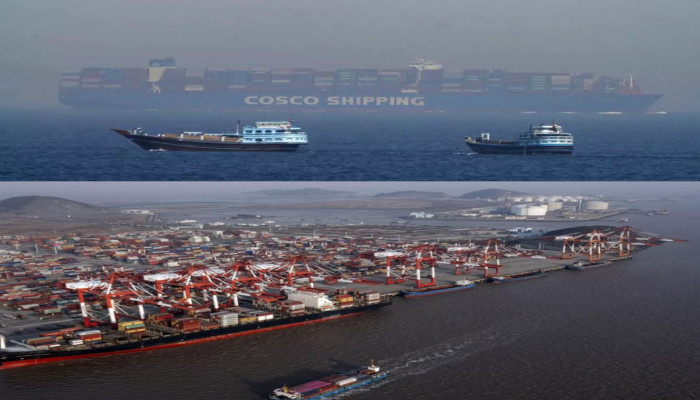
37 Indian-flagged ships with over 1,100 seafarers stranded near Hormuz amid West Asia tensions
NEW DELHI : With tensions between US-Israel and Iran on the rise, at least 37 Indian-flagged ships, along with 1,109 crew members, are stuck in the region around the Strait of Hormuz, sparking safety and potential trade worries for India.
These ships are located in the Persian Gulf and the Gulf of Oman, with some ships awaiting cargo and some already fully loaded.
In a statement, the Indian National Shipowners’ Association (INSA) confirmed the presence of the ships and sought government intervention in the issue.
“We understand that about 37 Indian flag ships are in the region while servicing the needs of the nation, some waiting to load and others in laden condition. These vessels are on both sides of the Hormuz Straits. Indian ships have Indian seafarers on board. It is our request to the govt of India to assist the Indian flag ships in obtaining safe passage for its ships through the Hormuz Straits. The ships which are in ballast awaiting instructions may be given further instructions by Charterers thereby protecting Indian life, Indian assets and the supply chains of the nation,” the association said.
The shipping industry body has also highlighted the need to take collective action to protect Indian sailors, commercial interests, and supply chains, especially oil.
Islamic Revolutionary Guard Corps announced on March 2 that they had effectively closed off the Strait of Hormuz to maritime traffic and threatened to attack any ship that tries to pass through this critical shipping chokepoint, a situation that has already resulted in a significant decrease in ship traffic through this critical shipping route because of the Middle East conflict.
Moneycontrol reported that nearly a fifth of India’s imports, including crude oil, goods such as food items and chemicals, could be at risk if hostilities escalate further. The narrow waterway is a critical artery for global oil flows, and any prolonged closure could significantly impact crude supplies and freight costs. Also, about 46 per cent of the country’s crude oil imports are tied to shipments that pass through Hormuz, making energy supplies particularly vulnerable to tensions in West Asia.