



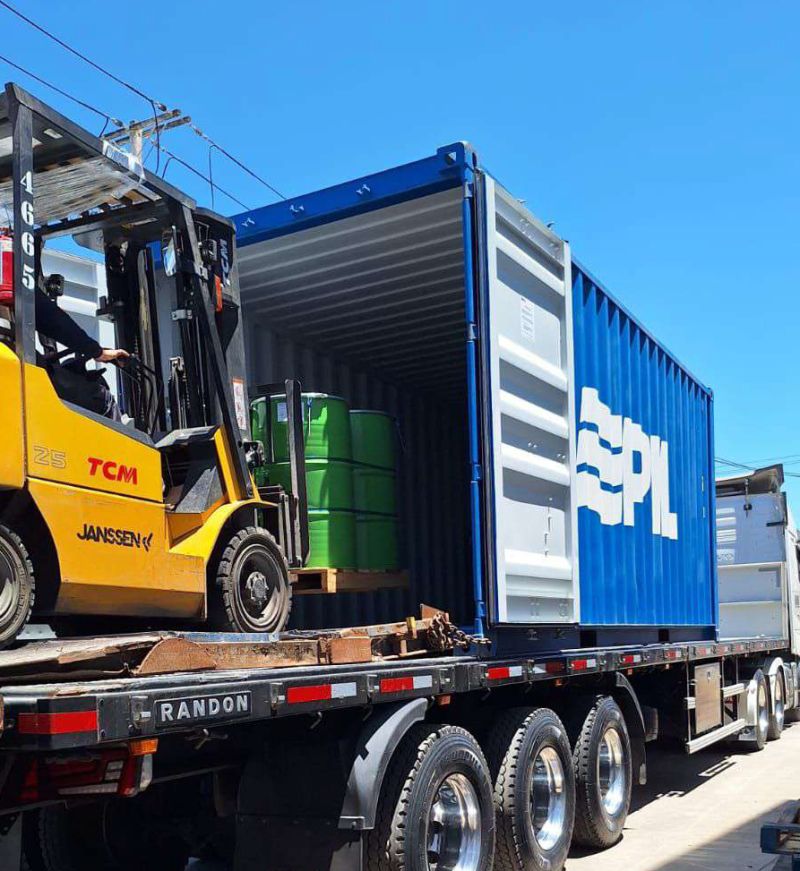
CHILE : Pacific International Lines (PIL) has reached a significant milestone with the successful launch of a new intermodal corridor in Chile, marking the company’s first inland intermodal shipment in the country through PIL Intermodal Services.
On 7 January, a consignment of 76 barrels of fruit juice was loaded into a 20-foot container at Santiago, Chile’s capital. Leveraging PIL’s integrated inland logistics capabilities, the container was transported by road to the port of San Antonio, one of Chile’s key maritime gateways. From there, the shipment commenced its ocean leg on 9 January, sailing on PIL’s West Coast Central and South America Service 6 (WS6).
The cargo is currently en route to its final destination, Adelaide, Australia, highlighting PIL’s ability to seamlessly connect inland production centres in South America with global consumption markets across the Asia-Pacific region.
This successful movement underscores PIL’s commitment to delivering end-to-end logistics solutions, combining inland transportation with reliable ocean services under a single, integrated offering. The newly launched intermodal corridor enhances supply chain efficiency for exporters by reducing complexity, improving transit visibility, and providing a single point of coordination from origin to destination.
Commenting on the achievement, PIL reaffirmed its customer-centric philosophy of “Putting Customers First”, emphasising its focus on pushing boundaries through innovative transport solutions that add tangible value to customers’ supply chains.
The Chile intermodal corridor represents a strategic step forward in PIL’s broader efforts to strengthen its presence in Latin America, expand inland connectivity, and support time-sensitive and value-added cargo such as food and beverage products. By offering a one-stop transport solution, PIL continues to go the extra mile in supporting customers’ growth in an increasingly interconnected global trade environment.