


By Mr. Suresh Matcha, Associate President, Head Operations & Marine, Howden (India)
India’s recent wave of public investment is doing something more fundamental than expanding ports and building new logistics corridors. It is changing the very shape of marine risk. As port infrastructure gets bigger and more sophisticated, and as road, rail and waterways become more tightly linked, the risks that insurers manage are becoming heavier, more interconnected and far more concentrated. At the same time, companies are starting to look for broader cover that follows cargo throughout its journey, rather than sticking to traditional marine boundaries.
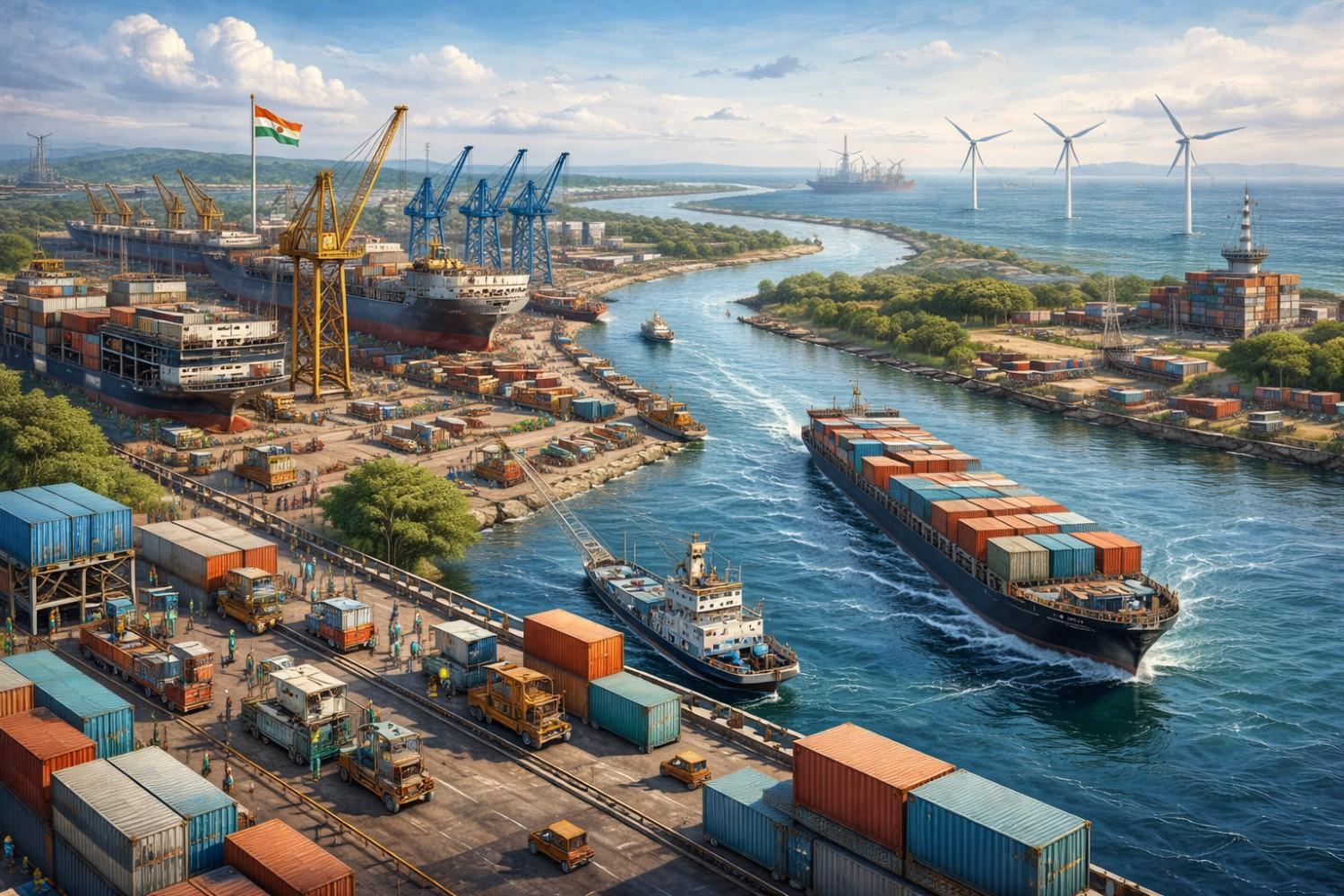
This shift has been years in the making. Programs such as Sagarmala, Maritime India Vision 2030 and Amrit Kaal Vision 2047 have pushed India’s port sector into a new phase of modernisation. According to government data, Sagarmala alone identified more than 800 projects worth nearly ₹6 lakh crore by early 2025. These investments have helped major ports grow cargo volumes by more than 85 percent since 2014–15, and the assets sitting on the waterfront today are significantly more valuable than they were a decade ago.
A different kind of exposure
For insurers, the concentration of high‑value infrastructure at ports creates very different exposure patterns:
- Modern terminals, automated cranes, deep‑draft berths and LNG facilities have increased the sums insured for property and equipment.
- A single incident can now cut across multiple lines: port property, hull, cargo and business interruption.
- The ongoing build‑out, from dredging to new deep‑sea ports like Vadhavan and Vizhinjam, keeps construction and DSU covers in steady demand.
The multimodal shift
The most profound change, however, is happening outside the ports. The PM Gati Shakti National Master Plan has connected ports with highways, dedicated rail corridors, inland waterways and logistics parks. More than 300 multimodal cargo terminals have been approved, and a sizeable portion of that capacity is already operational.
As a result, marine insurance is no longer confined to the waterfront. Three shifts are becoming increasingly visible:
- Modal boundaries are fading. Cargo now moves through rail yards, warehouses, container depots and ports as a single chain, and companies want policies that reflect that end‑to‑end journey.
- The inland leg matters more than before. Rail and waterways are taking a larger share of cargo movement, which forces insurers to account for inland congestion, depot risks and first‑ and last‑mile exposures.
- Liability is harder to untangle. With more operators involved, determining who is responsible when something goes wrong can be complicated, prompting a need for clearer and broader liability cover.
Volume brings frequency, and occasionally severity
In FY 2024–25, major ports handled roughly 855 million tonnes of cargo, and total cargo across all ports crossed 1.6 billion tonnes. Higher throughput inevitably brings more day‑to‑day claims, whether from tight berthing schedules, faster loading cycles or simple handling errors. At the same time, the value of goods has increased. Larger vessels, bigger stacks of containers and more specialised commodities like LNG and chemicals raise the stakes when a major incident does occur.
A market that is maturing, not just growing
India’s cargo insurance market stood at around USD 2.6 billion in 2024 and is expected to continue expanding. But the more interesting shift is the type of cover buyers want. All‑risk policies are gaining popularity because they better match the operational realities of multimodal logistics. Coastal shipping and inland waterways are also drawing in smaller operators who were previously uninsured or underinsured.
There is also renewed interest in building more domestic marine capacity. Discussions around a homegrown P&I‑style facility reflect a desire to reduce dependence on overseas clubs, especially during geopolitical disruptions. However, even if domestic capacity increases, it will still rely on global reinsurers for scale and expertise.
How insurers are adapting
The industry is adjusting in several ways:
- Offering more integrated policies that combine cargo, terminal liability and inland transit.
- Increasing capacity for ports and terminals through layered reinsurance programs.
- Using parametric triggers and data‑driven tools to handle weather disruptions and port closures.
- Strengthening accumulation controls at locations where multiple lines converge.
What this means for reinsurers
Reinsurers are dealing with the same core issue: accumulation. Larger ports filled with higher‑value cargo create scenarios where one event can affect multiple classes of business at once. This requires closer management of peak exposures by location rather than by product line.
Growth opportunities lie more in the upper layers of reinsurance towers, where tail risk sits, rather than in the thinner lower layers that absorb frequent multimodal losses. End‑to‑end logistics also means treaties need to reflect journeys that extend far inland rather than stopping at the coastline.
Comparative Snapshot (Reinsurer View)
| Cargo Type | Frequency | Severity | Accumulation Risk | Best Reinsurance Capital |
| Containers | Medium–High | Medium–High | High (yard/terminal) | Upper XoL, indexed limits |
| LNG / Energy | Very Low | Extreme | Very High (single site) | High‑attachment cat & liability |
| Project Cargo | Low | Medium–High | Low (but volatile) | Project‑specific QS / XoL |
The road ahead
India’s logistics network is becoming more integrated every year, and the insurance market is catching up. The most successful carriers and reinsurers will be those that understand cargo movement at a granular level, invest in better data and treat accumulation as a central pillar of underwriting rather than an afterthought.
The country is building a modern, connected logistics system. The risk framework that supports it will need to be just as integrated, flexible and informed.
Author:

Mr. Suresh Matcha, Associate President, Head Operations & Marine, Howden (India)