


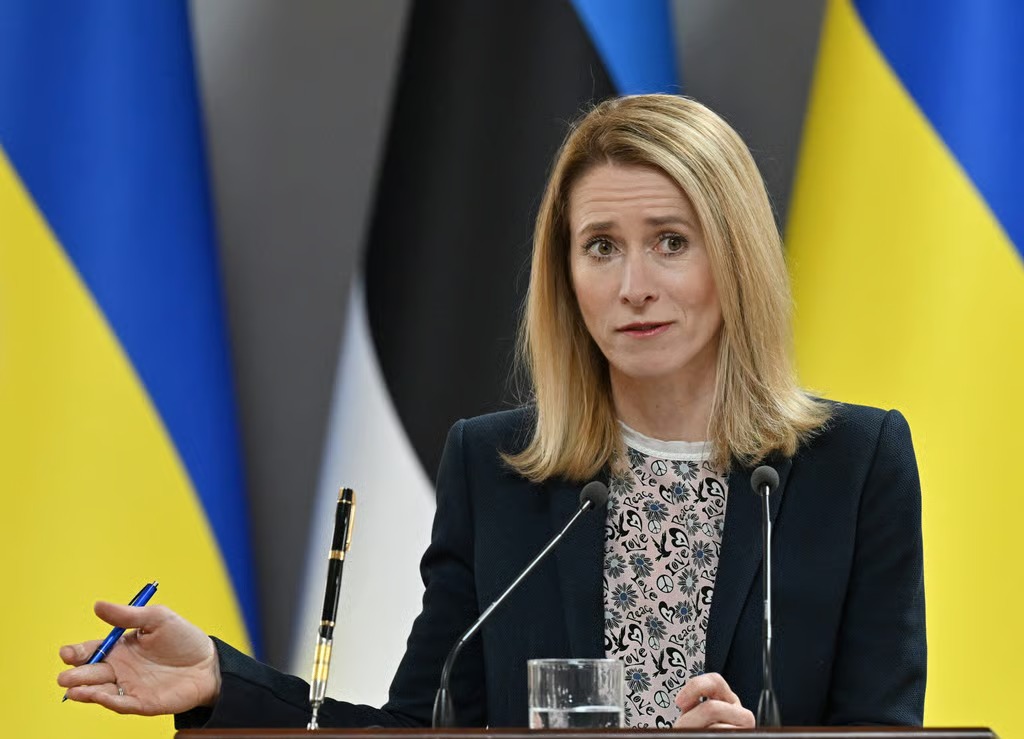
LONDON : The European Union (E.U.) is in discussion with the U.N. on a Black Sea Grain initiative type arrangement to open up the Strait of Hormuz, according to its top diplomat Kaja Kallas.The strait, a waterway for a fifth of the world’s oil supply, has been virtually closed by Iran following a conflict in the region which began after Israel and the U.S. struck Iran on February 28, sending oil prices soaring to above $100 per barrel.
Speaking ahead of an EU foreign affairs meeting in Brussels on Monday (March 16, 2026) morning, Ms. Kallas said that she had discussed adopting a Black Sea initiative type arrangement for the Strait with UN Secretary General António Guterres. The Black Sea initiative, facilitated by the U.N. and Turkey, sought to ensure the safe export of grain and fertilizer from Ukraine’ ports after Russa invaded Ukraine in 2022.
Ms. Kallas pointed out that 85% of the oil that goes through the Strait of Hormuz is destined for Asia, and that the blocking of the Strait was also impacting fertilizer production and warned of food shortages next year if the Strait isn’t opened up.
Ms. Kallas also suggested one option was to expand Aspides, the E.U.’s security mission to protect vessels in the Red Sea from attacks by Houthi militants in Yemen. German Foreign Minister Johann Wadephul had said he was “very skeptical” of using Aspides to secure the passage.
“…We will discuss with Member States whether it is possible to really change the mandate of this mission. The point is that whether the Member States are willing to actually use this mission,” she said, adding that a third option was to form a “Coalition of the Willing” to open the Strait.
U.S. President Donald Trump had called on NATO allies and other countries to assist in forcibly opening the Strait, telling the Financial Times on Sunday (March 15, 2026) that it would be “very bad” for the future of NATO if allies did not help the U.S. in opening the passage.
The easing of U.S. sanctions on Russia was a “dangerous precedent”, Ms. Kallas said, adding that the closure of the Strait of Hormuz was to Russia’s benefit, helping it to fund its war with Ukraine.
New Delhi has also been in talks with Teheran regarding the safety of Indian vessels passing through the Strait.European leaders resisted pressure from Mr. Trump to join Washington and Israel’s war with Iran. “We will not be drawn into a wider war,” British Prime Minister Keir Starmer said on Monday as he announced millions of pounds in assistance for households facing rising energy costs. The price of oil soaring has increased inflationary pressures and energy costs most directly with oil shipments via the Strait of Hormuz being severely curtailed.
Referring to the British opposition parties, Mr. Starmer said: “They would have rushed the U.K. headlong into this war, without the full picture of what they were sending our forces into and without a plan to get us out.”
Mr. Starmer said a diplomatic solution was needed once the armed conflict ended, “to constrain the threat posed by Iran”, which he suggested lay with Teheran’s ability to rebuild a nuclear programme, pose a ballistic missile threat and to arm proxy militias.
“This war has nothing to do with NATO. It’s not NATO’s war,” German government spokesperson Stefan Korenilius said on Monday. The U.S. and Israel did not consult Europe before the war, Mr. Kornelius said, adding that Washington had dismissed the need for Europe’s assistance initially.
“Italy is not at war with anyone and sending military ships in a war zone would mean entering the war,” Italian Deputy Prime Minister Matteo Salvini said, as per news agency Reuters.
France, like the U.K., has emphasised that it is focused on defence in the region not offensive strikes. French President Emmanuel Macron said on Sunday that he had spoken to Iranian President Massoud Pezeshkian, and conveyed that France was only taking “strictly defensive” actions to protect its assets in the region and its regional partners and that it was “unacceptable” for France to be targeted.
“Freedom of navigation in the Strait of Hormuz must be restored as soon as possible,” Mr Macron wrote on X.
Source : The Hindu