



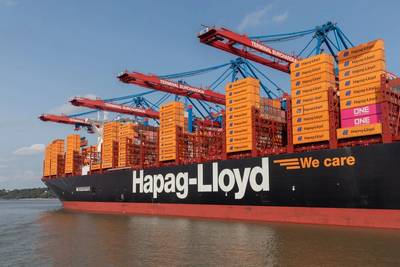
HAMBURG : Global shipping major Hapag-Lloyd has announced a set of temporary operational measures to maintain the continuity of container flows across the Gulf region, as ongoing instability in the Middle East continues to impact conventional shipping routes.
In response to the evolving situation, the company has introduced alternative cargo handling options through selected regional ports. These solutions provide customers with the flexibility to either arrange container movement independently or opt for carrier-managed logistics, ensuring minimal disruption to supply chains under current constraints.
As part of the initiative, exporters and importers operating via designated ports will be able to collect empty containers free of charge from selected depots across the United Arab Emirates, Bahrain, Qatar, Kuwait, Saudi Arabia, and Iraq. The move is aimed at facilitating smoother cargo operations and improving equipment availability across the region.
Hapag-Lloyd has also advised customers to ensure timely collection of cargo at the port of discharge. Containers can subsequently be transported across borders to final destinations within other Gulf countries using customer-arranged inland logistics. However, the carrier has specified that empty containers must be returned to the original port of discharge, with additional charges applicable for returns at alternate locations.
To address the heightened risk environment, the company has introduced insurance charges for all commercial cargo movements under these arrangements. The applicable fees are set at USD 3,000 per 20-foot container, USD 5,500 per 40-foot container, and USD 15,000 per reefer unit.
Additionally, customers will benefit from an extended free period of 10 days for cargo movements, after which a fixed rate of USD 25 per day will be levied before standard tariffs come into effect.
All service requests related to these temporary measures will be processed manually by customer service teams to ensure effective coordination and oversight. The company has clarified that these provisions will not apply to intra-Gulf trade movements.
The initiative underscores the growing emphasis among global carriers on flexible, multimodal, and contingency-driven logistics strategies to navigate ongoing geopolitical and operational challenges in the region.