



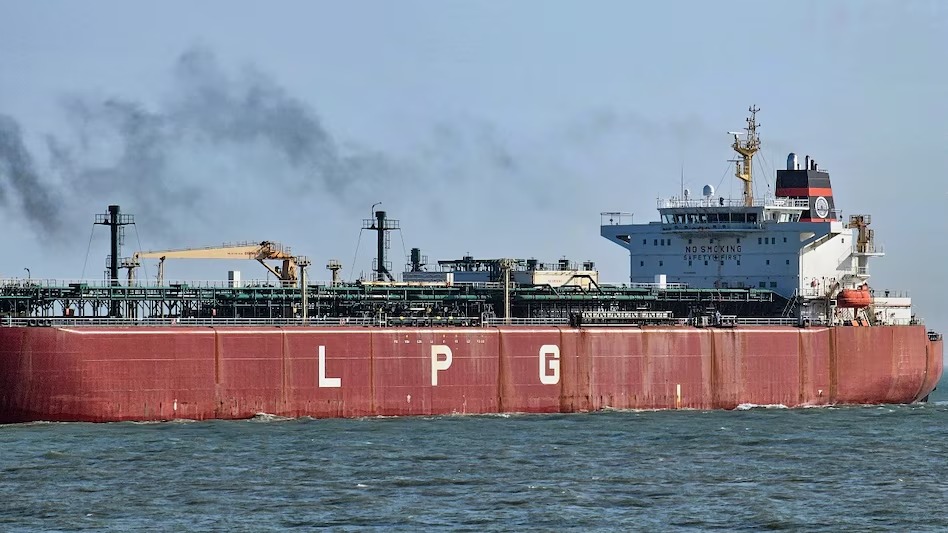
HORMUZ : The Iranian Navy guided an Indian liquefied petroleum gas tanker through the Strait of Hormuz last week, allowing the vessel to pass on a pre-approved route following diplomatic engagement by New Delhi, a senior officer onboard the ship told Bloomberg.
The unnamed officer said that his ship was one of two Indian vessels that made the crossing. His account suggests Tehran is operating what amounts to a selective traffic control system through the strait- permitting safe passage for vessels from friendly nations while leaving others at risk of attack.
During the crossing, the ship was in radio contact with the Iranian Navy throughout. Iranian officials took details of the ship’s flag, name, origin and destination ports and the nationality of crew members- all of whom were Indian- before guiding the vessel on an agreed course.
Before entering the strait, sailors onboard the LPG tanker prepared their life rafts. The ship had been anchored in the Persian Gulf for around 10 days when crew were informed on the morning of March 13 that permission had been granted to make the transit that night.
The vessel traveled with its Automatic Identification System switched off, according to the officer, turning it back on only after reaching the safety of the Gulf of Oman. GPS navigation was also unavailable due to widespread signal interference in the region since the start of the conflict, which meant the crossing took significantly longer than usual.
On the far side of the strait, Indian Navy ships were waiting to escort them, with the national flag flying higher than usual, the officer said. The vessel has since sailed on to India.
Over the past week, several ships have transited through a narrow gap between the Iranian islands of Larak and Qeshm, tracking close to the Iranian coastline. These include two bulk carriers that had previously called at Iranian ports and a Pakistani-flagged vessel, the Karachi.
Iran’s grip on the strait gives Tehran significant leverage over global energy markets. Around a fifth of the world’s oil normally passes through the channel. Since the beginning of the conflict, several ships have been struck by missiles or drones in the strait, at least two seafarers have been killed, insurance costs have soared and there have been reports that Iran has mined the waterway.