


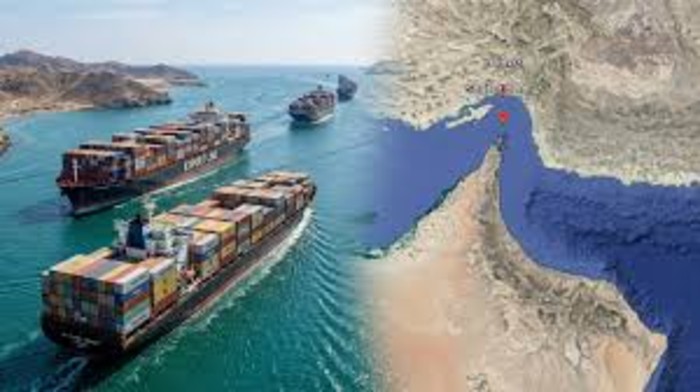
NEW DELHI : Less than a tenth of India’s exports routed to countries linked to the Strait of Hormuz may face difficulty finding alternative markets in the event of prolonged disruption, while the bulk of shipments could be redirected to other major economies, a Moneycontrol analysis shows.
Middle Eastern economies, especially the UAE, had become one of India’s major export markets for rerouting goods in the wake of US tariffs last year. A Moneycontrol analysis shows that the European Union, the US and ASEAN may offer similar relief to Indian exporters in 2026 in the wake of the Iran-US war.
The assessment comes amid rising geopolitical risks following the Iran-US conflict, with exporters reassessing trade flows through one of the world’s most critical maritime chokepoints.
India exported goods worth $62.4 billion to economies linked to the Strait of Hormuz in 2024. Of this, only around $5.3 billion, or less than 10 percent, may face significant challenges in being redirected elsewhere. The remainder could be absorbed by markets such as the European Union, the US, ASEAN, the UK, and others.
Among the most exposed categories is rice, with over $4 billion of Indian rice exports headed to the region. Rice growers may face the sharpest disruption if Gulf demand weakens and rerouting proves difficult.
Within the vulnerable $5.3 billion, around $291 million worth of goods are most at risk due to heavy dependence on Gulf buyers and limited alternative demand. These include goats, cardamom and copra.
Countries linked to the Strait accounted for 76 percent of India’s total cardamom exports, worth nearly $200 million, while unworked diamonds worth $53 million, or around 70 percent of India’s total exports in that category, were also routed to these markets.
The analysis suggests that the European Union alone has the capacity to absorb nearly 90 percent of India’s exports previously destined for these countries.
The US and UK could individually absorb 79percent and 51 percent, respectively. If disruptions were to widen to the Red Sea route as well, Japan and South Korea could absorb 39 percent and 33 percent of the affected trade, respectively.
Meanwhile, ASEAN countries could take in 78 percent, while Australia alone could absorb 39 percent.
Even in categories where India was completely dependent on the West Asian countries, exports could be accommodated by other nations.
India’s largest export to Strait-linked nations, with more than 60 percent dependence in 2024, was aircraft parts, valued at $3.8 billion. The analysis indicates that ASEAN, the EU, the UK and the US all have sufficient import demand to absorb such shipments.
Similarly, India’s $1 billion ink exports, currently concentrated in Middle Eastern markets, could be redirected to Europe, while $5.38 billion worth of jewellery exports could also find buyers in the EU.