



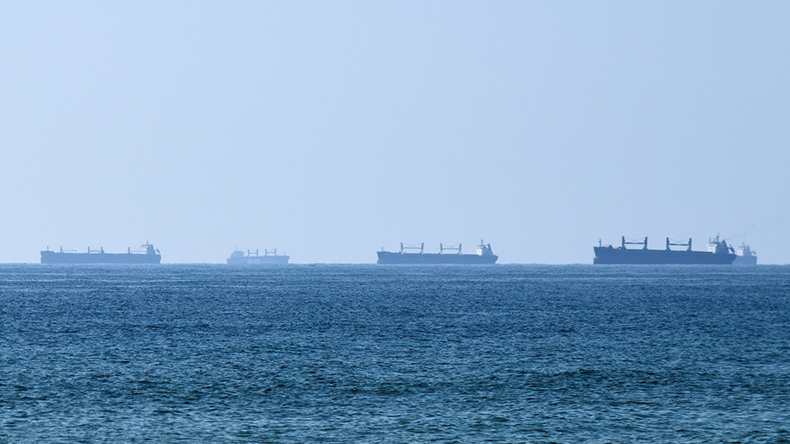
Amidst escalating tensions surrounding the Strait of Hormuz, Saudi Arabia, the UAE, and Turkey are now exploring alternative routes. Since Iran’s blockade of the Strait of Hormuz, nations across the globe have faced significant challenges.
Saudi Arabia, UAE, Turkey Working On Alternate Routes
In a recently released report, the South China Morning Post revealed that the governments of Saudi Arabia, the UAE, and Turkey are actively working on land-based rail links, maritime corridors, and pipeline projects. The objective of this initiative is to reduce their reliance on routes passing through the Strait of Hormuz and the Red Sea.
A blockade was imposed on the Strait of Hormuz on February 28, following a joint operation against Iran by the United States and Israel. This action had a profound impact on the global economy, as the Strait serves as the primary waterway for global energy supplies.
Experts Weigh In: A Structural Transformation
In light of these recent developments, experts are characterizing this move as a “structural transformation”—a shift away from a reliance on the region’s historically fragile infrastructure. These new routes involve the movement of goods from ports in the UAE and Oman—located outside the Persian Gulf—to their destinations. Under this new framework, cargo will be transported through Saudi Arabia to Jordan. From there, it will be moved onward to the Mediterranean Sea, either via Egypt’s Suez Canal or through Syrian ports.
Furthermore, several links are already operational. These include a land-sea corridor connecting ports in the UAE with those in Saudi Arabia, as well as a rail service in Jordan; both initiatives were launched earlier this year. Additionally, Saudi Arabia has inaugurated a freight transport service from its Neom port, which connects the Suez Canal region with the Gulf nations and Iraq.
Meanwhile, in a parallel initiative, Saudi Arabia, the UAE, Turkey, and Jordan have set plans in motion to revive the historic Hejaz Railway. This railway connects Istanbul to Jeddah, passing through Amman and Damascus.
Consensus Reached at GCC Summit on Developing a Regional Railway Network
At a recently held GCC summit in Jeddah, leaders reached a consensus on rapidly developing a regional railway network. This network will connect Saudi Arabia to the UAE, Qatar, Oman, Kuwait, and Bahrain. Furthermore, discussions are underway regarding the creation of a multi-national network for oil and gas pipelines, as well as the construction of power lines and water systems.