



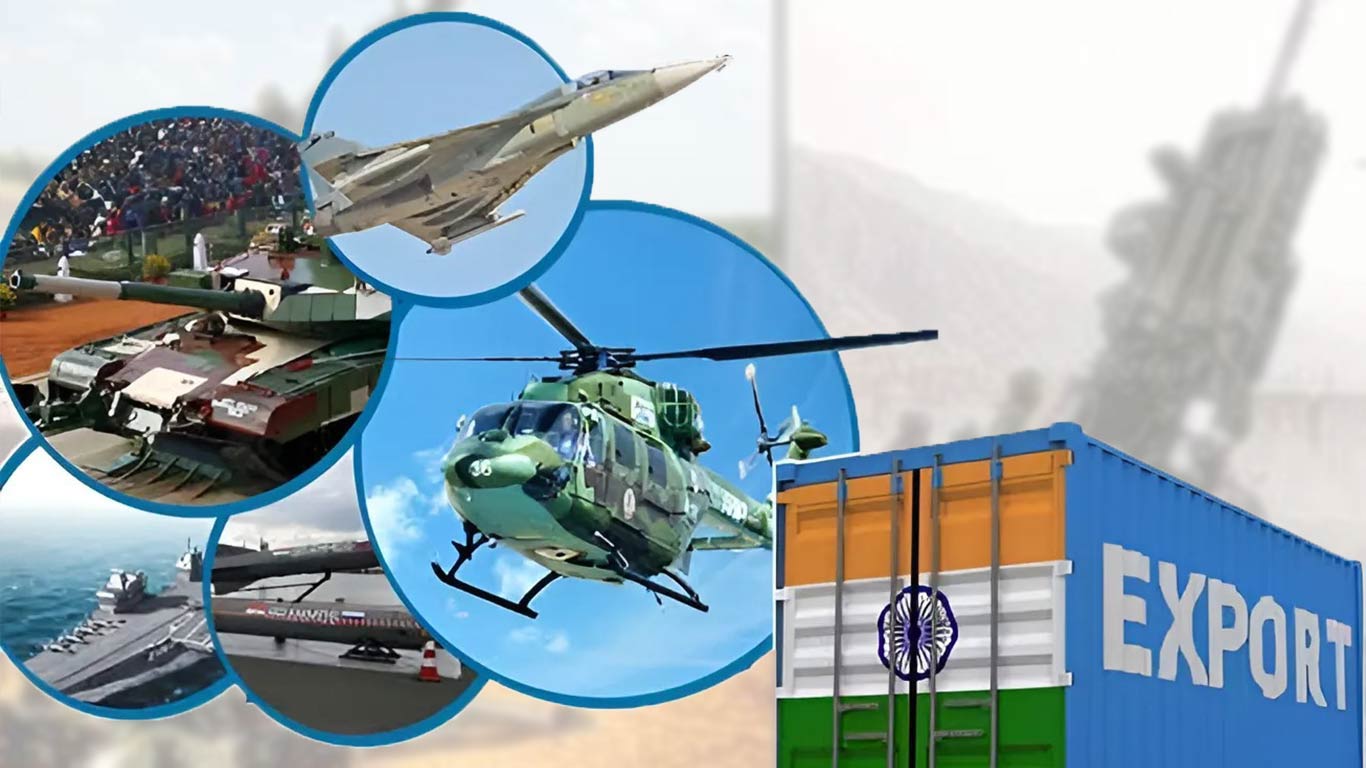
MUMBAI: As India marks the first anniversary of Operation Sindoor, Rubix Data Sciences has released its latest Rubix Industry Insights: Defence report. The central finding is a decade-long structural shift in India’s defence industry from import dependence to indigenous, self-reliant production.
India’s defence production has grown nearly 3.2 times over ten years, from under INR 500 billion in FY2015 to a record INR 1.54 trillion in FY2025, with the government targeting INR 3 trillion by FY2029. The defence budget has tripled since FY2014, reaching INR 7.85 trillion in FY2027, the largest allocation of any Union Ministry, accounting for 14.67% of the Union Budget.
A key reason behind this growth is the increasing preference for domestic manufacturers in procurement decisions. In FY2025, the Ministry of Defence signed 193 contracts worth INR 2.09 trillion, with 92% by volume and 81% by value directed at Indian firms. Around 65% of India’s defence equipment is now produced domestically, a reversal of the 65–70% import dependence that defined the sector a decade ago.
Exports tell an equally striking story. India’s defence exports reached an all-time high of INR 384 billion in FY2026, a 63% jump over the previous year and a 25-fold increase since FY2017. The government has set an export target of INR 500 billion by FY2029. India now supplies to over 80 countries, with products ranging from BrahMos missiles and Akash air-defence systems to naval vessels, Swathi radars, and artillery.
On the import side, India remains the world’s second-largest arms importer but is actively diversifying its supplier base. Russia’s share has declined sharply from 70% (2011–2015) to 40% (2021–2025), while France has emerged as the second-largest supplier at 29%, followed by Israel at 15%. In FY2026, India cleared 55 procurement proposals worth a record USD 71 billion, the highest in a single financial year.
The report also maps India’s broadening industrial base. Private sector participation has grown from 19% of production in FY2017 to 23% in FY2025, contributing 45% of defence exports in FY2026. Around 16,000 MSMEs are active in the supply chain, and over 1,000 defence start-ups have collectively attracted nearly USD 2 billion in funding since 2017.
“Operation Sindoor has brought India’s defence preparedness into sharp focus, and the data is encouraging. Procurement is increasingly anchored within the country, and the industrial base is widening, with private players, MSMEs, and start-ups now participating alongside established public sector enterprises. This shift is also changing the risk and supply chain landscape. As more of the value chain moves onshore, dependencies become more visible, supplier networks deepen, and the need for better risk assessment across tiers increases. While reliance on critical imports continues to shape key decisions, the emphasis is steadily moving towards building capacity within India, where stronger supply chain resilience directly supports greater self-reliance and, ultimately, national security,” said Mohan Ramaswamy, Co-founder and CEO, Rubix Data Sciences.
Despite this momentum, the report flags structural challenges: continued import dependence for critical technologies such as jet engines and advanced sensors, a persistent gap in R&D intensity, and exposure to global supply chain disruptions. Addressing these will require accelerated R&D investment, deeper industry–academia collaboration, and continued policy support to strengthen domestic capability in high-end technologies. Nevertheless, sustained policy support, through DAP 2020, the draft DAP 2026, Defence Industrial Corridors, the PLI scheme for drones, the Positive Indigenisation List (PIL), and the iDEX programme, is steadily accelerating indigenisation. India’s defence sector is positioned for robust long-term expansion, with a more resilient and self-reliant ecosystem taking shape.