
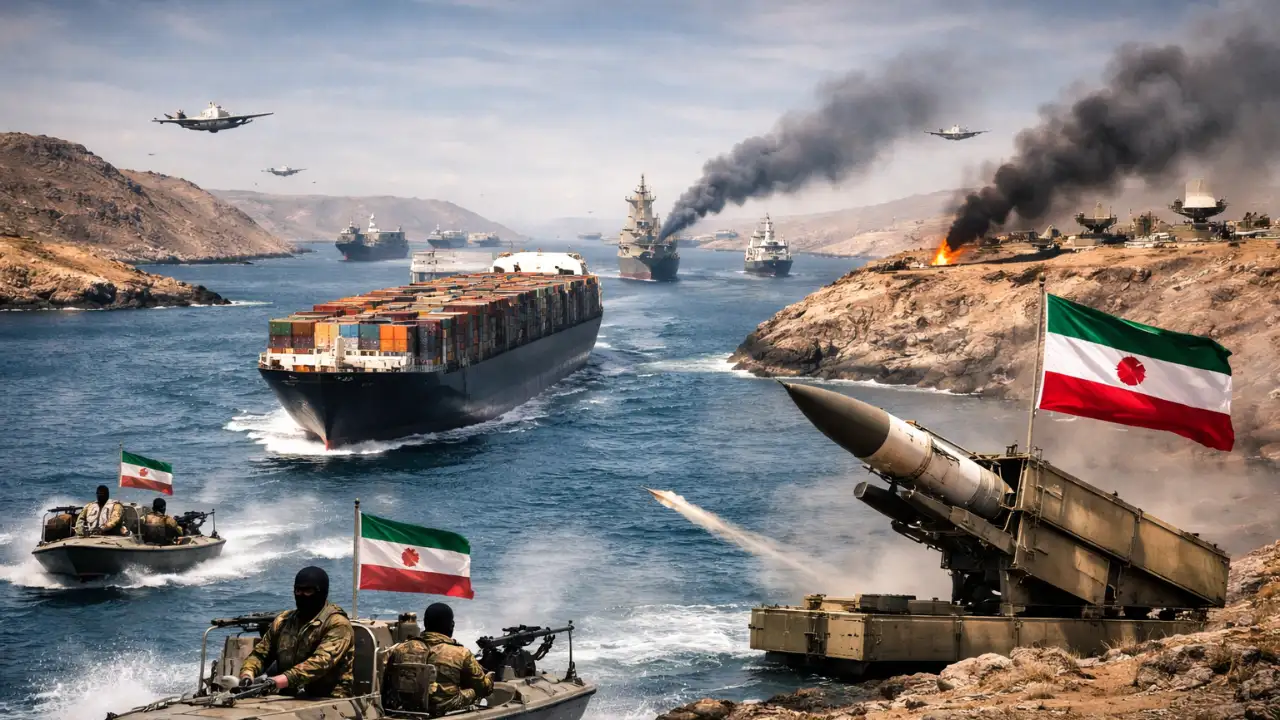
After Hormuz, Iran threatens to block another strait: Why Bab El-Mandeb matters
LEBANON : Israel’s ongoing military operations in Lebanon may soon send shockwaves through the global economy, as Iran and its allies have warned to block another major shipping route if the conflict is not put to an end.
The focus is now shifting to the Bab al-Mandeb Strait, a narrow waterway connecting the Red Sea to the Gulf of Aden. Around 15% of global maritime trade passes through the route each year, making it one of the world’s most important shipping corridors.
The warning comes as tensions continue to rise across West Asia. On Monday, Iranian state-linked media reported that Tehran had suspended indirect talks with the United States over Israel’s military campaign in Lebanon. US President Donald Trump later said he did not care if those talks collapsed.
Trump also announced a ceasefire between Israel and Hezbollah, though the situation on the ground remains unclear. While Lebanon confirmed a partial ceasefire, Israeli Prime Minister Benjamin Netanyahu said military operations would continue in southern Lebanon. Israeli forces have advanced towards the Zaharani river, their deepest push into Lebanese territory in 25 years.
Iran has repeatedly argued that diplomatic negotiations cannot move forward while military operations continue in Lebanon and Gaza. Netanyahu’s latest remarks have strengthened concerns that the conflict could widen further and threaten key trade routes.
Why Bab al-Mandeb matters?
Among those routes is the Bab al-Mandeb Strait, located between Yemen and the Horn of Africa. Though only about 29-km wide at its narrowest point, the passage serves as a critical gateway to the Suez Canal and connects trade between Asia, Europe and Africa.
Any disruption in the area could force shipping companies to reroute vessels around Africa’s Cape of Good Hope, adding thousands of kilometres to the journey and increasing fuel and transport costs. According to analysts, the added expenses will eventually translate into higher prices for consumers around the world.
Iranian officials have directly linked the future of the shipping route to the conflicts in Lebanon and Gaza.
“The Zionists attacks in Lebanon and Gaza, under blatant American support, will push the Resistance Axis to strengthen its support for both fronts, and work to activate other fronts, and make the maritime situation in the Bab al-Mandab Strait similar to the situation in the Strait of Hormuz,” said Esmail Qaani, commander of the Islamic Revolutionary Guard Corps’ Quds Force.
He added, “And the collapsing Zionist entity should know that its simultaneous crimes in southern Lebanon and Gaza will plunge it into a whirlpool of Hezbollah’s operations and a new storm of Palestinian resistance operations.”
The Houthi link
The comments have renewed attention on Yemen’s Houthi movement, one of Iran’s closest regional allies. The group has previously targeted commercial vessels passing through the Bab al-Mandeb Strait.
In 2023, Houthi fighters launched attacks on ships in the area, saying they were acting in response to Israel’s war in Gaza. The attacks forced several companies to divert vessels around southern Africa, causing major delays and higher shipping costs.
Industry estimates suggest those disruptions cost the global economy about $20 billion annually between 2023 and 2025.
Although the Houthis have not officially responded to the latest developments, senior Houthi official Mohammed Mansour had earlier warned that the group could target the route again.
In March, he said shutting Bab al-Mandeb “is a viable option, and the consequences will be borne by the American and Israeli aggressors.”