



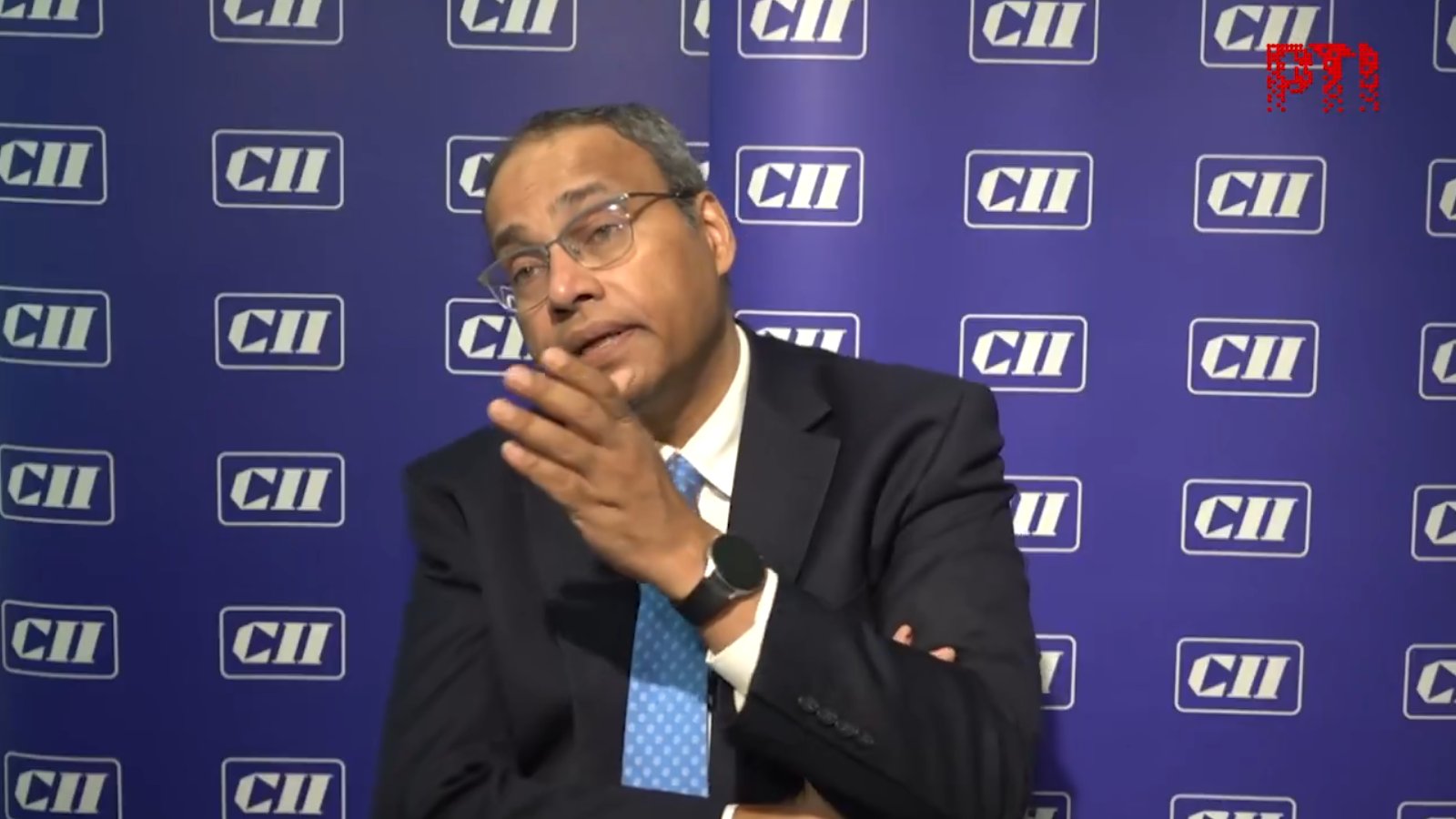
NEW DELHI : India should adopt a cautious and strategic approach towards deepening trade ties with China while encouraging investments and technology transfers that strengthen domestic manufacturing capabilities, newly appointed Confederation of Indian Industry (CII) President R Mukundan has said.
Speaking in an interview with PTI Videos, Mukundan emphasized that while Chinese technology and investments can play an important role in supporting India’s industrial growth, the country must remain focused on reducing import dependence and building robust domestic manufacturing ecosystems.
Highlighting sectors where China has developed significant expertise, particularly in battery technologies, energy storage systems, and electric vehicles (EVs), Mukundan noted that India should leverage global technological advancements to accelerate its own industrial and clean-energy ambitions.
“There are areas where Chinese technology is very good, especially in batteries, storage solutions, and electric mobility. Wherever the technology is strong, India should look at accessing that technology. Similarly, investments that help create manufacturing capacity and jobs within the country can be beneficial,” he said.
However, Mukundan stressed that China remains a major economic competitor and that any engagement should be structured in a manner that strengthens India’s industrial base rather than increasing reliance on imports. He suggested that if Chinese companies seek access to the Indian market, they should be encouraged to establish manufacturing operations and invest within India, thereby contributing to local value creation, employment generation, and technology transfer.
His remarks came in response to questions regarding the possibility of a future Free Trade Agreement (FTA) between India and China. While acknowledging the importance of economic engagement, Mukundan advocated a measured approach that balances opportunities for growth with the need to safeguard India’s long-term industrial competitiveness.
The comments assume added significance as trade between the two Asian economies continues to expand. According to recent trade data, China has surpassed the United States to become India’s largest trading partner in 2025–26, with bilateral trade reaching USD 151.1 billion.
Industry experts note that while China’s dominance in sectors such as electronics, batteries, chemicals, machinery, and renewable energy equipment presents opportunities for collaboration, it also underscores the need for India to accelerate domestic manufacturing under initiatives such as Make in India, Atmanirbhar Bharat, and Production-Linked Incentive (PLI) schemes.
Mukundan’s remarks reflect a broader sentiment within Indian industry that strategic foreign investments and technology partnerships should be leveraged to enhance domestic capabilities, strengthen supply chain resilience, and support India’s ambition of becoming a global manufacturing hub.
As India continues to expand its economic footprint and integrate with global value chains, policymakers and industry leaders are expected to focus on balancing international cooperation with the goal of building self-reliant and globally competitive industries.