



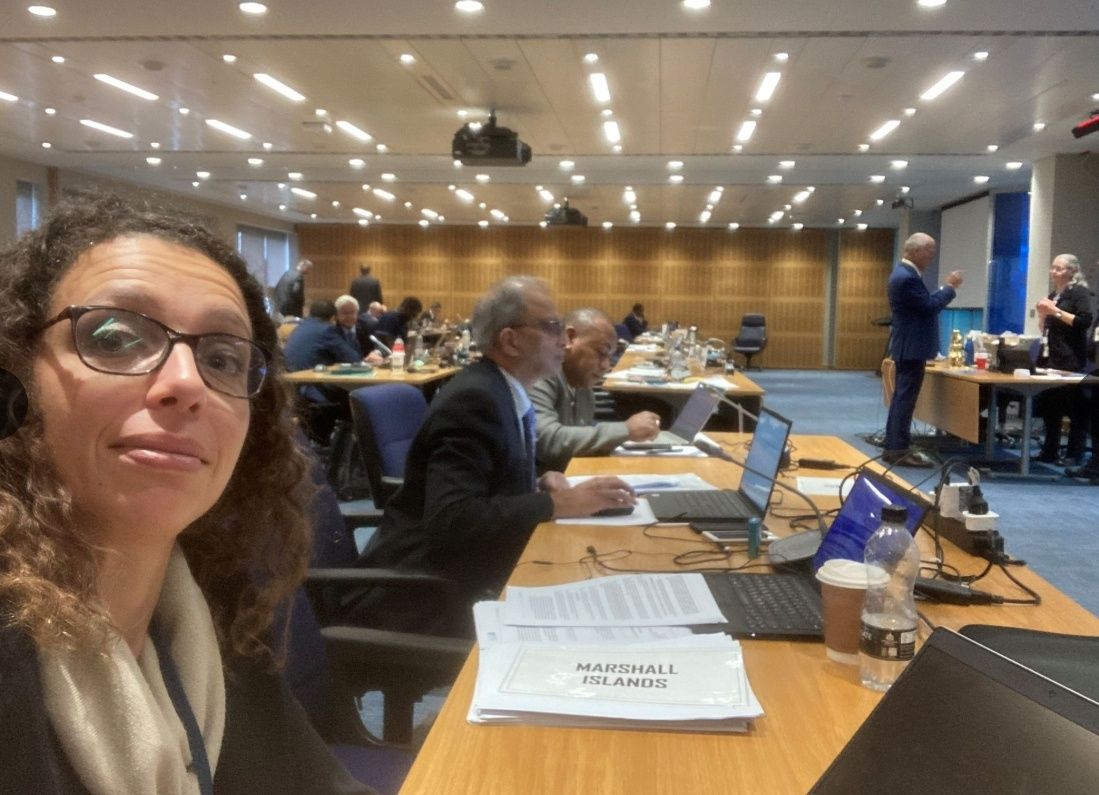
By Charlène Ceresola, BWT Project Manager, BIO-UV Group
When the IMO Ballast Water Management Convention entered into force, there was optimism that installing a certified treatment system would be enough to eliminate the transfer of invasive marine species. Today, with the vast majority of the global fleet fitted with ballast water treatment systems, it is becoming increasingly clear that the real challenge lies not in certification but in day-to-day operation.
It is important to understand that certification itself is not the problem. All IMO-approved treatment systems have undergone rigorous land-based and shipboard testing under controlled conditions. And when operated correctly and within their approved parameters, they are entirely capable of meeting regulatory standards.
The difficulties arise because port state control assessments evaluate not only the treatment unit but the entire ballast water management system, including crew procedures, maintenance, system documentation, sampling methods, and the ship’s operational environment.
Failures often come down to bypassing equipment, incorrect modes of operation, outdated or incomplete manuals, and insufficient crew familiarity with the vessel’s Ballast Water Management Plan. These are issues that fall outside the certification scope but directly affect operational performance.
A growing contributor to non-compliance is the variability of natural water conditions in ports worldwide. Some ports present exceptionally challenging environments due to high turbidity, low salinity, or heavy sediment loads. In river ports especially, ships may avoid ballasting altogether because the intake sits at a depth where silt and debris are most concentrated. Masters report that these conditions can overload filtration stages or trigger alarms. Yet these challenges are well known and often manageable.
Crews can adapt procedures by switching ballasting sides, delaying uptake until reaching deeper water, or performing partial ballasting before entering port.
The IMO’s 2024 guidance on operations in challenging water quality explicitly acknowledges this reality and offers flexibility. If, despite best efforts, water cannot be treated during uptake, the convention allows bypassing the system temporarily and performing mid-ocean exchange followed by treatment once out at sea. This is not a loophole but a structured response built into the regulatory system. The key is that such measures must be planned taking into account BWMS’ design limitations, documented, and executed in accordance with a vessel’s approved procedures.
At MEPC84, held at IMO headquarters in late April 2026, the focus was on the review of the BWMS Code, with the objective of enhancing type approval testing with CWQ conditions. The aim is to give better information to shipowners about the effectiveness and capacity of approved systems when operating in challenging water conditions. BIO-UV is closely following these regulatory developments.
Submissions were also made by the industry to further work on the IMO interim guidance on operations in CWQ, as practical difficulties are still present. BIO-UV is working to improve its HMI and OMSM to better guide the final user in these operations.
Filtration remains at the heart of ballast water treatment technology, whether the system uses UV or electrochlorination.
UV treatment is often also challenged by turbid/high load waters, but our system automatically reduces the inlet flow (to maintain the UV dose) and protect the BIO-SEA filter. Other systems using full flow in challenge water will more likely face clogging issues.
The inconvenience of slower ballasting is often overstated compared with the operational and regulatory risks associated with running without filtration.
Some operators consider switching to filter-less chemical systems, believing this will eliminate clogging concerns, but doing so generally increases chemical consumption, lengthens retention times, and makes residual monitoring more difficult.
Filtration is not a vulnerability but a protective barrier that enables consistent, predictable treatment performance.
A more worrying issue comes from systems whose manufacturers have left the market. UV lamps, filters, control components, and specialised consumables are essential for sustained compliance. When makers cease trading or discontinue product lines, shipowners can be left with obsolete systems and limited sources for spare parts. In contrast, systems still actively produced and supported by established manufacturers pose no such risk.
For these, consumables remain readily available, and the manufacturer is incentivised to maintain supply. Although replacing a legacy system requires capital expenditure, the long-term compliance risk of operating unsupported equipment is considerably higher.
Looking ahead, one of the most promising developments in the field is the emergence of real-time biological compliance monitoring.
BIO-UV Group is collaborating with MicroWise, whose BallastWISE device is currently the only IMO-approved portable tool for PSC-aligned biological assessment. The device uses imaging and fluorescence-based methods to quantify phytoplankton and zooplankton within the regulatory size classes.
MicroWise is now developing an in-line version capable of continuous monitoring during ballasting and discharge. For ship operators, this would represent a significant leap forward: instead of waiting for laboratory analysis or relying solely on alarms, owners could see in real time whether their system is delivering compliant discharge water. For port-side treatment operations, which BIO-UV Group is increasingly providing through containerised units, such real-time verification could transform the process by enabling immediate confirmation that treated water meets environmental standards before discharge.
The rise of port-side treatment represents another important trend. As PSC campaigns increasingly highlight not just documentation deficiencies but hardware-related failures, ships need reliable alternatives when onboard systems become inoperable. Using a shore-based ballast water treatment facility provides a compliant, controlled environment for discharge, and as such, the industry is likely to see steady growth in these services. They offer a practical safety net that strengthens global compliance infrastructure and reduces the number of vessels forced into non-compliant operations due to equipment issues.
The ballast water management landscape has advanced significantly, but the industry now faces a transition from installation to operational excellence. The systems work, and the regulations are clear, but compliance will depend on the competence of crews, the reliability of equipment support, and the adoption of new technologies that bring transparency to treatment performance.
Recent port state control campaigns, including data from the Concentrated Inspection Campaign (CIC), shows that while documentation and record-keeping issues remain widespread, the most serious non-compliances are technical in nature. The ballast water system itself is now accounting for 46% of all detainable deficiencies, followed by deficiencies in crew training (21%) and the Ballast Water Management Plan (15%).
The number does not imply widespread system failure, but it does mean that when an issue escalates to the point of detention, it is very often because the system has been poorly maintained and not performing as it should.
Author:

Ms.Charlène Ceresola, BWT Project Manager, BIO-UV Group