



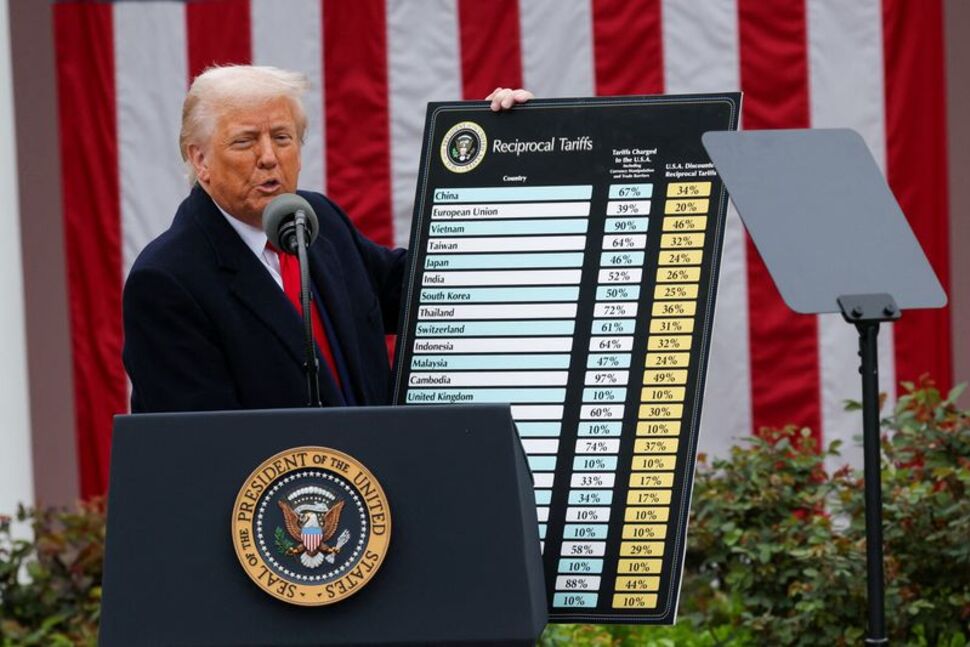
WASHINGTON D.C. : US President Donald Trump faces a fresh internal challenge as 25 democratic-ruled states have moved a court against the decision to impose tariffs on 60 economies that account for 99.4 per cent of American imports. India is currently subject to a 10 per cent tariff under the Section 301 measures, while the outcome of another investigation that could lead to additional tariffs is still pending.
This comes as Trump imposed a fresh round of tariffs ranging from 10 per cent to 12.5 per cent on 60 countries last month, citing failure on the issue of forced labour. The new levy replaced the 10 per cent global duties that expired on July 24.
The 25 states have moved the US Court of International Trade on Monday against the Trump administration for once again implementing tariffs on several countries, contending that it will raise costs for consumers and businesses nationwide.
New York Attorney General Letitia James, Governor Kathy Hochul and the coalition of the Democratic states are seeking to deem the tariffs illegal.
“After losing at the Supreme Court, the administration is once again trying to illegally raise taxes on families and businesses with a new round of tariffs,” James said in a statement.
India, along with 16 other countries, faces a 10 per cent tariff. Earlier, the US had proposed a 12.5 per cent tariff rate for India. The reduction cam after New Delhi amended its foreign trade policy on June 14 to ban imports of goods made with forced labour.
The Trump administration claims to be using section 301 of the Trade Act of 1974 to combat forced labour in global trade. However, the lawsuit argues that this is a pretext for imposing the same sweeping tariffs the administration has repeatedly tried and failed to enact, the statement said.
It added that the administration has violated the law by failing to follow section 301 requirements for imposing tariffs and implementing new tariffs without any clear connection to their stated goal of combating forced-labour practices.
“No matter how the administration tries to justify it, the law and our Constitution are clear that the president does not have the power to impose sweeping tariffs on whatever countries he wants,” the New York attorney general said.
“Tariffs are taxes, and the American people cannot and should not shoulder the extra costs that come from the President’s failed and illegal economic policy — no matter how much the President wants them to,” California Attorney General Rob Bonta said in a statement.
The lawsuit further details how tariffs are being arbitrarily imposed with little connection to the stated goal of combating forced labour, adding that they contain product exemption that undermines the desired results.
The administration’s report on its investigation identified just three products made with forced labour to justify tariffs on dozens of countries.
The lawsuit explains that the Office of the United States Trade Representative (USTR) failed to engage with testimony from countries and comments submitted during the shortened development of these tariffs, which overwhelmingly contradicted the administration’s claims that the tariffs would address the harms of forced labour.