
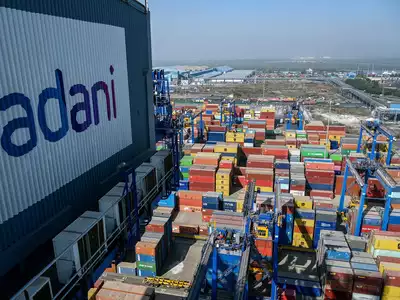
Adani Ports Q3 net profit jumps 21% to Rs 3,054 crore, revenue up 22%
AHMEDABAD : Adani Ports and Special Economic Zone Ltd (APSEZ) on Tuesday posted a 21.2 percent rise in its consolidated net profit to Rs 3,054 crore for the December quarter of the current financial year on account of higher income. The Adani Group company had reported a net profit of Rs 2,520 crore in the October-December period of the previous fiscal, the company said in a regulatory filing.
The company, India’s largest private port operator by volume, said its the top line came in at Rs 9,705 crore in the quarter under review, a rise of nearly 22 percent from a revenue of Rs 7,964 crore in the year-ago period.
The company also informed the exchanges on the appointment of Sreedhar Krishna Menon as its new chief financial officer. The total income surged 21 percent to Rs 9,939 crore in the December quarter from Rs 8,187 crore in the year-ago quarter. Expenses also rose to Rs 6,283 crore in the period from Rs 5,191 crore a year ago.
The EBITDA (Earnings Before Interest, Taxes, Depreciation, and Amortization) was up 20.5 percent at Rs 5,785 crore from Rs 4,800 crore year-on-year (YoY). The margin was at 59.6 percent in the December quarter from 60.3 percent YoY.
The company raised the upper end of its core-earnings forecast for the fiscal year ending March 2026. APSEZ Whole-time Director & CEO Ashwani Gupta said, “Sustained momentum across our four business pillars, combined with the consolidation of NQXT, has enabled us to raise the upper end of our FY26 EBITDA guidance by a robust Rs 800 crore. Towards the end of FY24, we articulated a clear ambition to double our revenue and EBITDA by FY29 to Rs 65,500 crore and Rs 36,500 crore, respectively. Our continued focus on capacity expansion, operational excellence and superior customer experience positions us strongly to deliver on these commitments. Sustainability remains central to our growth strategy.”
The company has completed the acquisition of NQXT Australia, and is on track to achieve 1 billion tonne of cargo volume by 2030, it said in an exchange filing.