
Archaeologists just found the largest and most advanced Medieval cargo ship ever
DENMARK : The Viking Ship Museum in Denmark recently announced an unprecedented discovery in the Øresund Strait: the world’s largest and most advanced medieval cargo ship ever found.

Hailed as “a milestone in maritime archaeology,” the discovery occurred while divers were investigating the seabed in the Sound, in anticipation of Copenhagen’s new Lynetteholm district, and stumbled upon a record-breaking cog buried beneath centuries of sand and silt.
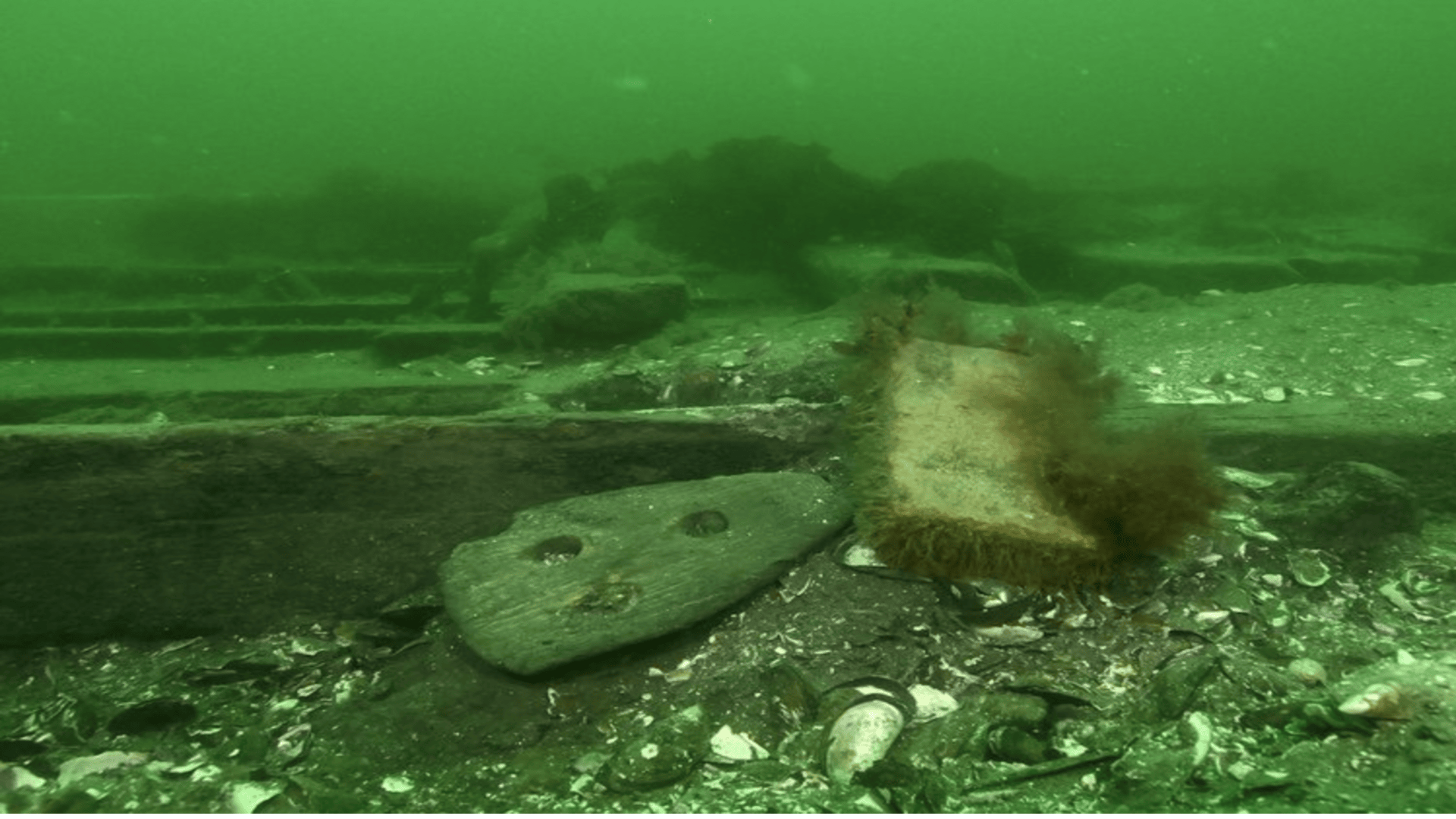
Found approximately 43 feet deep, the precious wreckage escaped destructive forces, resulting in an extraordinary state of preservation that provided archaeologists with a rare, close-up look at never-before-seen details.
“It is extraordinary to have so many parts of the rigging,” noted the researchers. Its sheer size and remarkable condition turned the excavation into a massive undertaking that required 289 dives and more than two and a half years to complete, according to Arkeonews. Now, the Viking Ship Museum has come forward, brimming with praise and insights into one of the medieval world’s most impressive vessels.
A groundbreaking cargo ship
Named Svælget 2, this medieval cargo ship would have sailed the seas of Northern Europe with the astounding capacity to carry an immense 300-ton load with only a minimal crew. Made of Polish and Danish wood, the vessel was described by the Viking Ship Museum in a press release as the “super ship” of the Middle Ages, measuring approximately 91 feet long, 30 feet wide, and 20 feet high.
Dendrochronological analysis revealed that Svælget 2 was built around 1410 using timber originating from Poland and the Netherlands. This indicated to archaeologists that while the frames were cut at the building site, shipbuilders imported other primary materials. So, researchers were impressed to discover that such large quantities of wood were moved across Europe.
In fact, this was the major insight archaeologists gleaned: the cog reflected the existence of a robust, complex trade network that the ship itself helped make possible. In a press release, the Museum called it “the backbone of medieval trade” because it could travel long distances and navigate treacherous waters without a large crew, making it an efficient, low-cost trading vessel.
“It is clear evidence that everyday goods were traded. Shipbuilders went as big as possible to transport bulky cargo – salt, timber, bricks or basic food items,” says Otto Uldum, head archaeologist.
The cog was a trailblazer
The ship marked a distinct shift in commerce when the goods exchanged were no longer just luxury items but everyday commodities too. The vessel literally expanded trade by cutting unnecessary costs and carrying heavy loads across Northern Europe.
Due to its excellent state of preservation, archaeologists recovered the ship’s hull, which is a rare find. Along the hull were remnants of the ship’s forecastle and aftcastle, which provided shelter for the crew. Until now, archaeologists could not confirm that these “castles” even existed on such ships.
A major surprise was the discovery of a brick-built galley, the earliest example of its kind ever found in Danish waters. This meant the crew could cook over an open fire in “remarkable comfort.” Besides, they found shoes, a comb, a cooking pot, and a wooden tray.
All these extraordinary finds opened up a unique vantage point into daily life on board a groundbreaking cargo ship that changed the face of trade in Northern Europe. It signaled an economic boom in the region as they had the finances to build a vessel to rule the seas.