Charting the Green Course: DG Shipping’s Net-Zero Blueprint for India’s Maritime Future
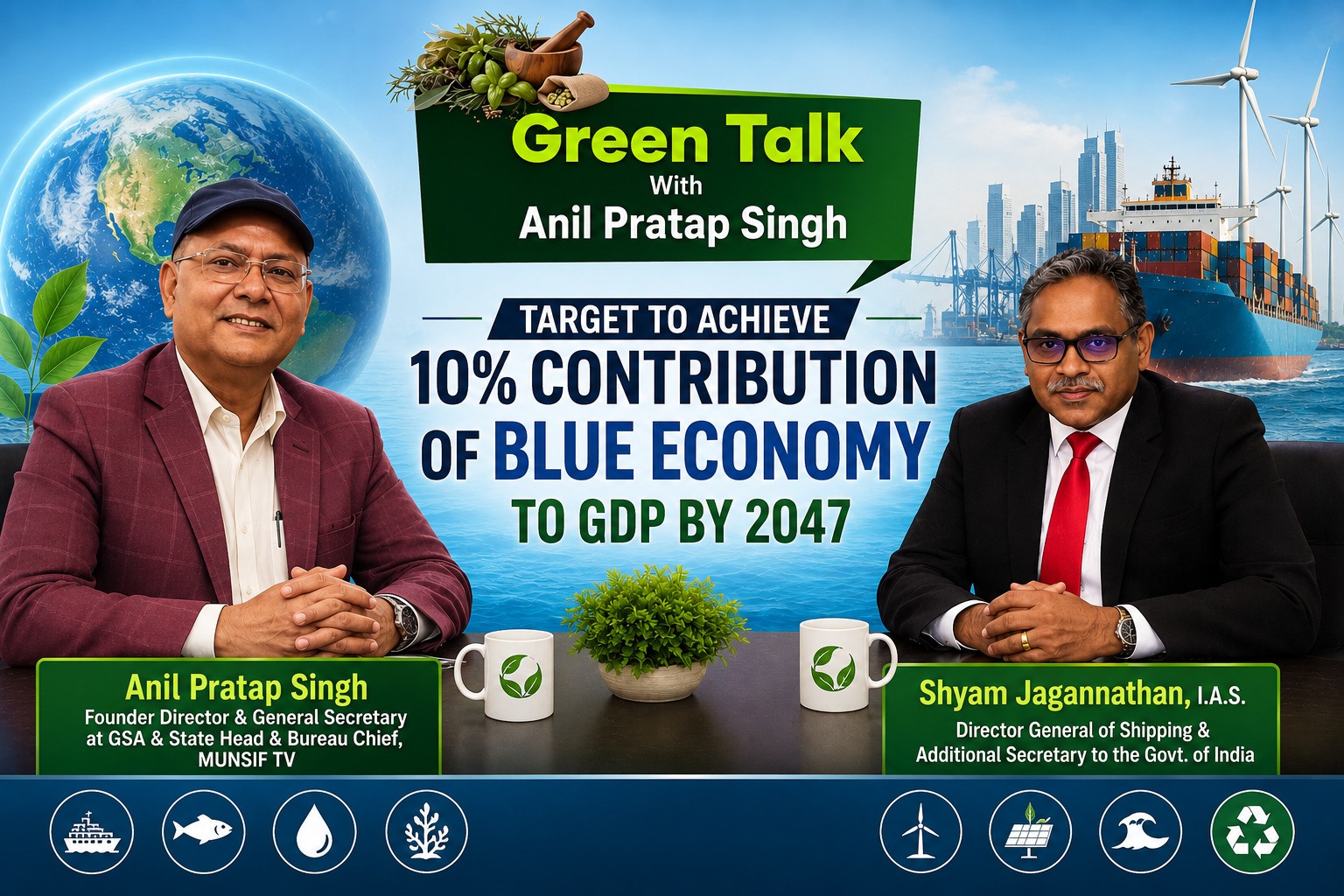
MUMBAI/BASTI: On the occasion of World Ocean Day, Mr. Shyam Jagannathan, IAS, Director General of Shipping and Additional Secretary to the Government of India, outlined a comprehensive road map for India’s maritime future in an exclusive interview on “Green Talk with Anil Pratap Singh” on Munsif TV. Acknowledging that shipping accounts for two to three percent of global carbon emissions, Mr. Jagannathan emphasized that transitioning to sustainable shipping is an essential investment for the future, especially given that the maritime sector manages roughly 90 to 95 percent of India’s international trade logistics.
The Eight Pillars of Decarbonization
To steer the country toward deep decarbonization, the Directorate General of Shipping, under the guidance of the Ministry of Ports, Shipping & Waterways, is actively implementing a multi-faceted National Maritime Decarbonization Policy Framework. This strategic framework is built upon eight fundamental pillars:
- Green Shipping & Ports: Enhancing the energy efficiencies of existing vessels, transitioning internal combustion engines to alternative net-zero fuel propulsions (like green ammonia, green hydrogen, and green methanol), and implementing the Harit Sagar port guidelines.
- Green Ship Recycling: Propelling India forward under the guidelines of the Hong Kong Convention to secure its spot as the world’s leading destination for sustainable ship recycling.
- Green Finance & Technology: Cultivating financial resources to back capital-intensive green initiatives and using digital tools (like the maritime single window) to create smarter, highly efficient logistics.
- Human Capital & Just Transition: Preparing India’s massive seafaring workforce for the green transition through focused skill development. The goal is to aggressively elevate the global share of Indian seafarers from 16.5% to over 20%, ensuring that tomorrow, one out of every four global seafarers is Indian.
- Waste Management: Enforcing strict protocols to mitigate pollution and handle marine waste responsibly.
Anchoring the Viksit Bharat 2047 Vision
Mr. Jagannathan highlighted that while the blue economy currently contributes approximately 4% to the national GDP, it remains absolutely critical to sustaining the country’s targeted 7 to 7.5% compounded annual growth rate. Geopolitical bottlenecks—such as recent logjams in vital energy supply lines like the Strait of Hormuz—underscore why stable, safe, and sustainable maritime routes are non-negotiable for India’s economic security. Moving toward the Vikshit Bharat 2047 vision, India is poised to leverage its 11,000-kilometer coastline by expanding far beyond mercantile trade into thriving sub-sectors, including cruise tourism, coastal shipping, marine biotechnology, aquaculture, and deep-ocean mineral exploitation.
Modernization via Legislative Overhaul
The year 2025 marked a historic regulatory shift with a series of landmark maritime legislative upgrades. The thorough revision of the Merchant Shipping Act has significantly streamlined vessel registration, ownership, and wreck removal protocols while boosting the salvage economy. Furthermore, the newly enacted Coastal Shipping Act 2025 provides a highly specialized focus on domestic coastal trade, enhancing cabotage regulations and feeder services to turn deep-water ports like Vizhinjam, Galathea, and the proposed Vadhavan port into major international transshipment hubs. Mr. Jagannathan noted that shifting toward a “landlord model” via the Indian Ports Act 2025 invites extensive public-private partnerships (PPP), driving efficiency, scale, and an unprecedented ease of doing business.
A Unified Call to Protect the River-to-Ocean Pipeline
Addressing the critical link between inland states and marine health, Mr. Jagannathan broke down the common misconception that ocean pollution is solely a coastal problem. Recognizing that a vast volume of microplastics, raw sewage, and untreated industrial effluents enter major inland river systems like the holy river Ganga before draining into the seas, he issued an urgent appeal for national awareness. In line with the Prime Minister’s vision, he urged citizens across inland plains, including Uttar Pradesh, to actively participate in mass tree plantation drives to create vital carbon sinks, preserve water quality, and protect the fragile marine biodiversity of ecosystems like the Bay of Bengal. On the global front, he reaffirmed India’s commitment to the UN Sustainable Development Goals (SDG 13 and SDG 14), advocating firmly for transparent, consensus-based global maritime funds that protect the interests of developing nations and human capital.
Watch the Full Discussion: For an in-depth look at this comprehensive roadmap, the strategic pillars, and India’s maritime transformation, you can watch the entire interview on YouTube at this link: https://youtu.be/rwJjEZeq4iQ