
China, EU are top buyers of Russian fossil fuel; India’s share at 16.26%
NEW DELHI : Russia’s cumulative earnings from exporting fossil fuels since the war in Ukraine (February 24, 2022) surpassed $1 trillion at the beginning of the 2026 calendar year. China and the European Union (EU) accounted for more than half the share, followed by India.

According to data from the Finland-based Centre for Research on Energy and Clean Air (CREA), Russia’s earnings from the export of crude oil, natural gas and coal hit €1 trillion, or roughly $1.17 trillion at the current exchange rate, between February 24, 2022 and January 3, 2026.
Oil (including crude oil and oil products) and fossil gas (either pipelined gas or LNG shipments) represent the vast majority of this revenue, it added.
The EU was Russia’s second largest fossil fuel trading partner, accounting for 21.81 per cent, or $255.21 billion, with $123.23 billion going to oil, $126.54 billion to LNG and $4.1 billion to coal. Together, China and EU accounted for more than 51 per cent of Russia’s fossil fuel export earnings.
India, which is the largest buyer of Russia’s seaborne crude oil, ran up a bill of more than $190 billion, accounting for 16.26 per cent of Russia’s cumulative earnings from fossil fuel export.
The world’s third largest energy consumer procured crude oil worth over $168 billion and coal worth over $21 billion between February 24, 2022, and January 3, 2026.
“The trade flourishes because of Russia’s ability to expand markets for its oil, grow its ageing, dangerous shadow fleet, and funnel large volumes of unsanctioned gas to Ukraine’s allies in the EU. EU imports consist of onefifth of this one trillion. Russian gas is the major share of it,” CREA emphasised.
TRUMP’S EXEMPTION
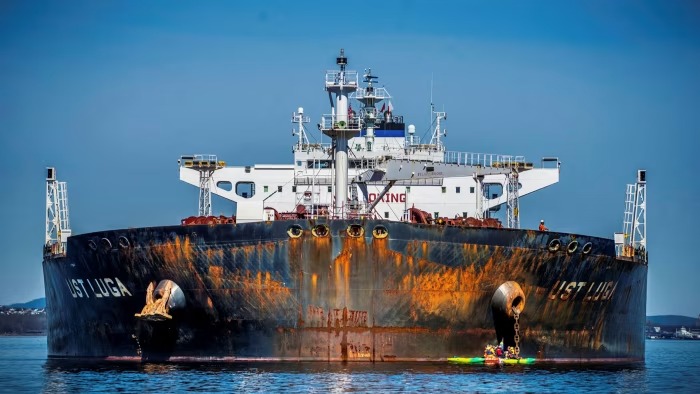
Russian oil flow to the EU goes mainly to Hungary and Slovakia. US President Donald Trump’s exemption for Hungary means that €1 billion will continue to flow into the Kremlin war chest, it added. “Sanctioning countries also continue to boost Russian revenues by allowing products refined from Russian crude to continue entering their shores. Over 500 ‘shadow’ tankers continue to carry Russian oil globally, often transiting key checkpoints and straits while not having any known and recognised insurance,” the think tank pointed out.
DISCOUNT ON URALS
Last month, CREA said that Staterun refiners increased Russian crude oil purchases in November 2025, as Urals crude is discounted heavily following the US sanctions.
Discount on Urals increased by 4 per cent in November, averaging $6.66 per barrel below Brent, compared to October ($4.92) and September ($5.13). The average Urals price fell 6 per cent monthonmonth to $55 per barrel (November), remaining above the new price cap of $47.6, it added.