



NEW DELHI : India has scrapped import duties on some parts used to make mobile phones and other electronic devices, removing the current 7.5% and 5% levies, in a move that could help companies like Apple (AAPL.O) and Xiaomi(1810.HK).
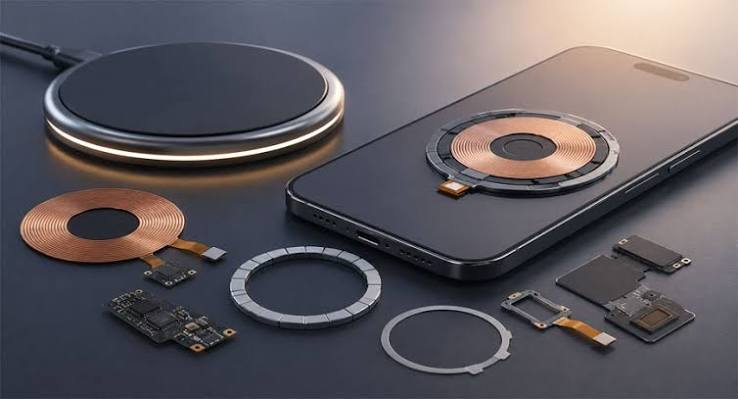
In a move that will directly benefit premium smartphone manufacturers, the Central Board of Indirect Taxes and Customs (CBIC) has introduced a ‘nil’ basic Customs Duty on key components required to manufacture inductor coil modules used for wireless charging in cellular mobile phones, covering nano-crystalline (NC) assemblies, e-shields, PET liners, PC shims (with Z-liner), main stranded coils, NFC coils, and Neodymium-Iron-Boron (NdFeB) Magnets.
- Items include key parts for producing wireless charging modules for mobile phones, displays for medical devices and automobiles, and lithium-ion cells.
- The exemption will be valid until March 31, 2029.
- “This should boost cost competitiveness, domestic value addition and localisation of high-value smartphone and electronics manufacturing,” said Manoj Mishra, a partner at business consultancy Grant Thornton Bharat.
- Exemption for lithium-ion cell manufacturing may spur investment in domestic battery production for electronics and electric mobility, Mishra said.
- India aims to expand electronics manufacturing to $500 billion by fiscal year 2030.
- Smartphone production in India rose 28-fold over the last decade to 5.45 trillion rupees ($57 billion) in 2024/25.
The orders issued late on Wednesday seek to support the domestic electronics industry with lower cost of production at a time the West Asia crisis has disrupted global supply chains and pushed up shipping costs.
A larger list of machinery used in lithium-ion cell manufacturing is now eligible for duty exemption without end use restrictions, replacing an earlier narrow list with restrictions.The move will benefit a wide range of sectors, including automotive, electric vehicles, medical devices and healthcare equipment, industrial electronics and manufacturing, mobile phones and smartphone manufacturing, consumer electronics, battery manufacturing, and energy storage systems.
The duty relief on display components and lithium-ion cell machinery is also expected to support the defence sector, particularly in the production of drones, robots, unmanned systems, and other advanced defence equipment that rely on high-quality displays and batteries.