Diesel Supply Crisis Triggers 20% Transportation Rate Hike at Kandla-Mundra Ports
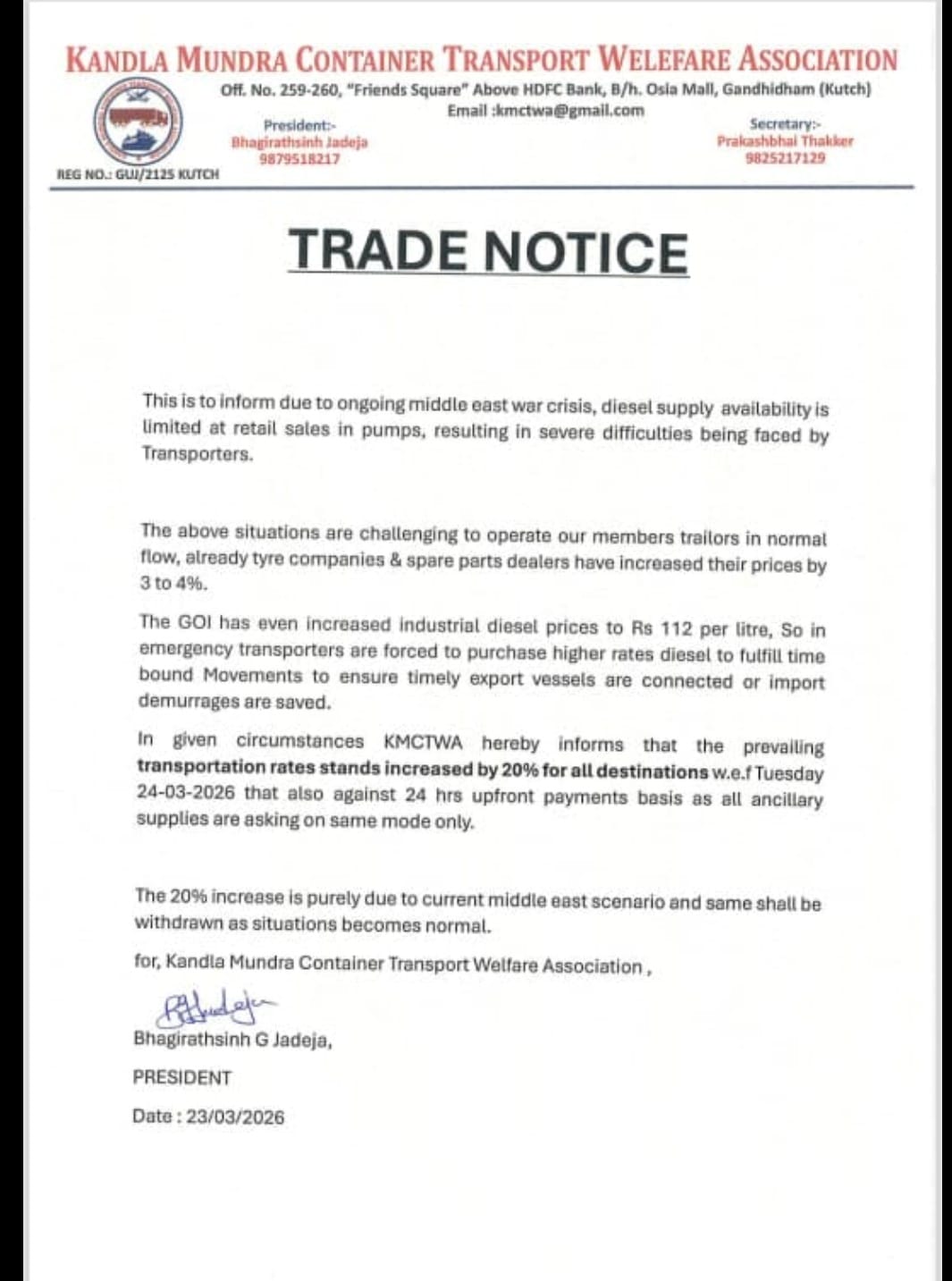
GANDHIDHAM: In a significant development impacting container logistics in western India, the Kandla Mundra Container Transport Welfare Association (KMCTWA) has announced a 20% increase in transportation rates across all destinations, effective March 24, 2026. The decision comes amid escalating operational challenges triggered by a diesel supply crunch linked to the ongoing Middle East geopolitical crisis.
According to an official trade notice issued by the association, limited diesel availability at retail fuel stations has severely disrupted transport operations, placing immense pressure on container trailer operators servicing the Kandla and Mundra port regions. Transporters are reportedly facing long delays and inconsistent fuel access, hampering timely cargo movement.
The situation has been further aggravated by rising input costs, with tyre companies and spare parts dealers already increasing prices by 3–4%. Compounding the strain, industrial diesel prices have surged to approximately ₹112 per litre, forcing transporters to procure fuel at significantly higher rates to maintain supply chain continuity.
Industry stakeholders warn that these challenges are particularly critical for time-bound export and import cargo, where delays could lead to vessel disconnections or mounting demurrage charges. To mitigate such risks, transporters have been compelled to absorb higher costs, prompting the rate revision.
In addition to the freight hike, KMCTWA has mandated a shift to a 24-hour upfront payment system, citing similar payment demands from ancillary service providers amid the crisis.
The association emphasized that the 20% rate increase is a temporary measure, directly attributed to the prevailing Middle East situation. It assured trade and industry participants that rates would be revised downward once conditions stabilize and diesel supply normalizes.
The development is expected to have a ripple effect across the logistics and EXIM trade ecosystem, particularly for businesses reliant on the Kandla-Mundra corridor—one of India’s busiest container handling regions.
Industry observers note that the evolving global energy scenario continues to underline the vulnerability of supply chains to geopolitical disruptions, reinforcing the need for resilient and diversified fuel and logistics strategies.