DPA Kandla & Assam Petrochemicals Ltd. to launch India’s first 150 TPD e-Methanol Plant at Deendayal Port
GANDHIDHAM : In a significant stride towards advancing India’s green maritime transition, Deendayal Port Authority (DPA), Kandla, is set to initiate site development works for the country’s first 150 Tonnes Per Day (TPD) e-Methanol Plant at a major port, in collaboration with Assam Petrochemicals Ltd. (APL).

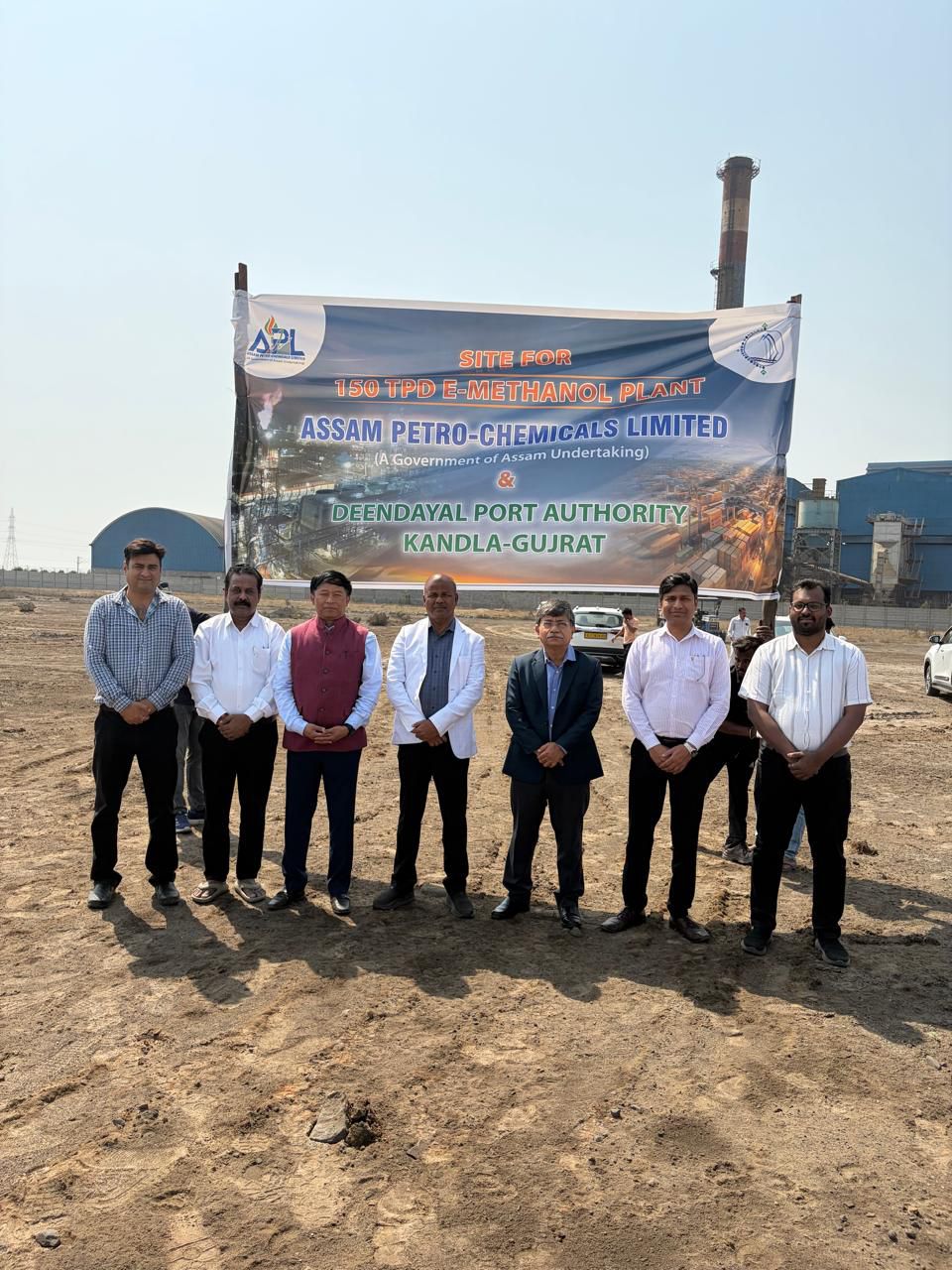
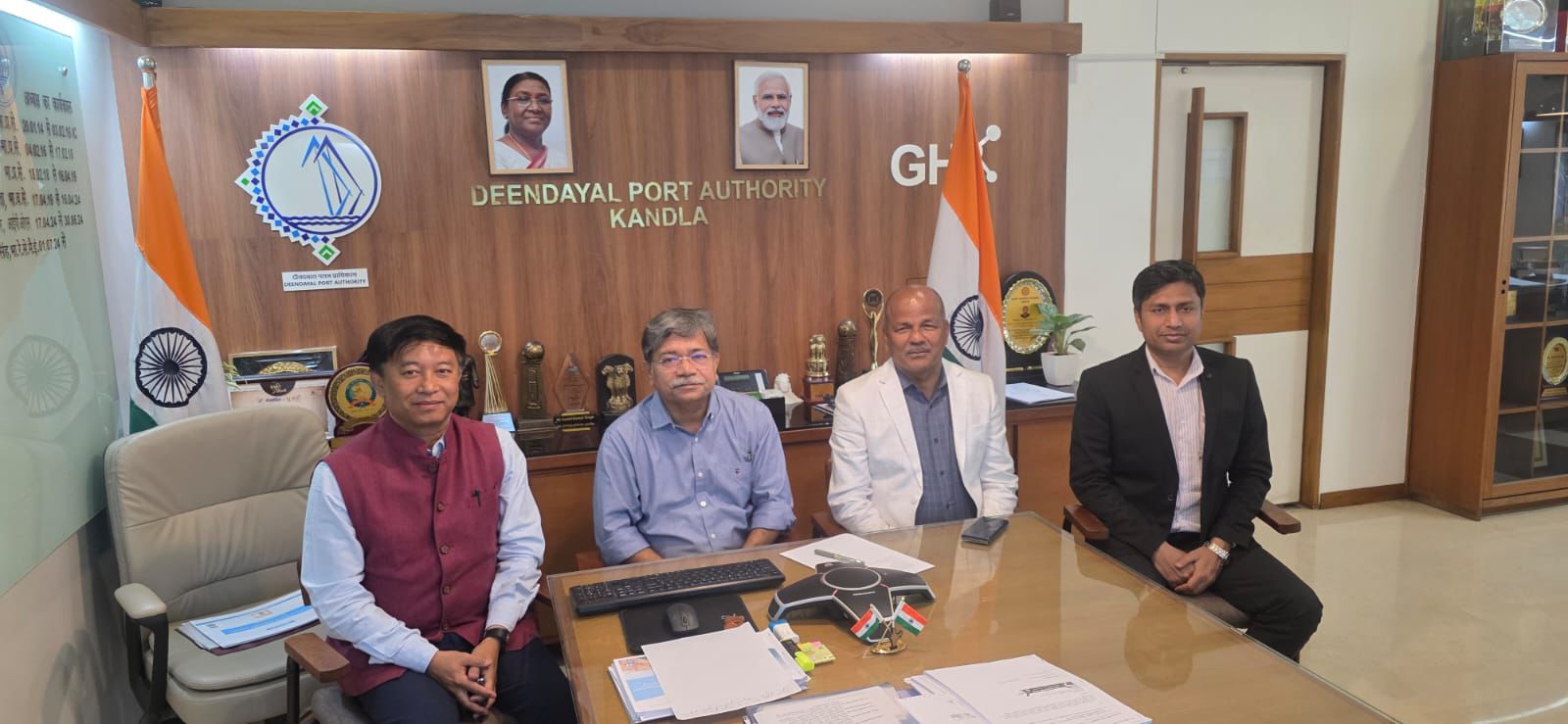
The project site was visited today by senior officials from DPA Kandla and APL, led by Shri Sushil Kumar Singh, IRSME, Chairman, DPA Kandla, and Shri Bikul Deka, Chairman, APL. The visit marks the formal commencement of groundwork and reinforces the shared commitment of both organizations towards clean fuel production, maritime decarbonisation, and India’s Net-Zero ambitions.
A Landmark Green Fuel Initiative
The APL–DPA partnership represents a historic milestone in India’s maritime sector, positioning Kandla as a pioneer in sustainable port-led industrial development. The 150 TPD e-Methanol facility will be developed within the port ecosystem, leveraging renewable energy and green hydrogen pathways for the production of environmentally friendly methanol.
e-Methanol, produced using green hydrogen and captured carbon dioxide, is widely regarded as a next-generation marine fuel capable of significantly reducing greenhouse gas emissions compared to conventional fossil fuels. The project aligns with global efforts led by international maritime bodies to promote alternative fuels for shipping and is expected to support cleaner coastal and international shipping operations.
Strategic Significance
Establishes India’s first e-Methanol production facility at a Major Port
Strengthens DPA’s vision of becoming a Green and Smart Port
Supports India’s National Green Hydrogen Mission
Enhances energy security through domestic alternative fuel production
Promotes circular carbon utilization and low-carbon maritime logistics
The plant will not only cater to the growing demand for green marine fuels but also serve as a model for integrating clean energy production within port infrastructure. By embedding renewable fuel production at the port level, the initiative is expected to reduce transportation costs, lower carbon intensity in port operations, and create a scalable blueprint for other Indian ports.
Leadership Perspective
Speaking on the occasion, senior officials reiterated that the project underscores DPA’s proactive role in driving innovation, sustainability, and energy transition in the maritime domain. The collaboration reflects a shared vision to transform India’s ports into hubs of green growth while supporting the nation’s broader climate commitments.
With site work set to commence shortly, the APL–DPA initiative marks a decisive step towards building a resilient, low-carbon maritime ecosystem — propelling India closer to a sustainable and future-ready shipping industry.