GMU launches VR Lab and hosts future leaders foundation programme
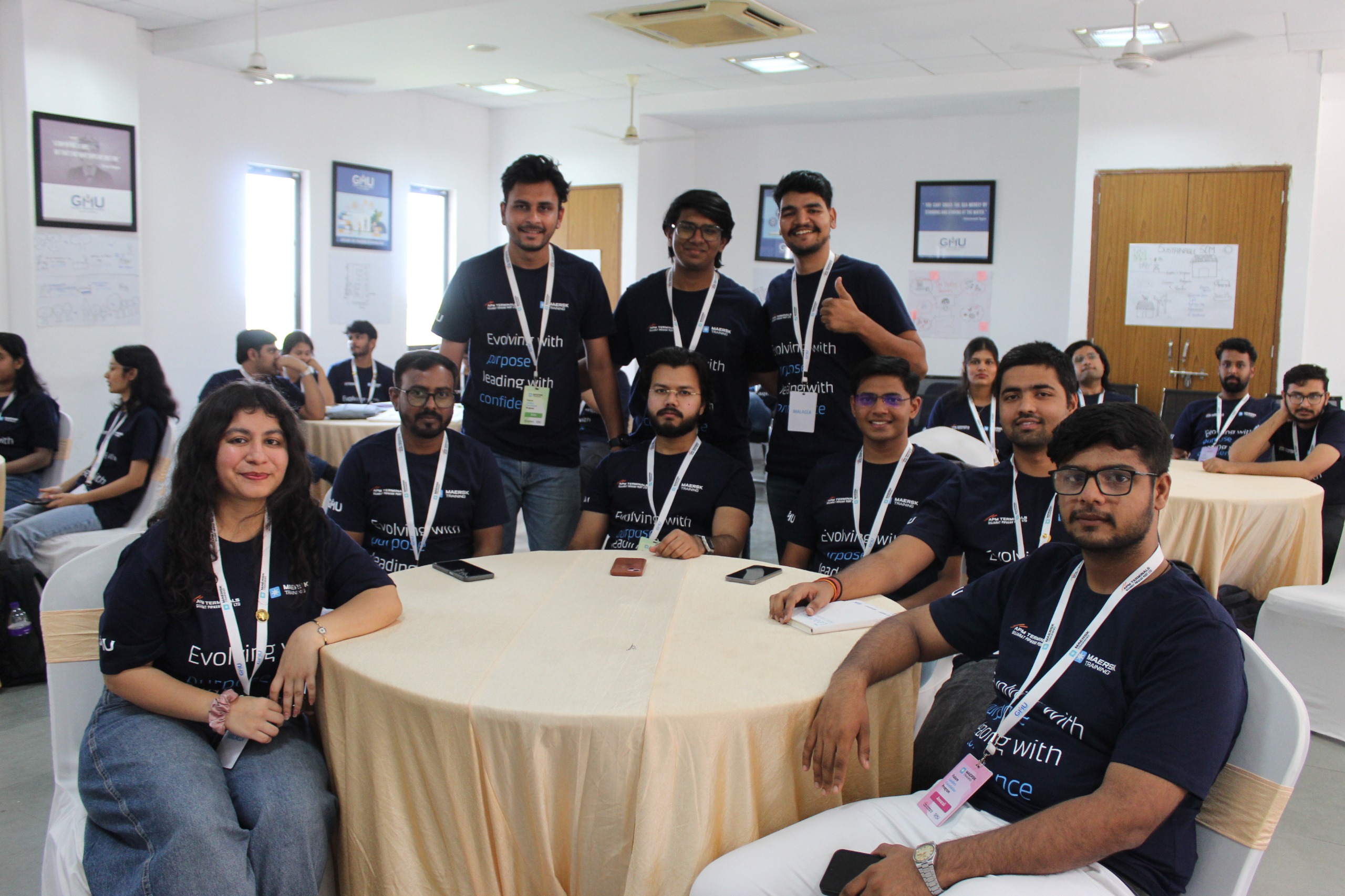
GANDHINAGAR : Gujarat Maritime University (GMU) recently organised a week-long Future Leaders Foundation Programme for postgraduate students of Maritime Management and Maritime Law, in collaboration with Maersk Training and APM Terminals.
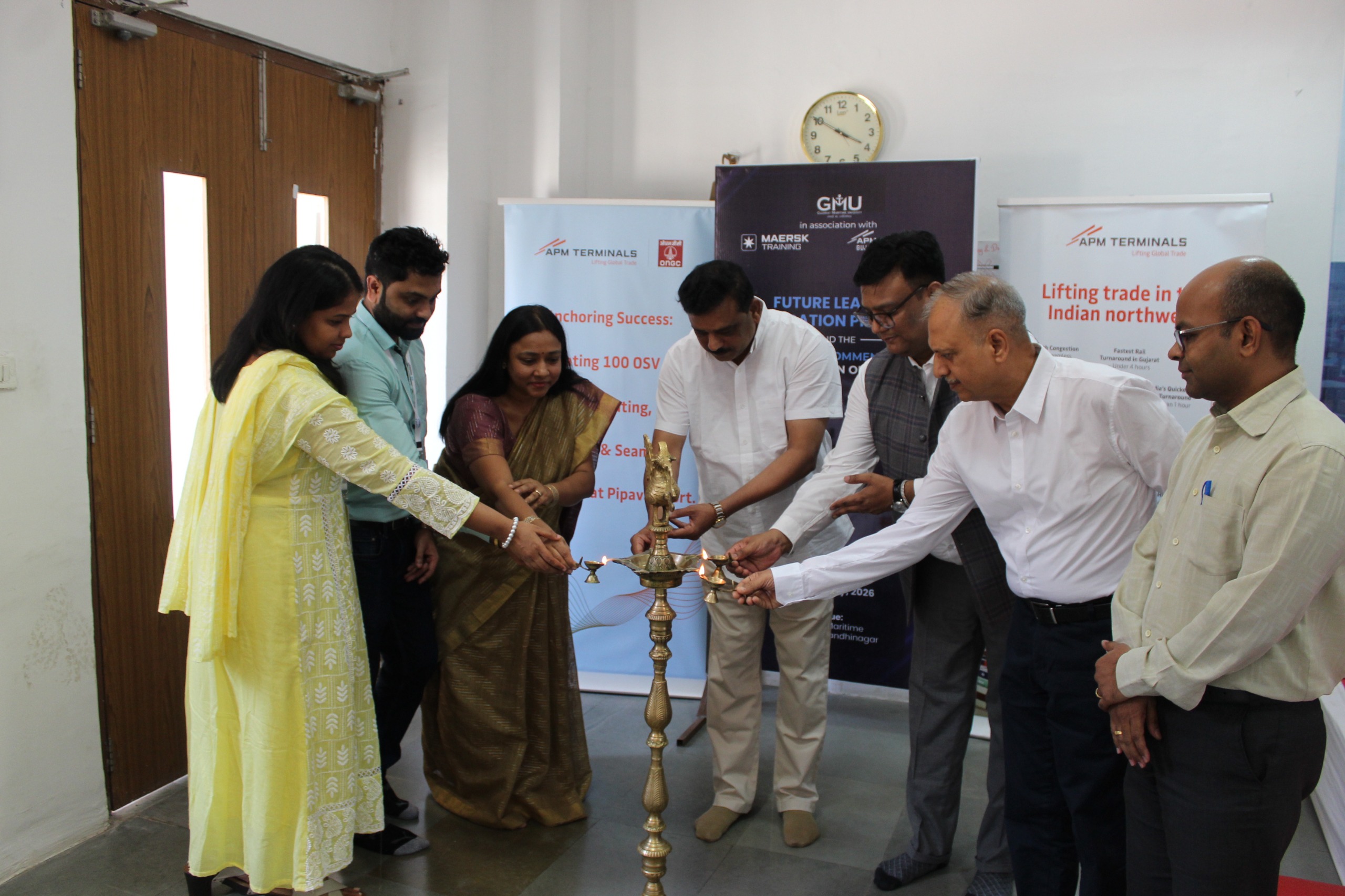
The valedictory ceremony was marked by a landmark milestone — the ceremonial commencement of construction of GMU’s state-of-the-art Virtual Reality (VR) Lab , signalling a transformative step in experiential maritime education in India.
Ceremonial Launch of the VR Lab
Prof. (Dr.) S. Shanthakumar, Provost of GMU; Mr. Vivek Sharma, Head – Public Policy and Regulatory Affairs, A.P. Moller – Maersk; and Mr. Dinesh Tiwari, Regional Manager and Head, Gujarat, APM Terminals Pipavav, graced the valedictory ceremony, and unveiled a commemorative plaque to formally inaugurate the construction of the VR Lab.
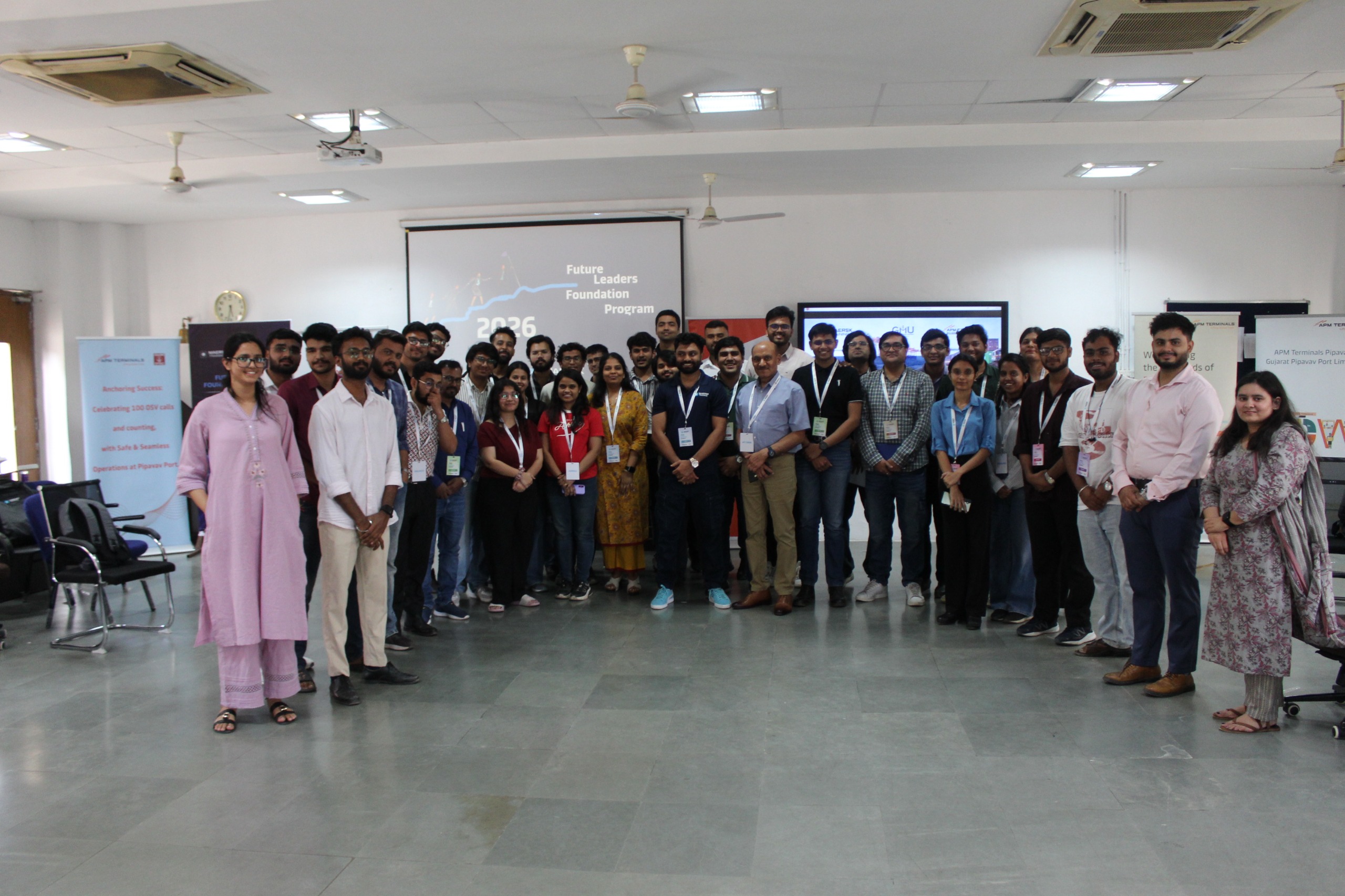
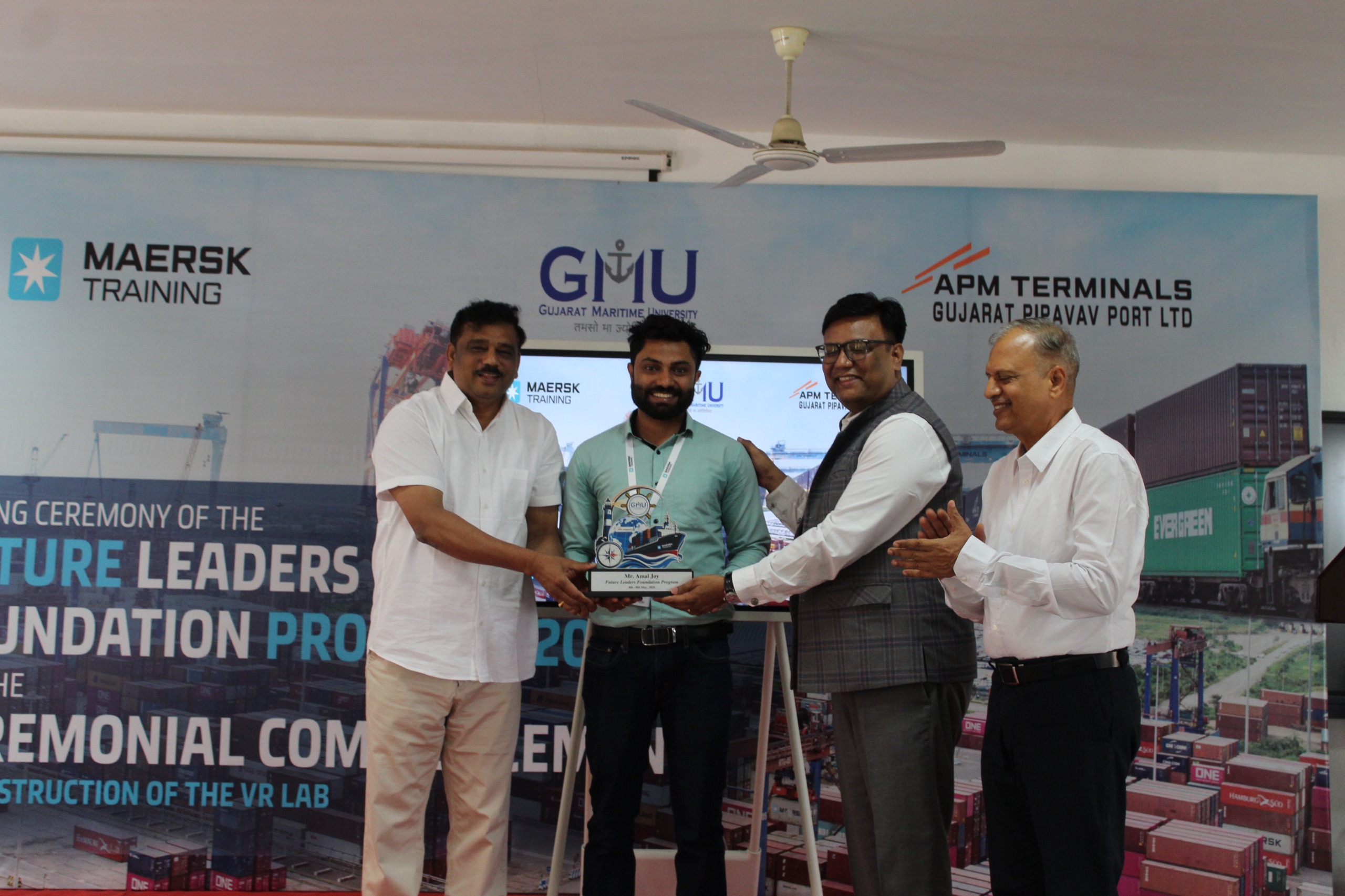
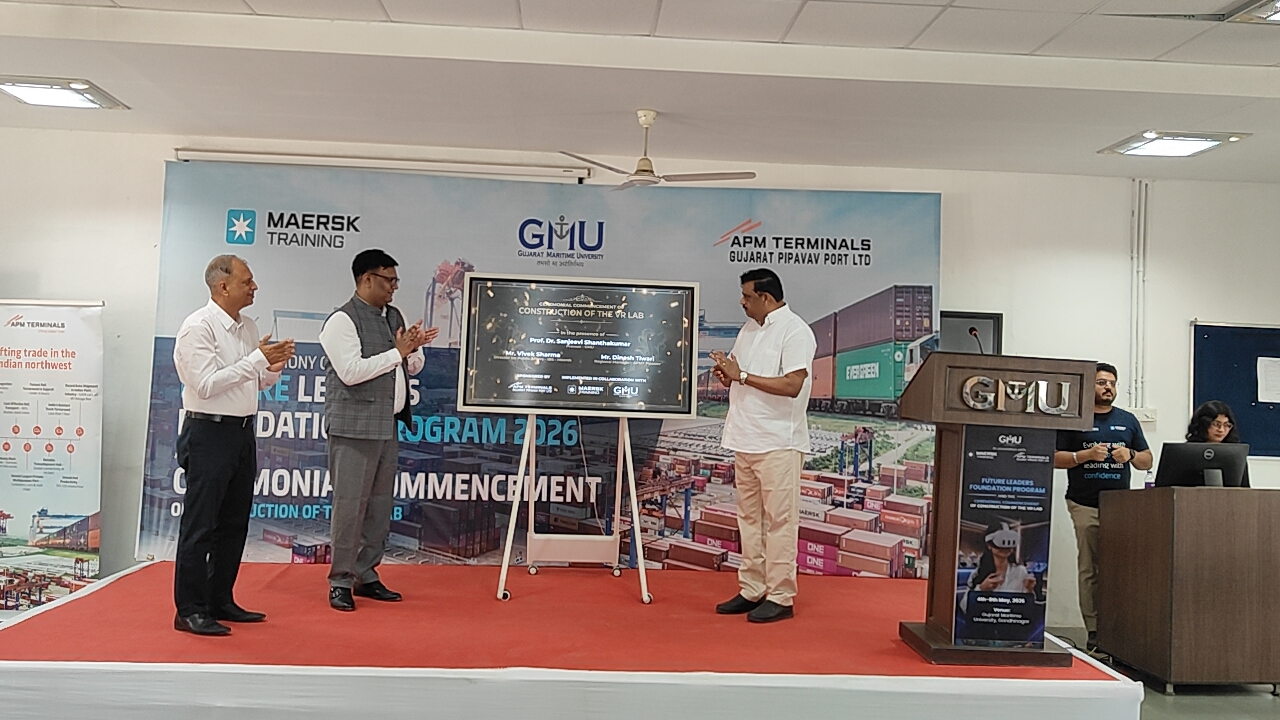
The VR Lab is envisioned as a cutting-edge experiential learning facility that will provide students with hands-on exposure to maritime operations through immersive Virtual Reality technologies. It represents a significant step towards integrating emerging technologies into maritime education and strengthening industry–academia collaboration in India’s maritime sector.
About the Future Leaders Foundation Programme
The intensive training programme was designed to bridge the gap between academic learning and industry practice, equipping students with critical skills for the global maritime sector. The curriculum encompassed key international maritime conventions, including the International Ship and Port Facility Security (ISPS) Code, the MARPOL Convention on pollution prevention, the Safety of Life at Sea (SOLAS) Convention, and the International Safety Management (ISM) Code — providing students with a thorough grounding in the regulatory frameworks essential for safe and sustainable maritime operations.
Students also explored end-to-end supply chain management, gaining insights into logistics, cargo handling, and the operational intricacies of global trade. A standout feature was the immersive VR sessions, which offered participants a first-hand experience of life at sea, the operations of critical waterways such as the Panama, Suez, and Corinth canals, Container Freight Stations, Warehouses and Cold Storage Facilities, and Port Operations. These immersive scenarios — including fire hazard management and maritime piracy response — fostered practical skills and situational awareness vital for maritime professionals.
In the context of current geopolitical developments, the programme also included an in-depth exploration of three of the world’s most critical maritime chokepoints — Gibraltar, Malacca, and Hormuz — complemented by dedicated VR sessions that deepened participants’ understanding of maritime navigation and canal operations. The programme was rounded out with sessions on Wellness, Stress Management, Crisis Management, Communication, and Team Building.
Voices from the Programme
“The future of maritime education lies in immersive, technology-driven learning. With the VR Lab, GMU will enable our students to experience the realities of global maritime operations first-hand — from navigating congested chokepoints to managing onboard emergencies — before they even set foot on a vessel. This programme has been a powerful demonstration of what is possible when academia and industry come together with a shared commitment to excellence.”
— Prof. (Dr.) S. Shanthakumar, Provost, Gujarat Maritime University
“The programme represents an important step toward nurturing the next generation of maritime leaders by integrating advanced regulatory knowledge, experiential learning, and strategic perspectives on global supply chain and port operations.”
— Mr. Vivek Sharma, Head – Public Policy & Regulatory Affairs, A.P. Moller – Maersk