
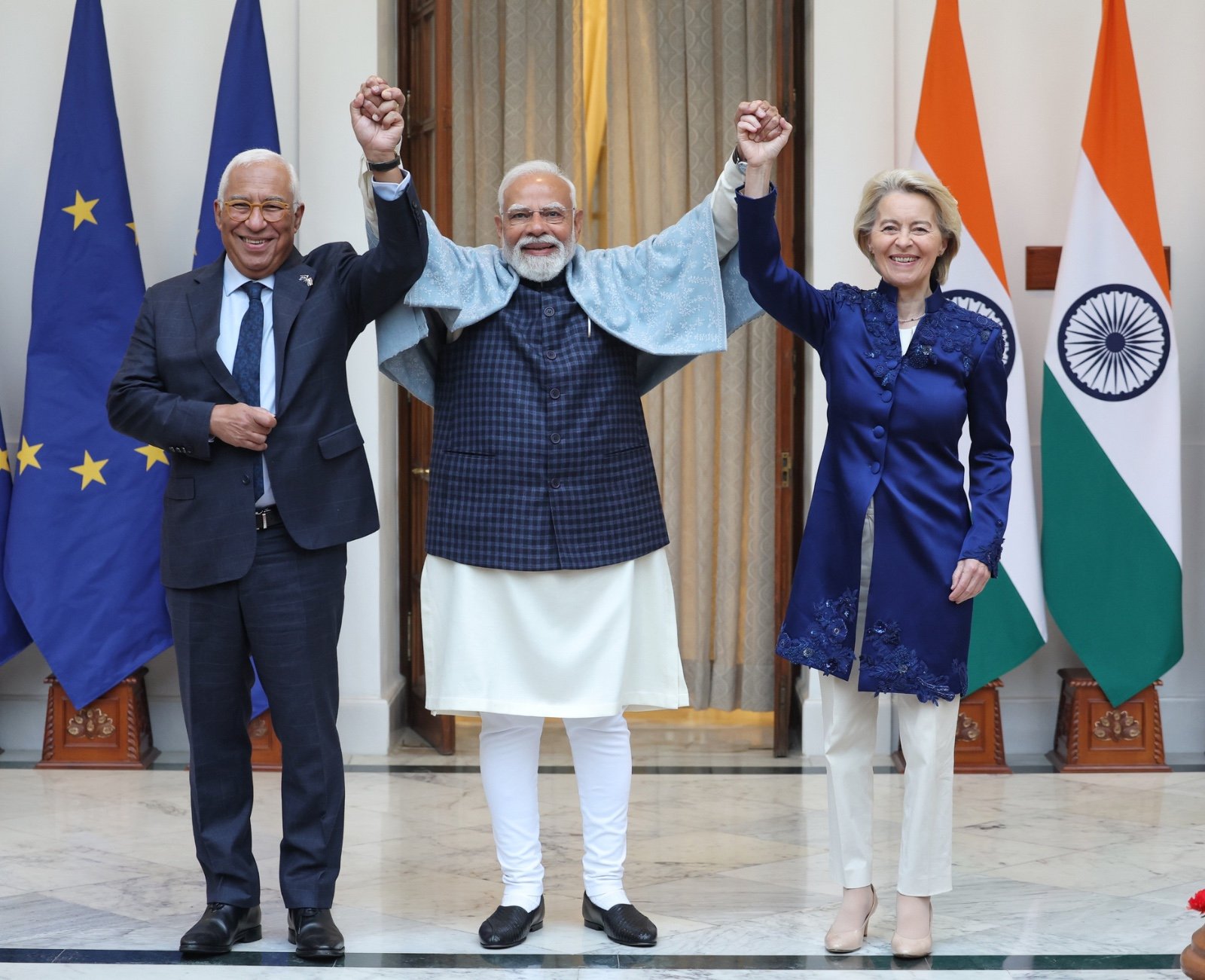
India–EU FTA-A strategic deal set to reshape Global Commerce and Maritime Flows
NEW DELHI : India and the European Union have successfully concluded negotiations on a long-awaited Free Trade Agreement (FTA)—a landmark deal described as a strategic game-changer for global trade and economic cooperation. Referred to by leaders as the “mother of all deals,” the agreement marks the culmination of nearly two decades of negotiations and is expected to significantly deepen economic ties between two of the world’s largest economic blocs.
Major Economic and Trade Outcomes
Under the agreement, tariffs on the vast majority of goods exchanged between India and the EU will be eliminated or substantially reduced:
The EU will eliminate tariffs on over 90% of its goods exports to India, lifting duties on machinery, chemicals, pharmaceuticals, industrial products, and more.
India will provide preferential access to 99%+ of its goods exports to the EU market, benefitting sectors such as textiles, chemicals, gems and jewellery, leather, and marine products.
The arrangement also features enhanced services liberalisation, investment facilitation, and regulatory cooperation that extend beyond traditional goods trade.
Strategic Global Trade Impact
The India–EU FTA arrives at a time of heightened global trade tensions, including tariff pressures from the United States and shifting supply chain dynamics. By forging stronger economic links, both India and the EU aim to diversify trade partnerships, enhance supply chain resilience, and reduce over-dependence on any single market.
Economists and trade officials anticipate that the FTA could boost bilateral trade flows substantially over the coming years by improving competitiveness and opening larger markets for exporters on both sides.
Maritime, Ports, and Shipping: A New Growth Corridor
The India–EU trade pact is expected to have wide-ranging implications for maritime transportation, ports, and global shipping networks, reinforcing the strategic importance of India–Europe sea lanes:
- Increased Container and Breakbulk Volumes
With tariff cuts and streamlined trade flows, containerised cargo movements between Indian and European ports are projected to grow, particularly for manufactured goods, electronics, automotive parts, textiles, and processed marine products. - Port Opportunities on Both Sides
Key Indian ports—such as Jawaharlal Nehru Port (Nhava Sheva), Mundra, and Pipavav—are well-positioned to serve expanded India–EU trade. These ports, already major container gateways on the Indian west coast, could see increased throughput as direct services to Europe become more commercially viable.
European hubs including Rotterdam, Antwerp, Hamburg, Valencia, and Piraeus are expected to benefit from higher inbound volumes from India, reinforcing their roles as transshipment and distribution centres for intra-European logistics.
- New Shipping Services and Corridors
Shipping lines are evaluating service adjustments that could include new direct deep-sea routes linking Indian ports with northern European destinations. These routes may reduce reliance on traditional transshipment hubs in East Asia and shorten transit times for Indian exporters reaching European markets. - Logistics and Supply Chain Enhancements
Greater predictability in trade flows fosters transport contracting stability, encourages investment in port infrastructure, and supports expansion of intermodal logistics solutions (including rail and inland connectivity) that tie production zones in India to maritime gateways.
Next Steps and Implementation
Although the India–EU FTA was signed on 27 January 2026, it must now undergo ratification by India’s cabinet, the European Parliament, and EU member states before coming into force. Implementation is anticipated gradually throughout 2026–2027.
As the world’s economy adapts to evolving trade landscapes, this comprehensive agreement is poised to be a cornerstone in future economic cooperation—reshaping trade patterns, unlocking port and shipping growth, and strengthening global supply chains for both India and the European Union.