
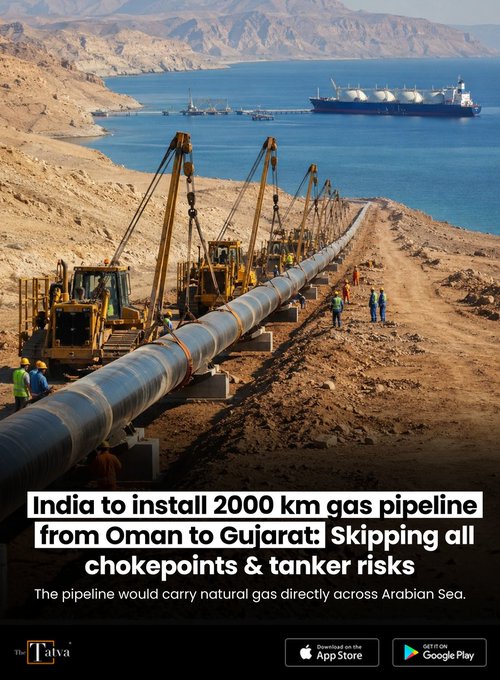
India revives ambitious ‘Oman–Gujarat Deep-Sea Gas Pipeline Project’ to strengthen energy security
NEW DELHI : In a significant move aimed at enhancing long-term energy security and reducing dependence on vulnerable maritime routes, India is revisiting the proposed ₹40,000-crore Oman–Gujarat deep-sea natural gas pipeline project. The ambitious 2,000-kilometre subsea pipeline would directly connect Oman’s gas reserves with the Gujarat coast, creating a strategic energy corridor that bypasses traditional shipping routes and geopolitical chokepoints.
The renewed interest in the project comes amid escalating tensions in West Asia and growing concerns over the security of energy supplies passing through the Strait of Hormuz—one of the world’s most critical oil and gas transit corridors. Any disruption in the region can have a significant impact on global energy markets and import-dependent economies such as India.
The proposed pipeline is expected to transport substantial volumes of natural gas from Oman directly to India’s western coast through the Arabian Sea. By avoiding the Strait of Hormuz and reducing reliance on LNG tanker shipments, the project would provide India with a more stable, secure and cost-effective supply of natural gas. The direct pipeline route would also minimize risks associated with maritime congestion, geopolitical conflicts, piracy threats and fluctuations in freight rates.
Industry experts note that advances in deep-water pipeline technology have improved the feasibility of such ultra-deep subsea infrastructure projects. The pipeline would traverse sections of the Arabian Sea at depths exceeding 3,000 metres, making it one of the most technically challenging energy projects in the region. Similar deep-sea gas pipeline projects operating in other parts of the world have demonstrated the viability of transporting natural gas across vast underwater distances.
The project aligns closely with India’s broader strategy of increasing the share of natural gas in its energy mix from the current levels to 15% by 2030. Natural gas is considered a key transition fuel that can support industrial growth while helping reduce carbon emissions compared to conventional fossil fuels. A dedicated pipeline from Oman could also support India’s rapidly expanding city gas distribution networks, power generation sector, petrochemical industries and manufacturing clusters.
Oman has long been a trusted energy partner for India, supplying crude oil, LNG and petrochemical products. Strengthening energy connectivity through a direct gas pipeline would further deepen bilateral economic ties and create a long-term framework for energy cooperation between the two countries.
If implemented, the Oman–Gujarat deep-sea pipeline would rank among the largest cross-border energy infrastructure projects in the Indian Ocean region. Beyond enhancing India’s energy security, the project could serve as a strategic pillar of regional energy integration, reinforcing India’s position as one of the fastest-growing energy markets in the world.
The revival of discussions around the pipeline reflects New Delhi’s proactive approach toward diversifying energy import routes and building resilient supply chains in an increasingly uncertain geopolitical environment. As India’s energy demand continues to rise, projects of this scale are expected to play a crucial role in ensuring reliable, uninterrupted and affordable access to natural gas for decades to come.