
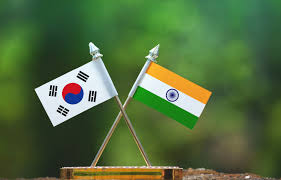
India–South Korea Trade stays Range-Bound at $25–28 Billion amid push towards $50 Billion Milestone: Rubix Data Sciences
MUMBAI: India–South Korea economic ties are entering a more strategic phase, even as trade remains range-bound and imbalances persist, according to a new analysis by Rubix Data Sciences. Both countries have set a target of scaling bilateral trade to USD 50 billion by 2030.
The report, India and South Korea: Trade Scenario, notes that the first South Korean presidential visit to India in eight years signals a clear shift towards a more structured, investment-led partnership spanning semiconductors, clean energy, shipbuilding, defence, and advanced manufacturing.
However, the analysis also points to underlying structural challenges that could shape the pace of this expansion. Bilateral goods trade has remained largely range-bound at USD 25–28 billion between FY2022 and FY2025, while India’s goods trade deficit with South Korea has widened significantly, making the case for export diversification, deeper value chain integration, and improved market access to fully realise the partnership’s potential.
Trade Trends Reveal Structural Gaps
Rubix’s analysis highlights that India’s goods exports to South Korea have declined from USD 8.1 billion in FY2022 to USD 5.8 billion in FY2025, reflecting an 11% CAGR contraction, even as imports have remained relatively stable at around USD 21 billion. This imbalance has led to a sharp rise in the trade deficit, which has expanded more than 1.6 times over the same period.
The findings suggest that while engagement between the two economies has deepened at a policy level, trade flows have yet to fully reflect this momentum, pointing to the need for more targeted interventions.
Shift Towards High-Value Supply Chains
The report identifies a gradual shift in India’s import basket towards higher-value, technology-intensive goods. Electrical integrated circuits have emerged as the fastest-growing import category, increasing their share from 7% to 15%, reflecting India’s growing dependence on semiconductor inputs and deeper integration into global electronics supply chains.
On the export side, India continues to rely on commodity and intermediate goods such as petroleum products and metals, though emerging segments like aerospace components indicate early signs of diversification. However, limited penetration into high-value industrial supply chains remains a key constraint.
Unlocking the Next Phase of Growth
Rubix Data Sciences notes that achieving the USD 50 billion trade target will depend on sustained execution across multiple fronts, including:
- Export diversification into high-value sectors
- Stronger manufacturing linkages and value chain integration
- Improved market access and reduction of non-tariff barriers
- Increased bilateral investments in strategic industries
With institutional frameworks being put in place and sectoral priorities aligned, the report concludes that India–South Korea economic ties are well-positioned for expansion, provided structural imbalances are addressed in a timely manner.
About Rubix Data Sciences
Rubix Data Sciences Pvt. Ltd. enables businesses to take prudent credit risks, build resilient supply chains, and monitor partner compliance in India and globally, while also helping ensure timely debtor collections for predictable cash flows. Founded by seasoned risk professionals.
Rubix is India’s first Validation Agent for the Legal Entity Identifier (LEI), appointed by Legal Entity Identifier India Ltd, accredited by GLEIF, Switzerland. It’s ARMSTM and EWS platforms, along with their reports and services, are powered by a vast database sourced from 120+ data streams, supported by customised predictive analytics and proprietary technology.