
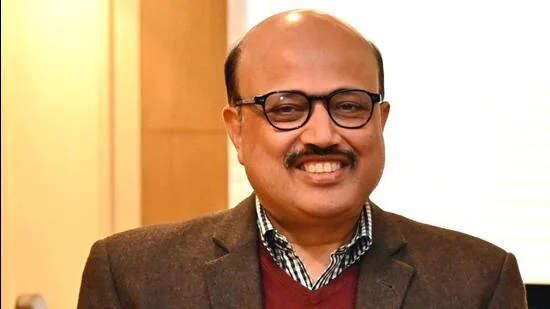
India–US trade deal very near completion, larger FTA will take time: Commerce Secretary Rajesh Agrawal
NEW DELHI: Commerce Secretary Shri Rajesh Agrawal on Monday said the India–US bilateral trade deal is very near completion, signalling progress in trade negotiations between the two countries.
Speaking in an interaction with CNBC TV18, Agrawal noted that while the United States is a large economy, concluding a comprehensive free trade agreement (FTA) would require more time. “The US is a big economy, and a larger FTA will take time,” he said.
Speaking on the first ‘Budget 2026: Accelerating India’s Export Story‘, the Commerce Secretary reiterated that two existing frameworks between the world’s two largest economies are still in place, underscoring New Delhi’s willingness to continue talks.
However, he stopped short of providing a timeline for a broader FTA, saying, “How fast it will happen, hope to get it sooner than later, can’t put a date.”
On reciprocal tariffs, the Commerce Secretary said the issue is “largely in the goods space”, adding that India is seeking to move towards “more balanced trade between both sides.”
The objective, he said, is to ensure that “both sides are better off” as negotiations progress. Referring to recent official commentary, Agarwal noted that the minister had said “most of the sticky issues are more or less resolved,” but declined to comment on recent remarks made by the US President.
Commerce Secretary Rajesh Agrawal also said India remains on a strong growth path despite global economic turbulence, with the country’s growth rate holding at around 7 per cent.
Sharing the government’s post-Budget 2026 outlook, Agrawal said that once ongoing trade agreements are fully operationalised, Indian exports will gain preferential access to nearly 55–60 per cent of global markets. This, he noted, would significantly strengthen India’s export competitiveness.
The Commerce Secretary added that India is aiming to cross $850 billion in exports in the current year, supported by long-term policy predictability and sustained service commitments that provide confidence to businesses and global investors.
The Commerce Secretary added that negotiations with several other countries are moving at a faster pace, and some free trade agreements are expected to reach the finish line this year. Emphasising the collaborative nature of trade talks, Agrawal remarked that such agreements require mutual effort, saying it “takes two to tango”.
Commerce Secretary Rajesh Agrawal also said that the successful conclusion of an India–US trade deal would require a strong appetite from both sides, underlining that negotiations can move forward only when there is mutual commitment.
He also pointed out that several trade deals announced by the US in recent years are yet to be rolled out.
Last month, US President Donald Trump expressed confidence about the future of India-US trade ties, praising Prime Minister Narendra Modi and signalling optimism on a bilateral trade deal.
Speaking to Moneycontrol when asked about the India-US trade agreement, Trump said he held Prime Minister Shri Modi in high regard and described him as a close friend. “I have great respect for your Prime Minister. He’s a fantastic man and a friend of mine. We are going to have a good deal,” the US President said.
Negotiations for a trade deal between India and the United States, expected to conclude this year, could help reduce uncertainty on India’s external front, the Economic Survey for 2025–26 said.
“At the same time, ongoing trade negotiations with the United States are expected to conclude during the year, which could help reduce uncertainty on the external front. While these risks remain manageable, they reinforce the importance of maintaining adequate buffers and policy credibility,” the Survey said.
India and the United States have concluded six rounds of talks for a trade deal so far. Both nations have reaffirmed their commitment to continue dialogue with the aim of reaching an early conclusion of a mutually beneficial agreement.
The recent US decision to exempt over 200 agricultural and food products from elevated tariffs marks a constructive shift in India–US trade dynamics. The move restores price competitiveness for key Indian exports, including spices, tea, coffee, nuts, and processed foods, helping offset earlier tariff pressures that had constrained market access, the Survey noted.
India’s goods and services exports in 2024-25 stood at $ 825 billion, and in 2025-2026, it is expected to cross USD 850 billion.