
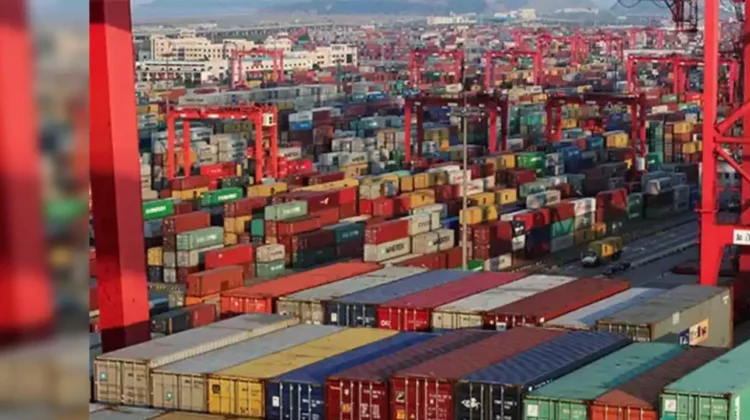
Indian Exporters hit hard by $4,000 contingency surcharge
NEW DELHI : Indian exporters whose goods had managed to cross the Strait of Hormuz and docked safely at ports in West Asia are being asked to pay a contingency surcharge that could in some cases go up to $ 4000 a container before cargoes are unloaded. This has put exporters in a situation where the freight costs are much below the surcharge, which is creating a big problem for them, CEO and Director General of Federation of Indian Export Organisations Ajay Sahai said.
The ships had crossed disturbed sea lanes before the conflict so the extra charge makes little sense. In new cargo bookings exporters can adjust the enhanced costs by raising prices or getting into arrangements with the buyers but on the goods that have already reached destinations exporters are struggling for alternatives, including abandoning the goods, he added.
Contractual Deadlock
The surcharge of $ 4000 is for a 40 feet container carrying perishables. For containers carrying hazardous items like chemicals surcharge is $ 3800 while for a 20 feet container the extra charges are $ 2000. As per the contract between the exporter and shipping line, the goods that are already handed over and the bill of lading has been issued so the risk should be borne by the shipping companies, Sahai said..
An estimated 150–200 ships are currently anchored outside the Strait, unable or unwilling to enter. Approximately 140 container vessels are reported trapped inside the Persian Gulf, according to reports.
Due to congestion, shipping companies are not taking bookings for West Asia ports. The stranded ships would also put the availability of containers at risk, Even air cargo prices have shot through the roof. The prices for goods from India to West Asia have gone up to Rs. 425 per kg from 175 per kg. The stoppage in routes will put a halt to exports to the region, which stood at $ 58.8 billion in the last financial year.
Bypassing Hormuz
Because of the conflict, the shippers are exploring alternate ports that are not directly impacted by the blockage of Hormuz strait. The ports that are being examined are the Ports of Fujairah and Khorfakkan on the east coast of the United Arab Emirates (UAE) that are designed to bypass the Strait of Hormuz. From India the ships from Mundra Port in Gujarat and Nhava Sheva in Maharashtra.
However, not all is clear at Fujairah and Khorfakkan. Drone incidents and debris have targeted the Fujairah Oil Industry Zone, resulting in fires and forced suspensions of activity.
While shipments to West Asia are on hold, the goods to the key western markets of US and Europe are being loaded at Indian ports. For these markets the ships will avoid West Asia and go through the Cape of Good Hope. This route will add 14 to 20 days to the voyage leading to higher rates.
“The shipping companies are yet to come up with new rates from the route,” chairman of Engineering Export Promotion Council Pankaj Chadha said.
Source : FE