
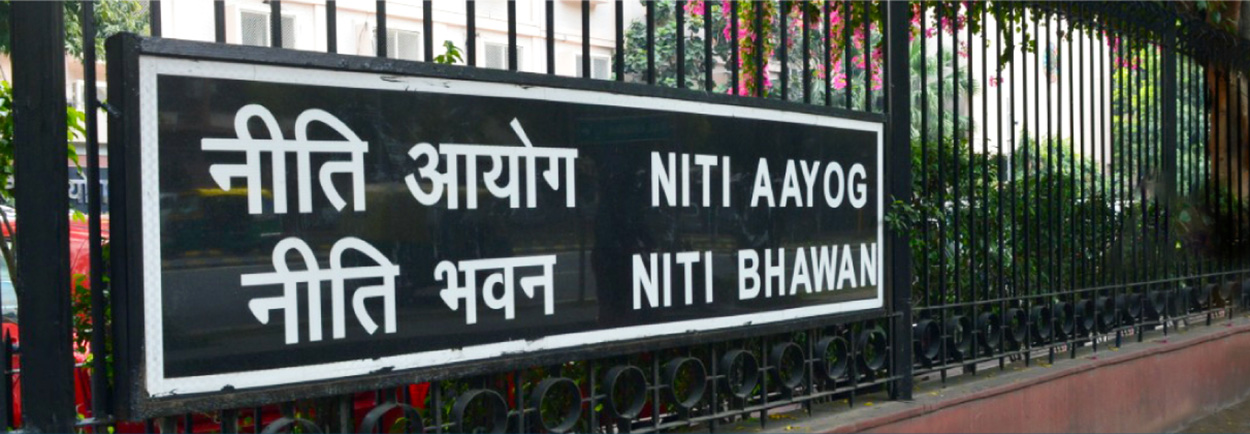
NITI Aayog urges more competitiveness in existing FTAs as trade deficit jumps 59%
NEW DELHI : Government think tank NITI Aayog flagged the need for more competitiveness in existing Free Trade Agreements, after India’s exports to FTA partners fell 9 percent year-on-year to $38.7 billion in the first quarter of FY26.

Imports from FTA countries, in contrast, rose 10 percent to $65.3 billion, pushing the trade deficit with these partners to $26.7 billion, up 59 percent from the same period last year.
According to the fifth edition of the think tank’s Trade Watch Quarterly published this month, “the overall contraction in FTA exports, coupled with stronger import growth, suggests a demand recovery skewed toward imported inputs and energy products rather than export-oriented manufacturing, highlighting the need for deeper value chain integration and competitiveness within India’s existing trade deals.”
The slowdown in exports was led by ASEAN, India’s largest FTA export market, which contracted 16.9 percent. Shipments to Malaysia, Singapore, and Australia fell 39.7 percent, 13.2 percent, and 10.9 percent respectively, while outbound shipments to the UAE, the country’s second-largest FTA destination, declined 2.1 percent.
Some markets, including South Korea, Japan, Thailand, and Bhutan, recorded modest gains of 15.6 percent, 2.8 percent, 2.9 percent, and 10.2 percent respectively, indicating pockets of resilience amid the overall slowdown.
On the other hand, the rise in imports from India’s FTA partners was driven by strong growth from the UAE, SAFTA countries, Japan, Thailand, and Singapore, reflecting higher inflows of energy products, machinery, and intermediate goods.
Imports from Nepal also surged sharply, though from a low base, while ASEAN saw only moderate increases. In contrast, imports from Australia and Bhutan declined, highlighting uneven trade patterns across India’s FTA partners.
In 2025, India signed FTAs with the United Kingdom and Oman, concluded negotiations with New Zealand, and saw the Trade and Economic Partnership Agreement (TEPA) with the EFTA nations, Iceland, Liechtenstein, Norway, and Switzerland, enter into force in October.
The country is currently negotiating a bunch of trade deals with several blocs and nations, including European Union, Peru, Chile, Israel, Canada, among others.