PIL and ABS to Advance Maritime Decarbonisation with Alternative Marine Fuel Emissions Verification
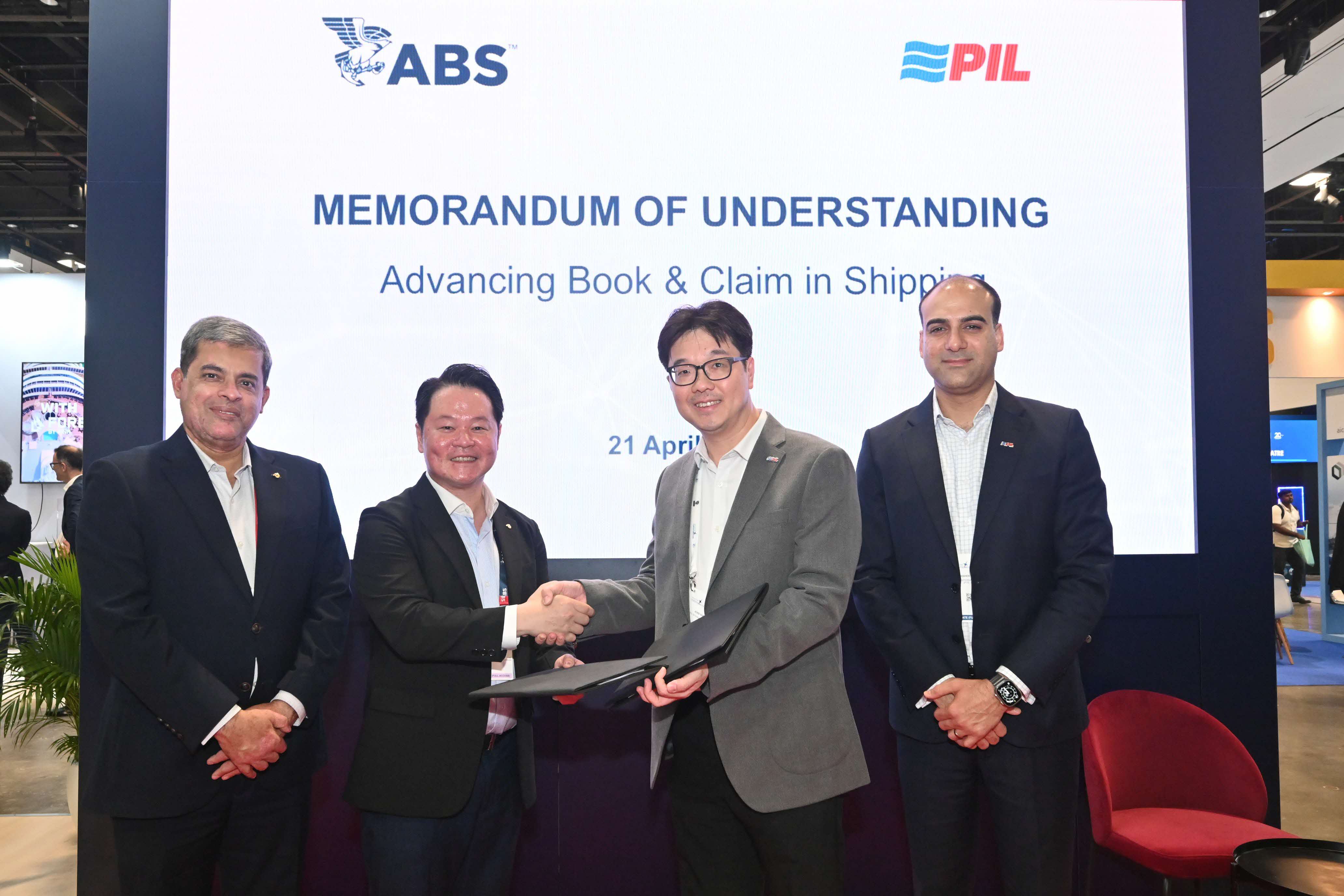
SINGAPORE: Pacific International Lines (PIL) and ABS have announced a formal collaboration with a Memorandum of Understanding (MOU) to support PIL’s participation in Book and Claim registries, enabling credible, independently verified claims of emission reductions from alternative marine fuels.
The MOU brings together PIL’s operational experience, fleet data and customer insights with ABS’s expertise in classification, certification and assurance to strengthen the credibility and consistency of emissions-related claims associated with the use of low-and zero-emissions marine fuels.
Under the agreement, ABS will serve as an independent third-party verifier for PIL’s fuel consumption, transport activity and emissions data, providing the rigorous, transparent oversight that credible book and claim participation demands.
“PIL is committed to advancing practical decarbonisation solutions for customers and industry. Our MOU with ABS enhances oversight and independent assurance for Book and Claim, ensuring consistent and reliable assessment of emissions and fuel data. This supports broader adoption of low- and zero-emission fuels as their availability grows, while maintaining accuracy in emissions claims,” said Abhishek Chawla, PIL Chief Marine Officer.
“ABS is committed to helping clients navigate maritime digitalisation with clarity and confidence. As digitalisation accelerates, independent data verification is essential to building the trust that drives meaningful progress. ABS brings deep technical expertise to this work, and we are pleased to support PIL’s commitment to reducing emissions across its fleet,” said Rostom Merzouki, ABS Vice President, Global Sustainability.
The long-term collaboration will focus on fostering transparency and driving continuous improvement in emissions monitoring and reporting. It also supports PIL’s broader decarbonisation strategy in alignment with international maritime emission reduction goals set by the International Maritime Organisation (IMO).
The Book and Claim mechanism, in the context of shipping, would be a chain-of-custody approach where environmental attributes are tracked and transferred separately from the physical fuel delivery or use on a specific voyage or vessel. Done through clear rules and a trusted registry, it can help customers access low- and zero-emission fuel solutions and support credible emissions reporting without being constrained by immediate fuel availability on a given route.