
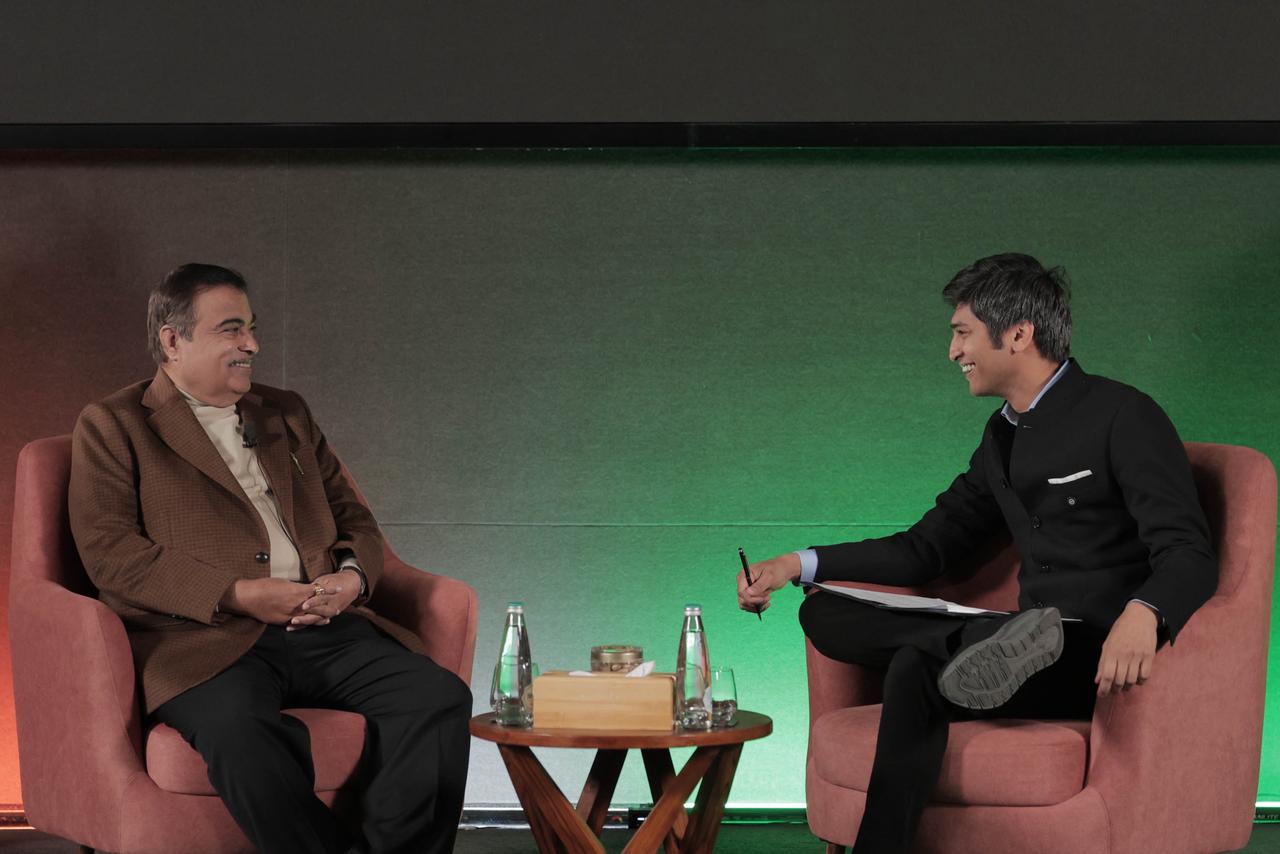
Rs. 22 lakh crore fuel import bill unsustainable; India must bet on EVs, ethanol and hydrogen: Nitin Gadkari
GURUGRAM: The Hon’ble Union Minister for Road Transport and Highways, Nitin Gadkari, said India’s continued dependence on fossil fuel imports, currently estimated at around Rs. 22 lakh crore annually – is economically unsustainable, and argued for a diversified transition across electric mobility, ethanol and hydrogen, during a recent episode of Series C, a podcast by Masters’ Union. The podcast is hosted by Pratham Mittal, Founder of Masters’ Union and Tetr College of Business, and a judge on Shark Tank India.

Highlighting the scale of India’s energy imports, Shri Nitin Gadkari said, “Today, we are importing fossil fuels worth around Rs. 22 lakh crore every year. This is a huge burden on the economy.” He added that reducing this dependence is critical not only for economic stability but also for public health and energy security.
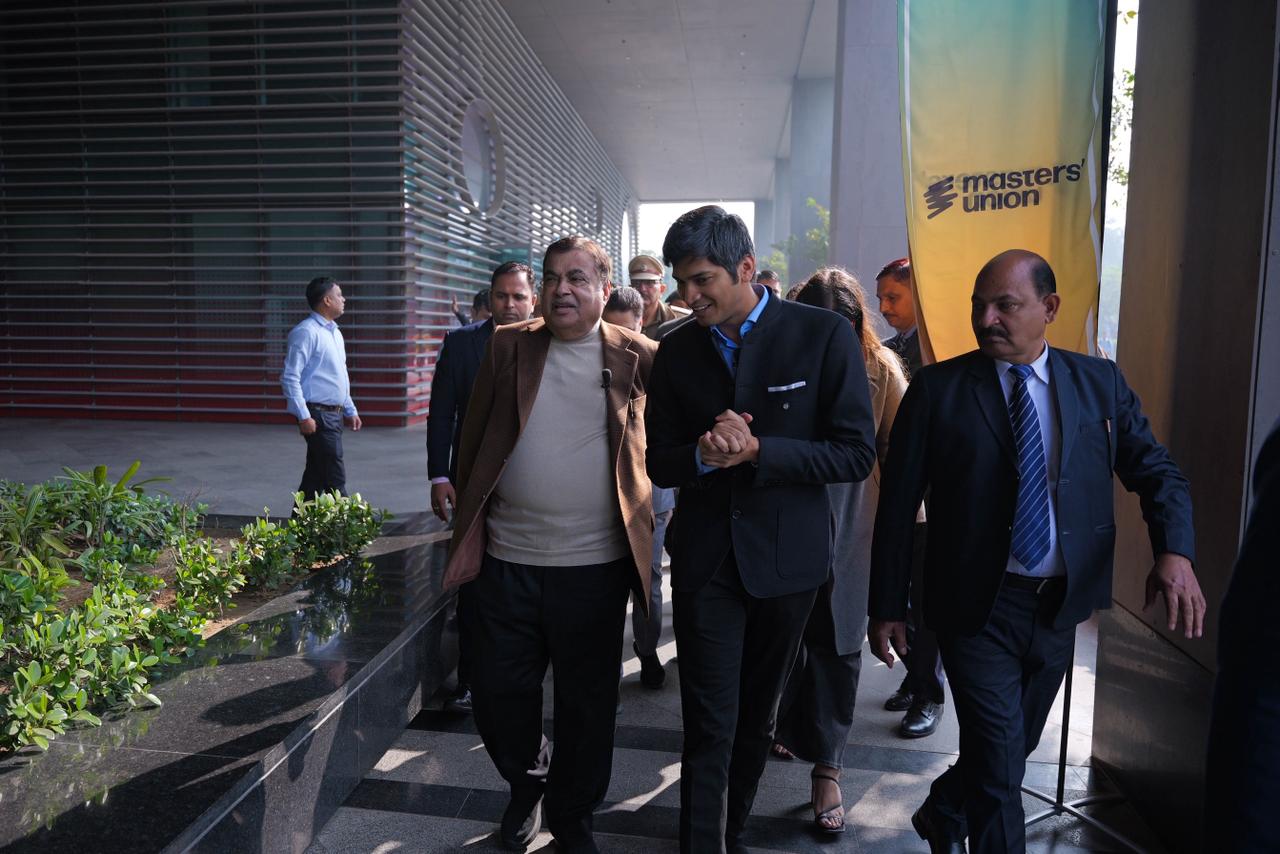
Rejecting the idea of a single-solution transition, the Hon’ble Minister said India would need to pursue multiple clean mobility pathways in parallel. “Electric vehicles, ethanol, bio-CNG and hydrogen – all of them will have a role. It is not possible that only one technology will solve everything,” he said, adding that innovation and adoption will determine the pace at which each alternative scales.
Making a cost-based argument for alternative fuels, the Hon’ble Union Minister pointed to the price differential between conventional fuels and ethanol, saying petrol currently costs around Rs. 120 per litre, while ethanol can be produced at an effective cost of around Rs. 25 per litre, while also helping reduce emissions.
Linking cleaner fuels and infrastructure investment to economic outcomes, the Hon’ble Union Minister also spoke about the impact of improved highways on logistics efficiency. He said India’s logistics cost, which earlier stood at around 16 per cent, has now come down to about 9 per cent, bringing it closer to global benchmarks. According to him, lower logistics costs directly improve export competitiveness and reduce the cost of doing business for Indian manufacturers.
He also spoke about hydrogen as a long-term strategic opportunity for India, stating, “Hydrogen is the fuel of the future. Today we are energy importers, but with hydrogen, India can become an energy exporter.” According to him, alternative fuels could help redirect capital currently spent on imports towards rural, agricultural and manufacturing sectors.
The full episode of Series C is available on Masters’ Union’s official digital platforms. Series C is Masters’ Union’s podcast series featuring conversations with leaders across public life and industry, hosted by Pratham Mittal, where students engage speakers on real-world leadership, decision-making, and the trade-offs that shape outcomes. Other eminent personalities who appeared on this podcast are Ronnie Screwvala, co-founder Upgrad, Kiren Rijiju, Union Minister of Parliamentary Affairs of India, Shiv Shivakumar, former Chairman and CEO of PepsiCo, etc.
About Masters’ Union:
Masters’ Union is a premium tech & business school based in the corporate district of Gurugram. It was founded in 2020 with the philosophy of hands-on learning where students learn by doing. The leadership behind Masters’ Union consists of graduates from Stanford, Wharton, and IITs and IIMs. Unlike traditional colleges, the faculty at Masters’ Union comprises MDs, CXOs and AI Experts from companies such as Amazon, Apple, IBM, McKinsey, PwC, and KPMG. Additionally, the Institute also brings in faculty from the world’s top-ranked universities such as Oxford & Harvard. Visit www.mastersunion.org