

BIMCO calls for immediate end to attacks on international shipping
LONDON : One month ago, a series of unprovoked attacks on merchant ships began in the Southern Red Sea, Bab El-Mandeb, Gulf of Aden and the Arabian Sea. It is widely believed the attacks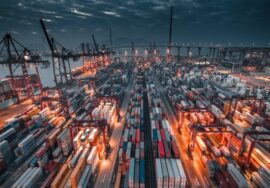
Container freight rates fall to 2019 levels while costs remain high : BIMCO
LONDON : Liner operators continue to struggle with a worsening supply/demand balance, affecting freight rates. On average, the fleet has grown 5% and 19% compared with 2022 and 2019 respectively. On the other hand,
BIMCO: Containerships hit their highest average age to date
COPENHAGEN : Containerships have now reached their highest average age to date, standing at 14.2 years. This places them as the oldest vessels among the three major shipping sectors. In contrast, dry bulk vessels
BIMCO adopts new CII clause for Voyage Charter Parties
LONDON : The shipping industry is facing an increase in new regulations from the International Maritime Organization (IMO) and the European Union (EU) and an increase in the urgency to decarbonise. To support the
Nikolaus H. Schües elected BIMCO President
LONDON : BIMCO, the world’s largest shipping association, has elected Nikolaus H. Schües, CEO and owner of Reederei F. Laeisz, as President at the organisation’s general meeting in Hong Kong on Thursday 25 May 2023. Nikolaus H.
Charter Parties Holding Back Industry Decarbonization Efforts : White Paper Launched by Nautilus Labs and BIMCO
NEW YORK : Nautilus Labs, the technology partner pioneering the decarbonization of the ocean supply chain, and BIMCO, the world’s largest international shipping association, released a white paper imploring the maritime industry to rethink
Over 15,000 ships could be recycled by 2023, up more than 100% on the last 10 years
COPENHAGEN : “Over the next ten years, from 2023 to 2032, more than 15,000 ships with deadweight capacity of more than 600 million tonnes are expected to be recycled, more than twice the amount
Brazil’s 2023 maize exports could rise 8%, benefitting shipping : BIMCO
COPENHAGEN : “Brazil remains on track for a record maize harvest this year, and exports could rise 8% in 2023. Brazil could thereby become the world’s largest maize exporter this year, which would partially