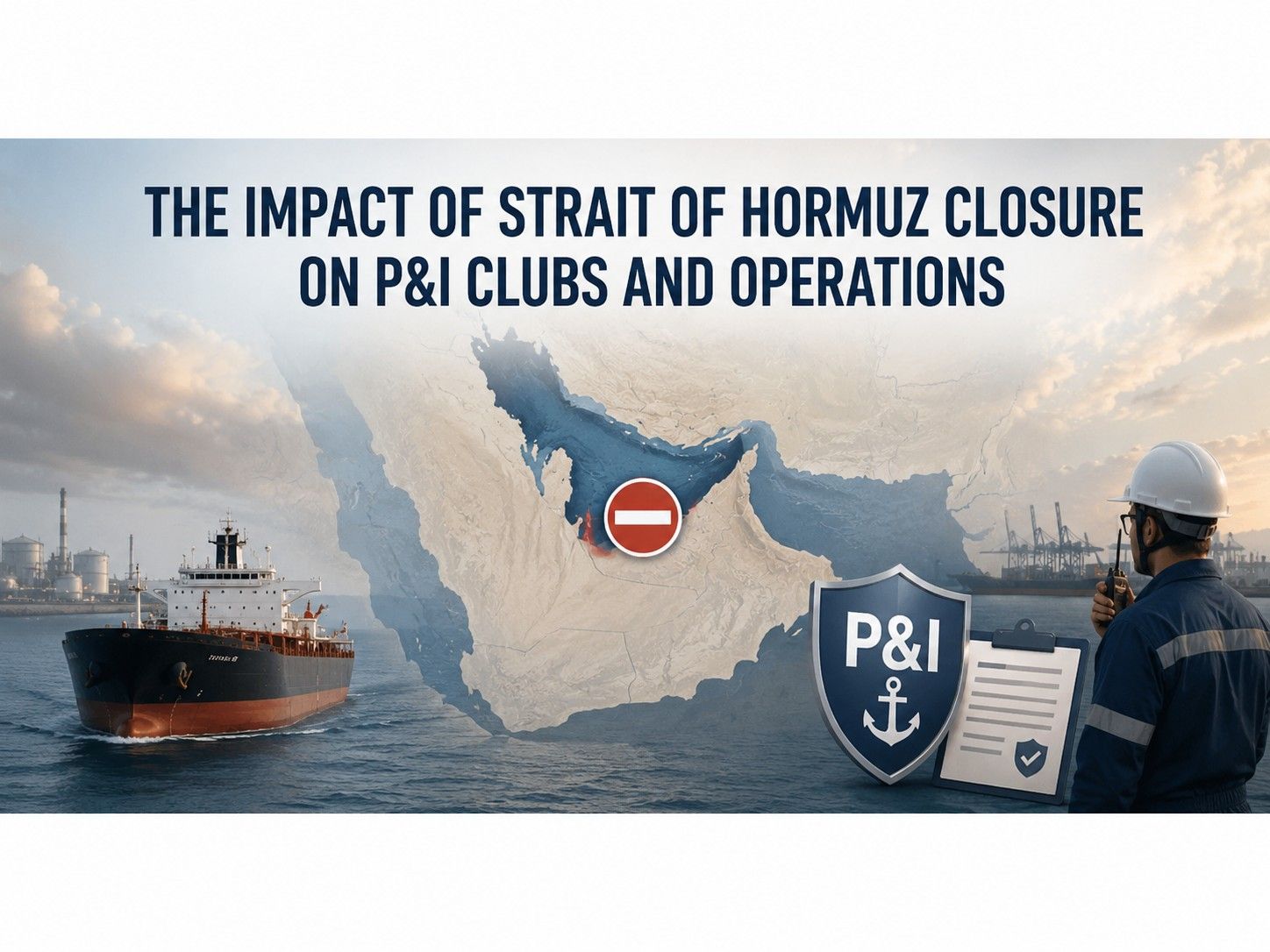
TALKING POINTS: The Impact of Strait of Hormuz closure on P&I Clubs and Operations
By Priyatham Sanjeeva Reddy Ramidi,Maritime Professional and P&I Expert
As we explored in the previous article, the closure of the Strait of Hormuz would create immediate and significant challenges for the maritime industry, particularly for Protection and Indemnity (P&I) clubs. In this section, we’ll break down specific operational risks, financial implications, and crew challenges that come into play when this vital chokepoint is disrupted.
Port Turnarounds and Rerouting:
When the Strait of Hormuz is closed, vessels will be forced to reroute around the Arabian Peninsula, taking longer and more complex routes that increase operational costs and reduce overall efficiency. This will involve navigating through different channels, with some ships potentially needing to travel through the Cape of Good Hope or bypass certain regions to maintain the schedule. The added distance not only increases fuel consumption but also leads to additional challenges in port turnarounds, where ships are scheduled for disembarkation and embarkation. These changes will lead to operational delays and could result in additional financial claims, particularly for cargo damage and port congestion.
Increased Operational Costs Due to Longer Routes:
As ships are forced to take longer routes, the associated costs will inevitably rise. Fuel consumption is one of the most immediate concerns, as increased travel time means more fuel expenditure, especially for vessels traveling through areas with less direct access to major shipping lanes. Furthermore, longer voyages require more supplies to sustain the crew and equipment, driving up operating costs. These extended voyages place financial pressure on shipowners, and P&I clubs will face increased claims for higher operational costs, including damage to the vessel, extended crew service, and potential delays in delivery times.
Security Risks and Piracy:
The rerouting of vessels from Hormuz will likely pass through regions with higher risks of piracy and maritime crime. As ships venture farther into high-risk zones, they will become more vulnerable to piracy attacks and other security incidents. Piracy along the Horn of Africa and other piracy-prone areas increases the likelihood of ransom demands and the loss of cargo, both of which are covered under war risk insurance but could lead to significant claims for P&I clubs. The increase in piracy-related incidents will put more strainon insurance providers, raising war risk premiums and potentially creating a wave of claims tied to stolen or damaged cargo, as well as the cost of crew recovery.
Increased Regulatory Scrutiny:
The closure of the Strait of Hormuz could also result in greater regulatory scrutiny for ships that are forced to take alternative routes. This is especially relevant for international shipping standards and compliance regulations, which vary depending on the regions in which vessels operate. For instance, ships rerouting through regions with specific environmental or security regulations may be subject to additional inspections, stricter compliance requirements, and costly delays. P&I clubs may need to guide shipowners through the increasing complexity of these regulatory challenges, which could add to the overall operational cost and risk.
War Risk Insurance and Increased Premiums:
One of the most immediate consequences of a disruption in the Strait of Hormuz is the increase in war risk premiums for ships transiting through potentially conflict zones. Given the geopolitical instability of the region, war risk insurance becomes a more significant consideration for shipowners. Higher war risk premiums will result in increased costs for shipping companies, which will, in turn, lead to higher premiums for P&I coverage, especially for vessels navigating through more volatile regions. The threat of armed conflict will increase the financial exposure for shipowners, leading to a potential spike in P&I claims related to vessel damage, crew safety, and cargo risks.
Crew Fatigue and Increased Operational Risks:
As voyages are extended due to rerouting, crew fatigue becomes a serious concern. Long periods at sea, especially in high-risk zones, put additional strain on the crew, leading to mental and physical fatigue, which, in turn, increases the likelihood of accidents and safety incidents onboard. Crew welfare and the risk of workplace injuries are areas where P&I
clubs may see an uptick in claims. The challenge for P&I clubs will be in covering these human resource risks, which often lead to crew injury or illness claims. Additionally, fatigue-related incidents might lead to ship accidents, further escalating the operational risk.
Environmental and Pollution Risks:
One of the most concerning aspects of rerouted shipping routes is the increased exposure to environmental risks. Ships forced to navigate through unfamiliar or high-risk waters may encounter new challenges such as adverse weather conditions, shallow waters, or areas with poor navigational infrastructure. This increases the likelihood of accidental pollution, especially in regions not equipped to handle major environmental disasters. With the heightened risk of spills, marine pollution, and damage to local ecosystems, P&I clubs could face a surge in claims related to environmental damage and pollution control. Ships may also need to comply with stricter environmental standards, further increasing operational costs.
Increase in Claims Due to Longer Voyages:
The extended voyages and increased exposure to challenging conditions lead to a higher frequency of accidents and incidents. The likelihood of ship damage rises with increased travel times and unfamiliar routes, which may involve more complex navigation or even adverse weather conditions. These increased risks of collision, cargo damage, and mechanical failure will lead to a surge in claims for P&I clubs. As the frequency of claims increases, premiums may rise for shipowners, and P&I clubs may face additional financial liabilities.
Conclusion: Managing the Impact on P&I Clubs
The closure of the Strait of Hormuz has wide-reaching consequences for the maritime industry, particularly for P&I clubs and the insurance policies they oƯer. The operational challenges that arise from rerouting vessels, increased fuel consumption, security risks, and regulatory compliance all lead to greater financial exposure for both shipowners and their insurers. With higher premiums and an increase in the frequency of claims, P&I clubs will need to adjust their policies and provide additional support to their members to manage the new risks.
As the industry adapts to these challenges, P&I clubs will play an essential role in ensuring that shipowners are equipped to handle the risks posed by geopolitical instability, and in turn, continue to keep global trade moving despite the challenges in the Strait of Hormuz.
Author:

Priyatham Sanjeeva Reddy Ramidi, Maritime Professional and P&I Expert.
Priyatham Sanjeeva Reddy, Ramidi currently works in maritime technical and operational roles with a focus on the intersection of ship technical operations and risk management.
Disclaimer: The views expressed in this article are those of the author and do not necessarily represent the views of India Shipping News. The publication assumes no responsibility for the accuracy or completeness of the information presented.