
Union Budget 2026-27: Major push for seamless Port-to-Hinterland Connectivity and Multimodal Logistics
NEW DELHI : The Ministry of Ports, Shipping and Waterways has outlined significant initiatives to strengthen India’s logistics backbone, in line with the announcements made in the Union Budget 2026–27. The measures are aimed at enhancing seamless port-to-hinterland connectivity and creating a more efficient, sustainable, and integrated transport ecosystem.
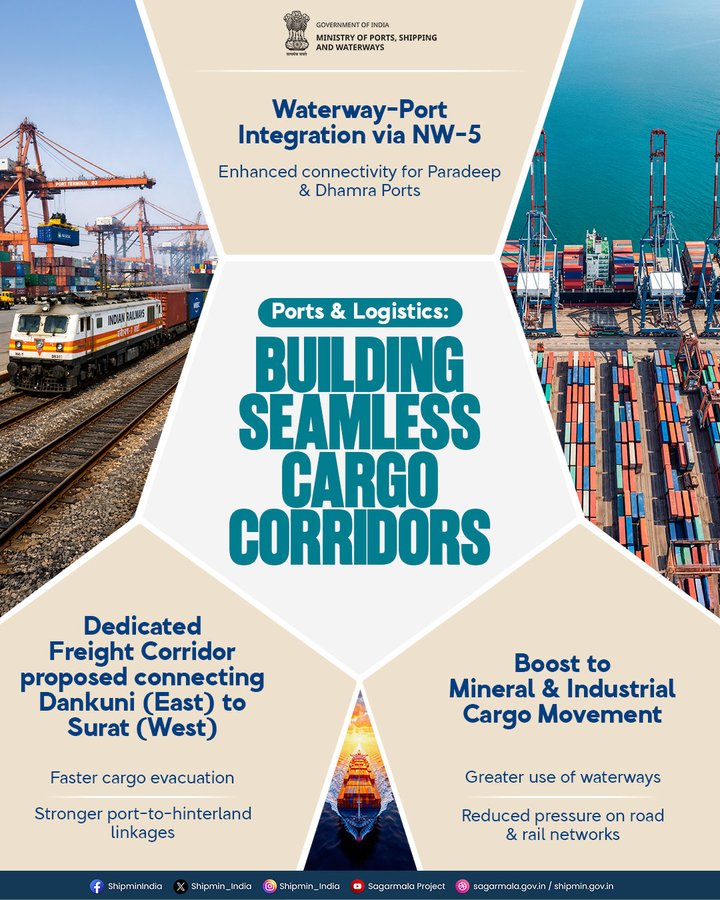
A key highlight is the proposed Dedicated Freight Corridor (DFC) connecting Dankuni in the East to Surat in the West. The corridor is expected to substantially improve cargo evacuation efficiency and streamline access to major ports across regions. By enabling faster, more reliable movement of goods, the DFC will reduce transit time, enhance supply chain predictability, and lower logistics costs—benefiting exporters, manufacturers, and trade stakeholders nationwide.
In parallel, the Ministry is advancing the integration of National Waterway–5 (NW-5) with major ports such as Paradeep and Dhamra. This initiative will facilitate the movement of mineral and industrial cargo through inland waterways, offering a cost-effective and environmentally sustainable alternative to conventional transport modes. The development is particularly significant for bulk cargo movement, supporting industries dependent on efficient raw material supply chains.
The multimodal strategy—combining rail, road, and inland waterways—will ease congestion on existing road and rail networks while improving overall logistics resilience. By strengthening connectivity between ports and industrial clusters, the initiatives align with the Government’s broader vision of port-led development and enhanced trade competitiveness.
These strategic interventions reaffirm the Government’s commitment to building world-class infrastructure, boosting economic growth, and positioning India as a global logistics and manufacturing hub.