WCO’s Second Webinar on the Theme of the Year Highlights Customs’ Role in Combating Money Laundering
BRUSSELS : Customs is a key player in detecting and combating money laundering across borders.
Strong inter-agency cooperation is essential to tackle evolving financial crime threats.
By disrupting illicit financial flows, Customs helps protect society, economies, and communities from criminal activity.
On 12 June 2026, the World Customs Organization (WCO) successfully held the second webinar in its series dedicated to the 2026 theme “Customs Protecting Society through Vigilance and Commitment”. These webinars have been designed to foster dialogue among the Customs community and interested stakeholders on key issues affecting cross-border enforcement activities and initiatives.
“Customs’ hidden efforts: Combatting Money Laundering for a Safer Society”
The second webinar brought together representatives from Customs administrations, international organizations, law enforcement agencies, academia and the private sector to discuss the growing role of Customs in tackling illicit financial flows.
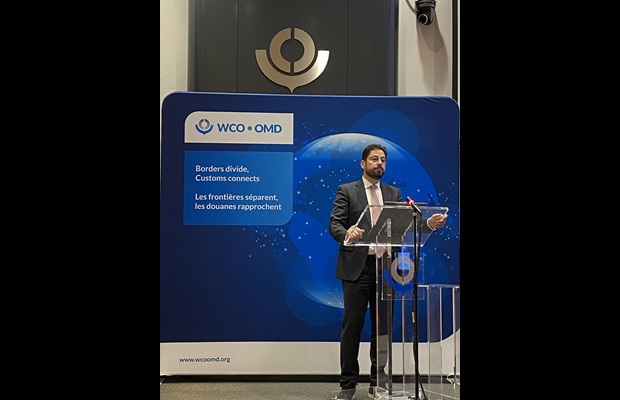
In his opening remarks, Ricardo Trevino Chapa, WCO Deputy Secretary General emphasized the central role of Customs in combating financial crime, stating: “From the WCO’s perspective, Customs is not on the margins of this fight. Customs is right on the operational front lines.” He also stressed that the Organization’s efforts extend well beyond any one initiative: “Our work is broader than any single project. It includes policy support, operational capacity building, knowledge development, intelligence-sharing mechanisms and international partnership-building.”
The webinar underscored the significant threat posed by money laundering to economic stability, public security and good governance.
Keynote Address: “Cash Couriers, Trade-Based Money Laundering (TBML), and the Financial Action Task Force (FATF) Recommendations: What Customs Needs to Know.”
The FATF Secretariat provided a keynote address providing comprehensive insights into linkages between Cash Couriers and Trade-Based Money Laundering (TBML). They emphasized that Customs must be a central actor in the Anti-Money Laundering/Countering the Financing of Terrorism (AML/CFT) system as it operates at both the physical and trade borders, holds critical financial data, and can detect illicit value movements before they enter the financial system.
The FATF – a 40-member body that sets international standards to ensure national authorities can effectively go after illicit funds linked to drugs trafficking, the illicit arms trade, cyber fraud and other serious crimes – shared recommendations for Customs around risk assessment, national and international cooperation, money laundering offences, confiscation, investigative powers, and cross-border currency and bearer negotiable instruments.
They stressed that cash-courier controls should be intelligence-led and linked to investigations, prosecutions and confiscation, while TBML requires cooperation between Customs, FIUs, banks, police, tax authorities and prosecutors because no single agency can detect it alone. Their key message was that Customs should not only be viewed as a border-control authority, but as an essential contributor to financial intelligence, disruption of criminal networks and protection of the financial system.
Panel discussion: “From Cash Couriers to Fictitious Trade: How Customs–FIU Cooperation Turns Detection into Action”
During a highly engaging and insightful panel, representatives from the WCO, Hong Kong Customs and the Egmont Group brought participants into a discussion on the heart of the challenges and opportunities surrounding the fight against financial crime.
Looking at cooperation to tackle exploitation in Cash Couriers and implications of Fictitious Trade, the speakers explored how closer collaboration between Customs administrations and Financial Intelligence Units (FIUs) enhances the detection, analysis and disruption of illicit financial flows.
Drawing on operational experiences and international best practices, the panel highlighted the critical role of information sharing, intelligence-led investigations and cross-border partnerships in transforming suspicious activities into concrete enforcement outcomes.
The webinar provided a valuable platform for sharing knowledge and raising awareness of Customs’ often unseen contribution to combating financial crime. It further demonstrated the WCO’s commitment to supporting its Members in protecting society and strengthening the integrity of the global trading system through enhanced vigilance, cooperation, and enforcement.
Next up in the “Protecting Society” Webinar Series
The third webinar will take place on 22 September 2026 and will focus on a timely and highly relevant topic: “Building Resilient Supply Chains to Protect Society.” The session will explore the role of Customs and its partners in strengthening supply chain resilience, mitigating emerging risks and ensuring the secure and efficient movement of legitimate trade.