

With 8.6 km of quay line, nearly 1,000 AI-enabled autonomous vehicles and operations commencing from 2028, Singapore accelerates its ambition to become the world’s leading intelligent maritime and logistics hub
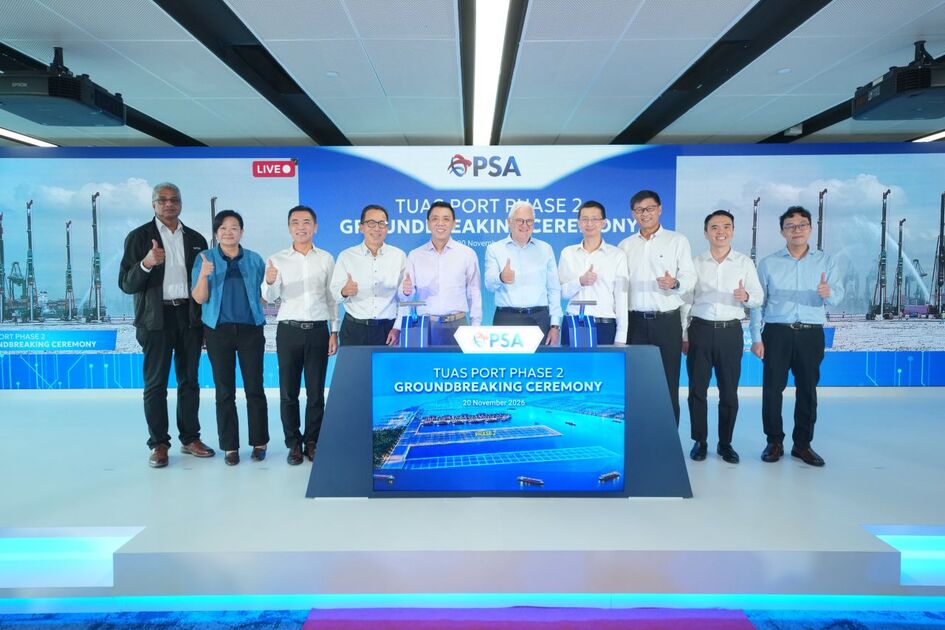
SINGAPORE: PSA Singapore has officially broken ground on Phase Two of Tuas Port, marking another significant milestone in Singapore’s ambitious maritime infrastructure development programme. The expansion will further strengthen the country’s position as a leading global transshipment hub and advance the development of what is envisioned as the world’s largest fully automated container port.
The groundbreaking ceremony, held on November 20, 2026, was attended by Mr. Jeffrey Siow, Minister for Transport and Second Minister for Finance, Singapore, and Mr. Peter Voser, Group Chairman of PSA International, along with industry partners, union leaders and other stakeholders.
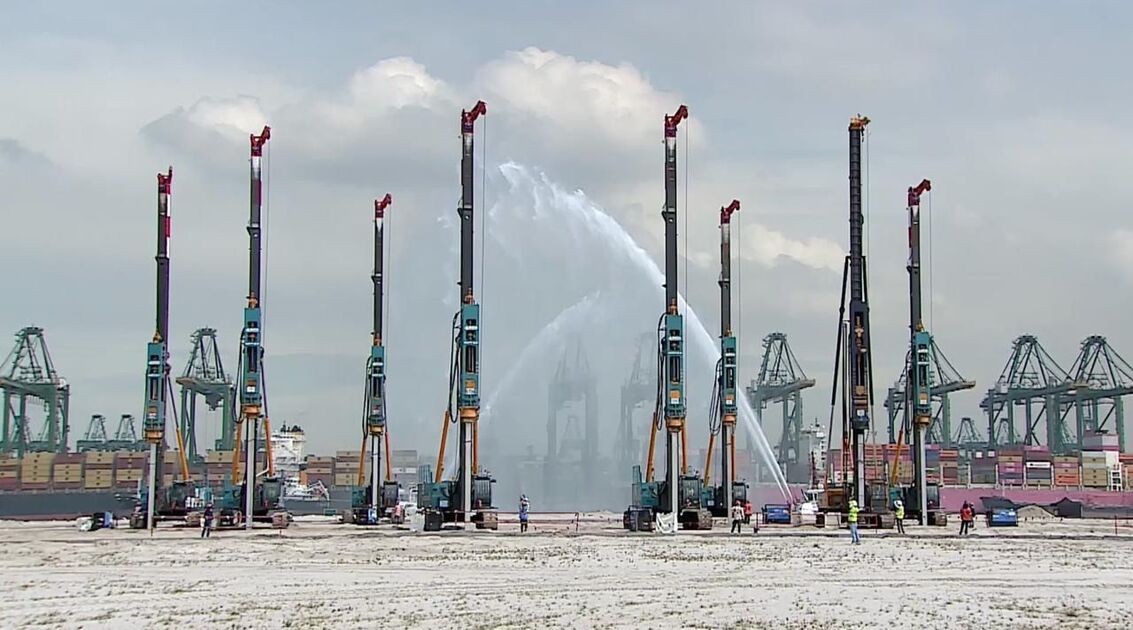
Phase Two to Add 21 Mega Berths and 8.6 km of Quay Line
Phase Two represents the largest of the four development phases of Tuas Port in terms of wharf length. The project will feature 21 deepwater mega berths with a total quay length of 8.6 kilometres and a water depth of 23 metres.
Spread across nearly 400 hectares of reclaimed land, the new development is designed to accommodate some of the world’s largest container vessels, significantly enhancing Singapore’s container handling infrastructure and capacity to manage growing international trade volumes.
Operations at Phase Two will commence progressively from 2028, with all 21 berths expected to become operational by the mid-2030s.
The expansion will provide additional capacity to handle evolving global trade flows, strengthen transshipment connectivity and support the increasing requirements of international shipping lines and cargo owners.
Nearly 1,000 AI-Enabled Intelligent Guided Vehicles to Transform Port Operations
A major highlight of Phase Two will be the extensive deployment of advanced automation and artificial intelligence (AI) technologies to enhance operational efficiency, safety and reliability.
Upon completion, the expanded terminal is expected to deploy close to 1,000 autonomous, AI-enabled Intelligent Guided Vehicles (IGVs) for container transportation across the port.
Unlike conventional automated guided vehicles that generally operate along predetermined routes, the next-generation IGVs can independently calculate and optimise their routes, responding dynamically to changing traffic conditions and operational requirements.
The integration of these intelligent vehicles with automated quay cranes, digital platforms and advanced terminal management systems will facilitate more coordinated cargo movement and improve overall terminal productivity.
Singapore is also exploring emerging technologies such as shore-to-ship drones for transporting urgent spare parts, fuel samples and supplies to vessels, further demonstrating its commitment to developing next-generation maritime operations.
Integration with PSA Supply Chain Hub @ Tuas
Beyond expanding container handling capacity, PSA’s vision is to develop Tuas Port as an integrated maritime and logistics ecosystem.
A key component of this strategy is the PSA Supply Chain Hub @ Tuas, which will be closely integrated with port operations. The facility is intended to strengthen logistics, warehousing, distribution and value-added supply chain services alongside the container terminal.
The integration of port infrastructure, logistics facilities, digital platforms, data and operational processes will enable more seamless movement of cargo and information across maritime and land-based supply chains.
This connected ecosystem is expected to create additional efficiencies for shipping lines, freight forwarders, logistics companies, manufacturers and international cargo owners by bringing multiple supply chain activities closer together.
Singapore Targets 65 Million TEUs Annual Capacity by the 2040s
Tuas Port is being developed in four phases as part of Singapore’s long-term strategy to consolidate its container port operations at a single location.
When fully completed in the 2040s, the port is expected to have 66 mega berths and an annual handling capacity of approximately 65 million TEUs, making it the world’s largest fully automated container port.
Addressing the groundbreaking ceremony, Transport Minister Jeffrey Siow highlighted that Tuas Port had already handled 25 million TEUs since opening in 2022.
He also outlined Singapore’s broader maritime development priorities, focusing on expanding capacity across the port and maritime ecosystem, leveraging technology and innovation, and investing in people.
The development is expected to reinforce Singapore’s maritime connectivity, which links the country to more than 600 ports worldwide, while supporting its wider manufacturing, logistics and services sectors.
Peter Voser Highlights Long-Term Commitment to Global Trade
Commenting on the milestone, Mr. Peter Voser, Group Chairman of PSA International, emphasised the importance of continued investments in infrastructure, technology and connectivity amid changing global supply chains and evolving trade dynamics.
He highlighted that Tuas Port represents PSA’s long-term commitment to strengthening Singapore’s position at the heart of global trade.
He also underscored that Phase Two is not simply about adding container handling capacity but about laying the foundations for a more integrated port ecosystem capable of delivering greater value to customers, partners and the wider supply chain