

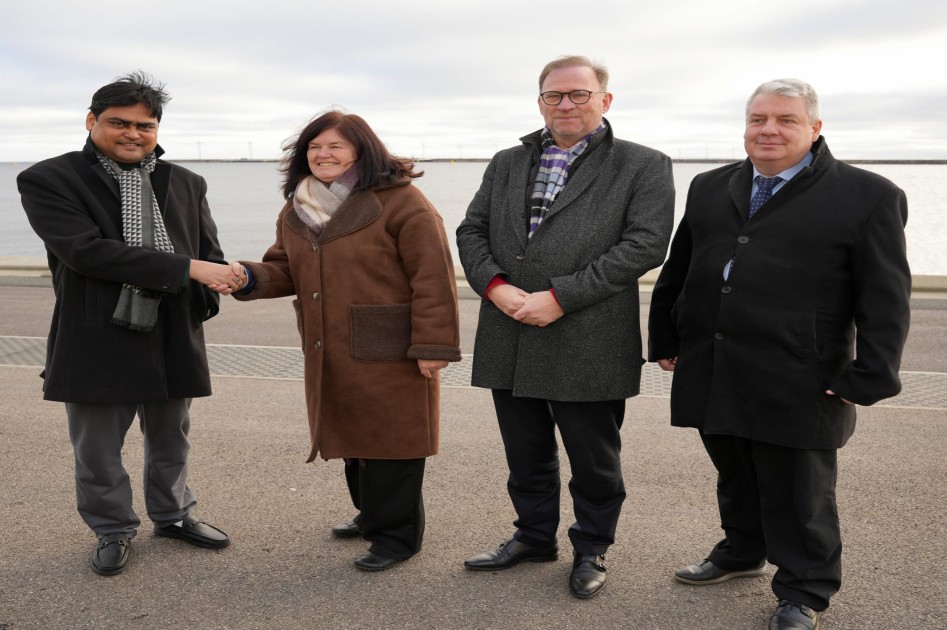
COPENHAGEN: Strengthening India’s commitment to maritime decarbonisation and international cooperation, Shri Shantanu Thakur, Hon’ble Minister of State for Ports, Shipping and Waterways, Government of India, accompanied by a high-level official and business delegation, undertook a series of engagements in Denmark to explore advanced green maritime technologies and opportunities for deeper India–Denmark collaboration in sustainable shipping and port development.
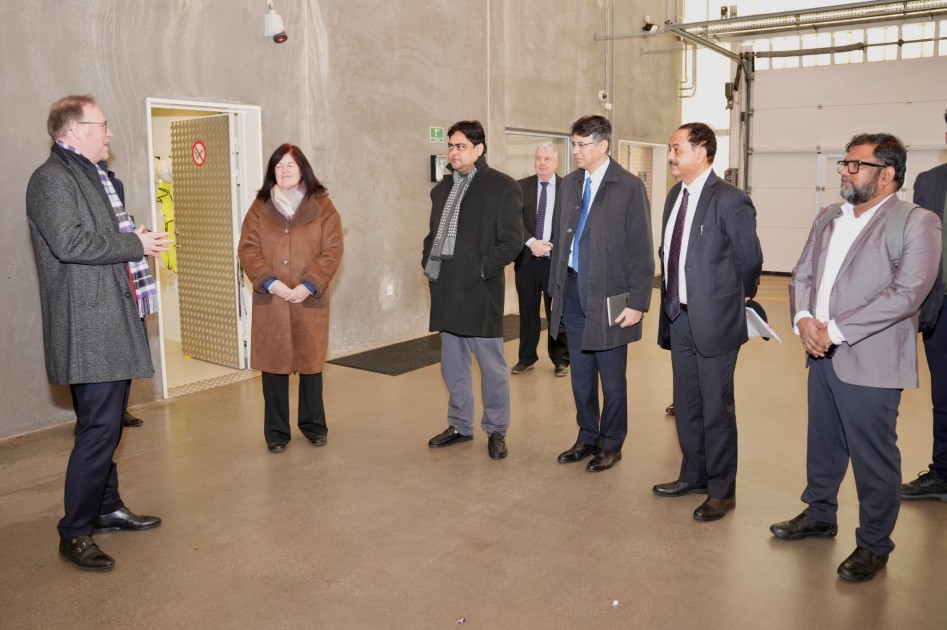
As part of the visit, the Minister and the delegation visited Everllence, where they interacted with the company’s senior leadership and technical representatives to explore the development and application of next-generation green ammonia-based marine engines. The discussions focused on emerging propulsion technologies, alternative marine fuels and the potential for accelerating the transition towards low- and zero-emission shipping.
During the interaction, Mr. Bjarne Foldager, Senior Vice President and Head of Two-Stroke Business at Everllence, delivered a detailed presentation outlining the company’s global business operations, technological capabilities and existing collaborations and activities in India. The delegation also visited Everllence’s two-stroke green ammonia engine facilities, gaining insights into the development of alternative-fuel propulsion systems and their potential application in the global shipping industry.
The engagement assumes significance as India advances its maritime decarbonisation agenda through the adoption of cleaner marine fuels, energy-efficient vessel technologies and sustainable shipbuilding practices. Green ammonia, alongside other alternative fuels, is emerging as a potential pathway for reducing greenhouse gas emissions from shipping, subject to the development of appropriate fuel infrastructure, safety standards and commercial viability.
Engagement with Danish Maritime Authorities on Green Port Development
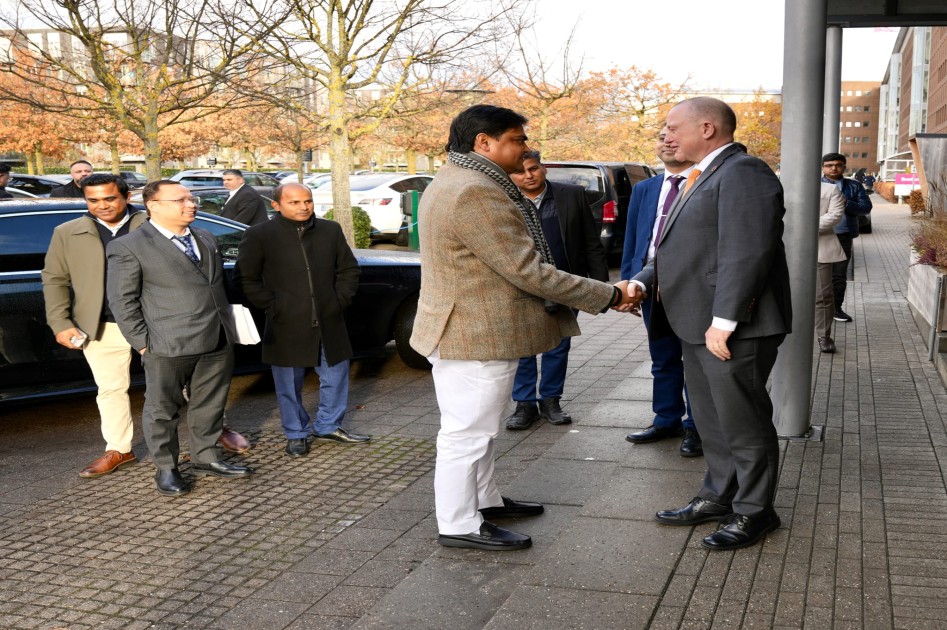
In another important engagement, Shri Shantanu Thakur and the Indian delegation visited the Port of Copenhagen (CPH), where they met Ms. Karina Lorentzen Dehnhardt, Minister of Urban and Rural Affairs and Transport, Denmark.
The discussions centred on the green transition of ports and their increasingly important role in decarbonising the maritime transport and shipping ecosystem. Key areas of interaction included the development of Onshore Power Supply (OPS) facilities, bunkering infrastructure for green marine fuels, port electrification and the adoption of sustainable port operations.
The Minister also explored the organisational and operational structure of Danish ports, including their approaches to infrastructure management, electrification and the integration of clean energy solutions into port activities. The exchange provided an opportunity to understand Denmark’s experience in developing environmentally sustainable port infrastructure and identify potential areas for knowledge-sharing and technological cooperation.
Onshore Power Supply, which enables vessels to connect to shore-side electricity while berthed, can help reduce emissions and noise pollution from ships operating auxiliary engines at ports. Similarly, the development of green fuel bunkering facilities and electrified port equipment will be essential to building an integrated, sustainable maritime ecosystem.
India–Denmark Cooperation: Advancing the Green Maritime Agenda
The engagements reflect the growing scope of India–Denmark maritime cooperation, particularly in the areas of green shipping, clean marine technologies, sustainable port infrastructure and alternative fuel development.
India’s maritime transformation agenda, supported by initiatives such as the Maritime India Vision 2030 and Maritime Amrit Kaal Vision 2047, places considerable emphasis on modernising ports, strengthening domestic shipbuilding, promoting alternative marine fuels and reducing the environmental footprint of maritime operations.
Denmark, with its established maritime expertise and growing focus on clean-energy technologies, offers opportunities for collaboration in technology development, innovation, infrastructure planning and capacity building.
The interactions with Everllence and Danish maritime authorities are expected to provide a platform for closer engagement between Indian and Danish industry stakeholders, technology providers, port authorities and shipping companies. Potential areas of cooperation include green ammonia propulsion, alternative-fuel infrastructure, shore-side electrification, energy-efficient port operations and sustainable maritime solutions.
The visit reinforces India’s determination to strengthen international partnerships and accelerate the transition towards a cleaner, more technologically advanced and globally competitive maritime sector, while creating new avenues for investment, innovation and cooperation between India and Denmark.