


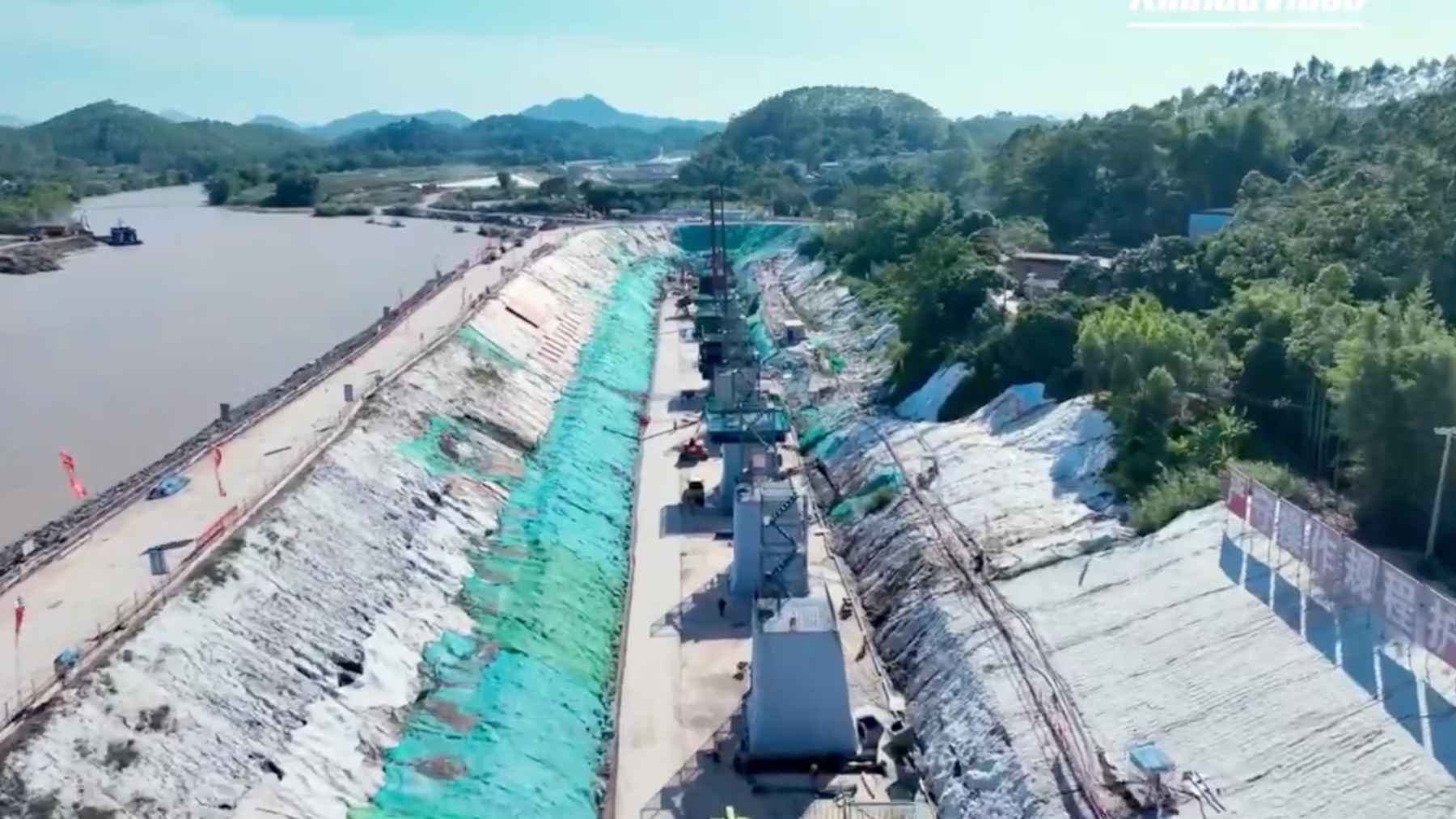
BEIJING : China is pushing ahead with the Pinglu Canal, a massive 83-mile (134-kilometer) waterway designed to let ships move from inland rivers to international sea routes. The project is meant to speed up freight from the country’s southwest, cut costs, and deepen trade links with Southeast Asia.
If you have ever waited on a late delivery or watched shipping fees creep up, you have seen why projects like this matter. The canal is a new shortcut that could reshape how goods flow out of cities like Nanning, with construction expected to finish in late 2026.
What just happened on the canal route
A new bridge opening this week offered a snapshot of how far the project has come. The Zicai Bridge, one of 27 planned crossings, officially opened to traffic over the canal route.
That kind of milestone sounds local, but it signals bigger changes ahead. Once ships can move smoothly under bridges and through locks, the canal becomes a working highway for cargo on the water.
Where this canal actually goes
The route links Nanning, the capital of China’s Guangxi region, to the Gulf of Tonkin, which Chinese sources often call the Beibu Gulf. It follows the Qinjiang River for much of its length before reaching the coast.
In plain terms, it is meant to connect river shipping inside China with ocean-going routes without forcing cargo to exit through Guangdong, the traditional gateway province. That matters because distance still drives cost, whether the cargo is electronics or everyday groceries.
Locks, bridges, and the ship elevator problem
A canal sounds like a trench with water in it. In reality, Pinglu must overcome a water level drop of about 213 feet (65 meters) from start to finish, which is why the design relies on ship locks.
A ship lock works like a water elevator for boats. Gates close behind a vessel, water rises or falls inside a chamber, and then gates open so the ship can continue at a new height.
A project overview released in late 2025 described three double-lane ship lock hubs built to handle the full change in elevation. It also listed 27 bridges being built or upgraded along the route, plus other support infrastructure.
A shortcut with real money behind it
If the canal works as planned, officials say it will cut about 348 miles (560 kilometers) from today’s inland-to-sea routes. That is a big deal for bulk materials and manufactured goods that move in high volumes.The projected savings have been put at more than 5.2 billion yuan a year, or roughly $750 million, mostly from shorter travel times and lower fuel use. For the most part, that is the kind of number that can change where companies choose to build warehouses and factories.
One official update also said the project has already spent close to 90% of its planned budget, signaling that most of the heavy construction is done. The total planned investment has been set at 72.7 billion yuan, about $10 billion, and the canal is scheduled to begin operations by the end of 2026.
Why China is betting on Southeast Asia
The canal is not just about moving goods within China. It is also about making the southwest more competitive in trade with nearby countries, especially in Southeast Asia.
Recent data showed China’s exports to the Association of Southeast Asian Nations, known as ASEAN, rose 13.4% in 2025, while exports to the United States fell 20% in dollar terms. That shift helps explain why Beijing keeps investing in overland and river-to-sea routes that point south.
Beibu Gulf Port, the canal’s coastal endpoint, reported annual container throughput exceeding 10 million TEUs, a standard way ports count shipping containers, in 2025. Local officials and companies say that kind of growth could draw more industry inland, turning Nanning into a bigger logistics hub.
The environmental question people keep asking
Digging a 83-mile canal through a living river system raises an obvious question. What happens to fish, wetlands, and local water quality when you change the flow?
Builders say the project includes 36 ecological conservation zones and wildlife crossings, plus a fish passage at one of the lock hubs to help migration. Another official update said a smart monitoring system is already being used to track fish movement in real time.
Researchers also warn that canals can create long-term risks if they bring saltwater farther inland or concentrate pollution in slow-moving sections. A 2024 literature review in the journal Water highlighted how large ship canals can change wetland habitats and stress biodiversity over time.
What to watch next
The main test comes after construction ends. Will the promised time and fuel savings actually show up in shipping bills, and will the canal’s environmental safeguards hold up once traffic increases?
For Guangxi and nearby provinces like Guizhou and Yunnan, the canal is being sold as a faster route to international markets and a magnet for new industrial zones. For everyone else, it is another reminder that infrastructure decisions made today can quietly shape prices and supply chains for years.