



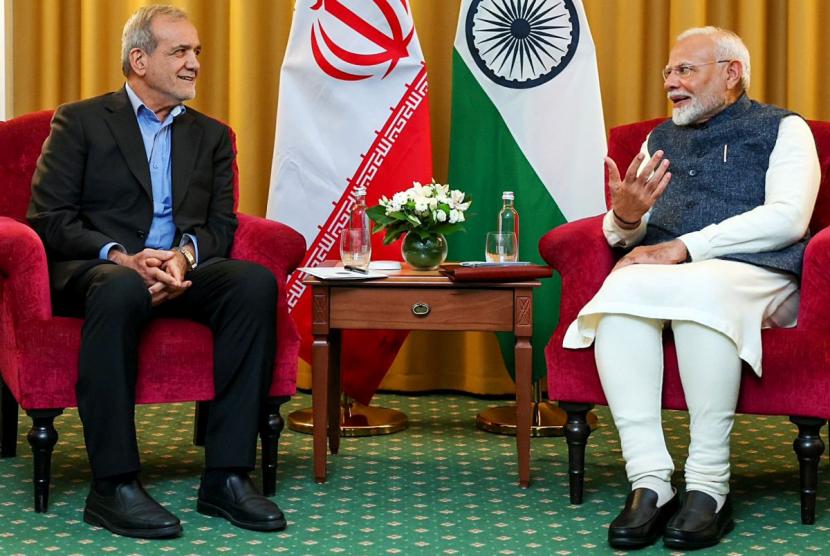
NEW DELHI : Prime Minister Shri Narendra Modi held a telephone conversation with Iranian President Dr Masoud Pezeshkian, discussing the latest developments in West Asia and the path ahead, as the fragile understanding between Tehran and Washington comes under fresh strain.
Iranian President Pezeshkian briefed the Prime Minister on recent developments in the region. PM Modi welcomed the understanding that had been reached between Tehran and Washington and reaffirmed India’s long-standing stance that all issues should be resolved through dialogue and diplomacy.
Spoke with the President of Iran, Dr. Masoud Pezeshkian, on the recent developments in West Asia. Welcomed the progress made in the negotiations and expressed hope that continued efforts will lead to lasting peace in the region. Reiterated the importance of freedom of navigation…
Posting on X, PM Modi wrote, “Spoke with the President of Iran, Dr Masoud Pezeshkian, on the recent developments in West Asia. Welcomed the progress made in the negotiations and expressed hope that continued efforts will lead to lasting peace in the region. Reiterated the importance of freedom of navigation in the Hormuz Strait for India and the World.”
PM Modi stressed the need for continued efforts to secure lasting peace and stability in the region, along with safeguarding freedom of navigation and commerce.
This comes as Iran is preparing for the funeral of Iran’s late supreme leader, killed in US-Israeli air strikes. His funeral, initially delayed at the height of the Middle East war, is set to take place from 5 to 9 July. Iran’s president has invited PM Modi to attend.
The call comes at a delicate moment for the ongoing US-Iran negotiations. Washington and Tehran signed a memorandum of understanding on June 17, which included an end to Iranian restrictions on the Strait of Hormuz, a reduction of US military assets in the region and relief from sanctions, alongside a 60-day timeline to settle the unresolved question of Iran’s nuclear programme. This was followed by a formal four-way meeting between the US, Iran and mediators Qatar and Pakistan in Switzerland’s Bürgenstock resort on June 21 and 22.
However, that agreement came under pressure after US forces struck Iranian military targets after accusing Tehran of attacking commercial shipping in the strait, including a drone strike on an oil tanker.
Iran’s Revolutionary Guard Corps responded by targeting US military sites in Bahrain and Kuwait. US President Donald Trump warned of further military action if the strikes continued, while Iranian officials said any further US action could bring a complete halt to negotiations.