


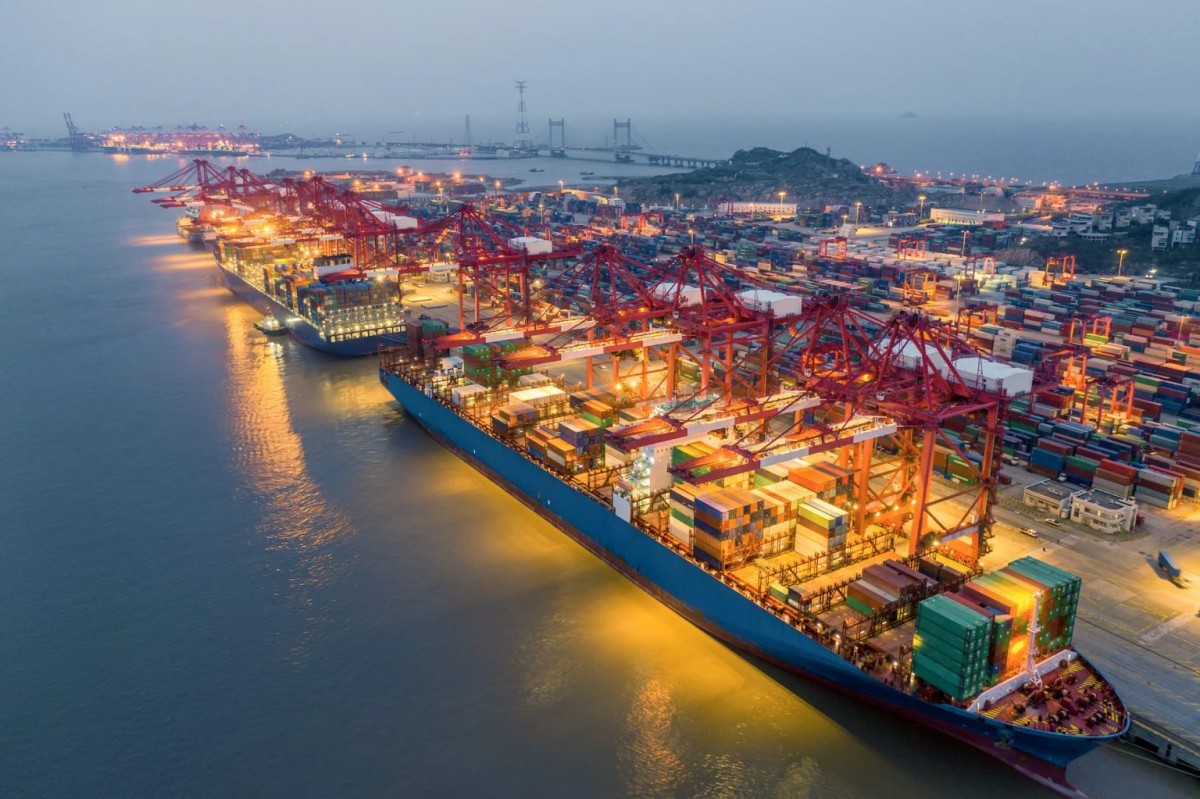
SHANGHAI : Shanghai Port recorded its highest single-day container throughput on 1 August, handling 203,881 TEUs and surpassing the 200,000 TEU mark for the first time, according to Shanghai International Port (Group).
The figure exceeds the port’s previous record of 187,312 TEUs by close to 9 per cent, and comes weeks after Typhoon Bavi disrupted vessel operations at the port for around four days in mid-July.
The storm forced trunk and feeder vessels sheltering offshore to arrive at the port simultaneously once conditions cleared, tightening berth availability and creating a temporary buildup of containers that strained terminal operations, vessel clearance and yard turnover, according to the port group’s official WeChat account.
In response, Shanghai International Port (Group) coordinated resources and introduced measures to clear the vessel backlog and restore terminal capacity. During the recovery phase, daily throughput held steady at 172,000 TEUs, with efficiency improving in the lead-up to Saturday’s record.
Zhao Nan, expert at the Shanghai International Shipping Research Center, said the record reflected the strength of China’s ports in absorbing unexpected disruption.
Despite Typhoon Bavi causing a surge in vessel arrivals and temporary cargo backlogs, Zhao said Shanghai Port had swiftly restored operations and improved handling efficiency, reflecting its capabilities in intelligent management, coordinated scheduling and infrastructure support.
Shanghai Port’s container throughput exceeded 55.06 million TEUs in 2025, a record that kept the port in position as the world’s busiest container port for the 16th consecutive year, according to Xinhua News Agency.
Under the recently released Shanghai 15th Five-Year Plan (2026–2030) for Accelerating the Development of the International Shipping Center, the port is set to play a leading role among ports in the Yangtze River Delta cluster, with annual container throughput targeted to exceed 58 million TEUs by 2030.
Zhao added that continued improvements in international transhipment capacity, alongside further progress in digitalisation and green development, would position Shanghai Port to play a larger role in supporting China’s domestic and international economic circulation, while strengthening its place in the global shipping network.