


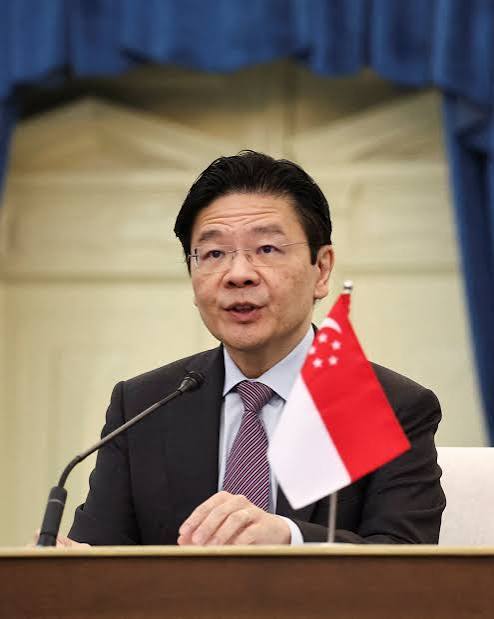
SINGAPORE: Singapore will not allow itself to be used as a conduit for illegal trade practices, but neither can it possibly trace and verify the entire supply chain behind every product that passes through its shores, said Prime Minister Lawrence Wong.
He was referring to the higher 12.5 per cent tariffs imposed by America on Singapore’s exports, due to the alleged use of forced labour, as well as to recent concerns raised by the US over goods being routed through other countries to circumvent tariffs.
However, tariffs are but one symptom of deeper global tensions and a more unstable world that Singapore has to survive and endure for years to come, he added.
PM Wong said during his National Day Rally speech on Aug 23: “Across the globe, the rules and norms that underpinned stability and prosperity for decades are being overturned.”
One reason for this change is that China has risen rapidly and is a peer competitor of the US with deep capabilities in many areas. Both countries have to live with a new reality where they compete fiercely but avoid outright conflict, PM Wong said.
The world is also shaped by other forces like Europe and India, and middle powers are also asserting their interests more actively, he added.
“Power is becoming dispersed,” he said. “Different centres are jostling for influence, competing for markets, technology, resources, and increasingly, over who sets the rules of the game.”
This is reflected in the changing global trading system, which used to be about countries lowering their barriers and tariffs, and having open economies.
“Companies assumed that if one supplier failed, another would easily step in,” PM Wong said.
“That was the world we knew. Now all that is changing.”
He noted that the Covid-19 pandemic was a wake-up call when suppliers that could usually be counted on stopped delivering goods.
This was followed by Russia’s invasion of Ukraine and the current Middle East crisis which expose vulnerabilities in energy, food and other critical supplies, PM Wong said.
Europe was affected when Russia cut off gas supplies during the invasion.
Meanwhile, the Middle East crisis impacted many countries due to the disruption of the Strait of Hormuz, a vital global shipping channel for oil and gas supplies.
Oil prices have skyrocketed to above US$100 a barrel in the past few months, creating inflationary pressures and adding fuel to the global energy crisis.
“Countries have learnt from these crises,” PM Wong said. “Security now weighs much more heavily in their economic decisions.”
Hence, governments are increasingly using trade, technology and investment to advance their strategic and security objectives, he added.
An example was the US imposing “liberation day” tariffs in April 2025 on countries globally.
At that point, the baseline tariff of 10 per cent was imposed on Singapore.
The US courts later ruled the tariffs unlawful, but the US administration found another way to reimpose tariffs, which increased to 12.5 per cent on Singapore due to the alleged use of forced labour.
PM Wong said: “We all agree there should be no place for forced labour. This is a global problem.”
But he said the better way to tackle this issue is through international cooperation and common standards, not tariffs.
The US now expects countries to have domestic measures to stop imported goods made with forced labour, he noted.
Another concern the US has raised is regarding Chinese goods being routed through other countries, especially in South-east Asia, to circumvent its tariff.
PM Wong said Singapore takes both issues seriously.
“We have clear rules and laws in place. We enforce them and we expect companies operating here to comply,” he said, noting that Singapore will investigate and take action if there is credible evidence of wrongdoing.
However, as a major centre for re-exports and transshipment, Singapore also cannot possibly verify the entire supply chain behind every product, he said. Goods pass through Singapore from all over the world.
“We must also be realistic about what Singapore can do on our own,” PM Wong said.
“So we will continue engaging the US and explaining our position.”
But this issue is just part of a larger reality, where trade is no longer just about economics, but increasingly shaped by security considerations, he said.
The tariffs are just one symptom.
“They reflect deeper tensions around the world,” PM Wong said.
He noted that there are major conflicts in Europe and the Middle East that seem far away from Singapore.
“But the conflicts do not always stay neatly contained. Other powers can get drawn in – because of their alliances, their interests, or simply because events force their hand,” he said, adding that new technologies like cheap drones that can inflict serious damage add to the risks.
Hence, the risks of miscalculation and escalation are much higher and a regional conflict can quickly become something bigger.
“Each thinks it is acting defensively. But step by step, the conflict can widen far beyond what anyone originally intended,” PM Wong said.
He added that no one wants another world war, but cautioned that major wars historically have begun because events spiralled out of control, not because they were planned.
“We all hope never to see a global conflict in our lifetimes. But we cannot ignore the growing risks,” he said.
PM Wong noted that there has been more pressure “below the threshold of open war”, with tactics such as economic coercion, foreign interference, disinformation campaigns, and cyberattacks on critical infrastructure.
These grey-zone tactics can cause real damage, even if troops do not physically cross over borders, he said.
“So this is our world today – more contested, more unstable and more dangerous than before,” PM Wong said.
“These are not temporary disruptions. This is the new normal that Singapore will have to endure and survive for many years to come.”
Source : The Strait Times