




COPENHAGEN: Global container vessel schedule reliability dropped to 56.4% in July 2026, a decline of ‑6.1 percentage points (pp) M/M. This is the sharpest single‑month decline since January 2021. Concurrently, the average delay for late vessel arrivals climbed to 6.06 days, an increase of 0.59 days M/M. This pronounced drop was driven primarily by congestion across major Asian ports. All 14 of the region’s busiest ports experienced a decrease in on‑time vessel arrivals, according to Sea-Intelligence report.
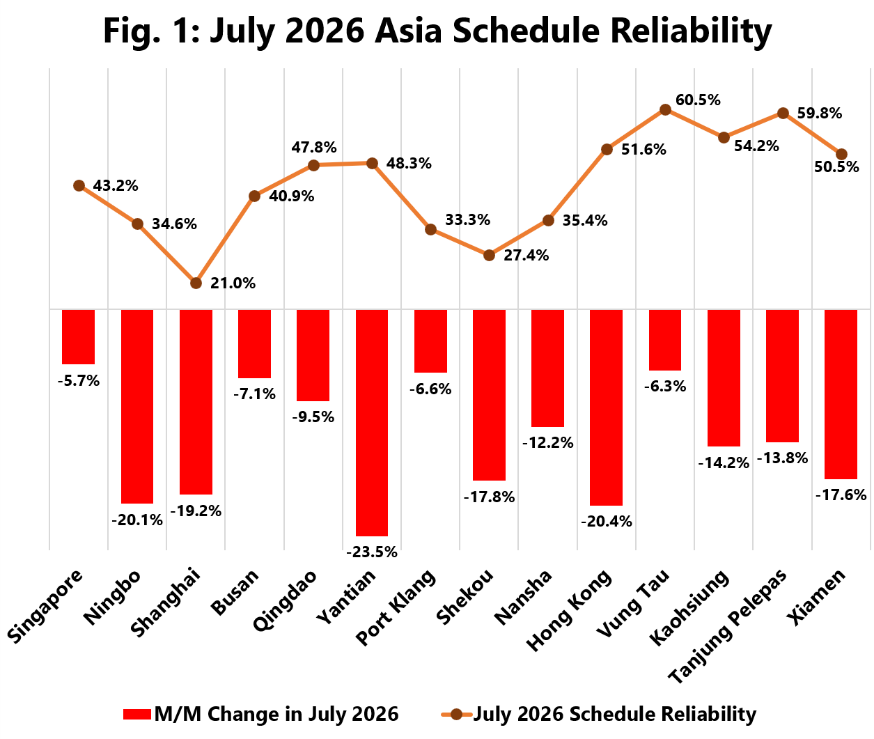
As shown in Figure 1, these 14 major Asian ports saw severe schedule reliability degradation. Yantian took the hardest hit with schedule reliability plummeting 23.5 percentage points (pp) down to just 48.3%. Hong Kong dropped by 20.4 pp to 51.6%, and Ningbo saw reliability fall by 20.1 pp to 34.6%. The situation in Shanghai is particularly alarming. Following a steep decline of 19.2 pp, a mere 21.0% of container vessels arrived at the port on time in July 2026. Outside of extreme pandemic era supply chain disruptions, schedule reliability in Shanghai has never dropped this low in 14 years of recorded data. Even ports with less drastic M/M drops operated at relatively lower levels of schedule reliability in July 2026. Singapore recorded reliability of just 43.2% after a 5.7 pp M/M drop. Similarly, Port Klang had 33.3% reliability, and Busan fell to 40.9%.
With the region’s busiest ports operating with more than half of their incoming vessels delayed, this backlog will naturally cascade through the maritime network, likely triggering a new wave of delays for critical head‑haul trade lanes in the coming months.