


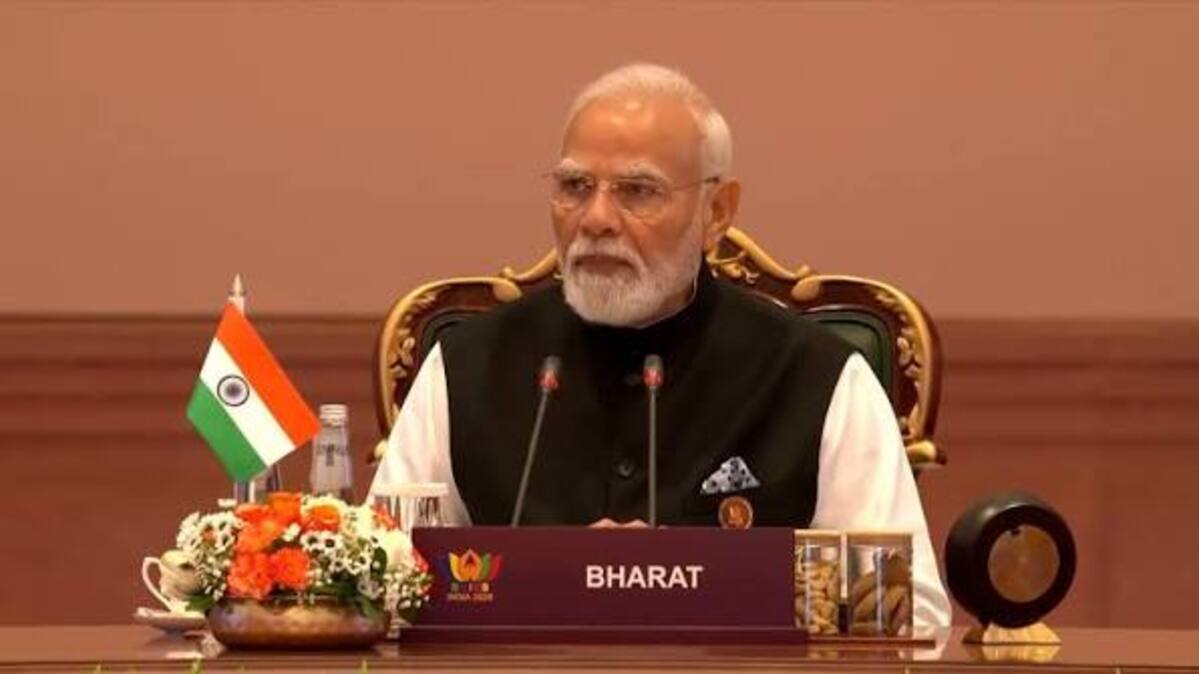
NEW DELHI: Prime Minister Shri Narendra Modi has proposed the creation of a “Seafarers’ Emergency Support Network” among BRICS countries, marking a significant push for greater international cooperation to protect seafarers and safeguard the human element of global maritime trade.
Addressing the inaugural session of the 18th BRICS Summit in New Delhi, Prime Minister Modi highlighted the indispensable contribution of seafarers to international commerce and stressed that their safety and wellbeing must remain a global priority, particularly amid growing geopolitical tensions and disruptions across critical shipping routes.
“Seafarers make a significant contribution to global trade, but they often find themselves without adequate support during difficult times,” the Prime Minister said, proposing the creation of a dedicated emergency support mechanism.
Connecting Maritime Authorities and Missions
Under the proposed network, maritime authorities and diplomatic missions of participating countries could be connected to facilitate coordinated assistance to seafarers caught in emergencies.
According to the proposal, the network could support a range of critical services, including distress alerts, medical assistance, communication with family members and evacuation support. Such a mechanism could provide a coordinated international response when seafarers are stranded, injured, threatened or otherwise affected by emergencies at sea.
The proposal comes at a time when maritime personnel are facing heightened risks from armed conflicts and instability in important shipping corridors. Recent attacks on commercial vessels in and around West Asian waters have underscored the vulnerability of seafarers who continue to operate essential services even during periods of severe geopolitical uncertainty.
‘Seafarer Safety Is Integral to Global Trade’
Prime Minister Modi had already placed maritime security at the centre of his message at the BRICS Business Forum, stressing that global trade can progress only when sea lanes remain secure, supply routes stay open and seafarers are safe.
India, he said, remains a strong advocate of freedom of navigation and the safety of seafarers.
The issue also featured in Prime Minister Modi’s bilateral discussions with Iranian President Masoud Pezeshkian on the sidelines of the summit. According to the Prime Minister’s Office, Modi emphasised the importance of safeguarding freedom of navigation and commerce, as well as the safety and wellbeing of seafarers, amid continuing developments in West Asia.
Growing Importance Amid Maritime Security Challenges
The proposed network assumes greater relevance against the backdrop of attacks and disruptions affecting merchant shipping in conflict zones. India has a particularly strong stake in seafarer welfare, given the country’s large maritime workforce and the significant number of Indian nationals serving aboard merchant vessels worldwide.
The situation has become increasingly concerning in recent months. In July, the Government of India said that Indian nationals, including seafarers, had suffered casualties amid the West Asian conflict. More recently, an attack on the Panama-flagged tanker MT El Gaia off Oman left one Indian seafarer missing while 13 of the 14 Indian crew members were rescued.
These incidents have reinforced the need for faster information-sharing, emergency response and coordinated assistance for maritime personnel operating in high-risk areas.
From BRICS Consensus to Practical Maritime Cooperation
The Seafarers’ Emergency Support Network also fits into India’s broader vision for its BRICS chairship, which Prime Minister Modi has described as people-centric and humanity-first, with resilience, innovation, cooperation and sustainability as key priorities.
The proposal could potentially evolve into a practical framework through which BRICS members coordinate emergency response capabilities, diplomatic assistance and maritime authorities during crises. Such cooperation could prove especially valuable when a vessel encounters an emergency far from its home country and requires assistance involving multiple jurisdictions.
With BRICS countries collectively accounting for a substantial share of global trade, strengthening cooperation on maritime safety could have implications well beyond the grouping itself. The initiative places the welfare of the people who keep global supply chains moving firmly on the international maritime agenda.
A People-Centric Approach to Maritime Security
Prime Minister Modi’s proposal represents a shift in focus from securing ships and sea lanes alone to protecting the people who operate them.
As geopolitical tensions continue to put pressure on global shipping networks, the proposed Seafarers’ Emergency Support Network could become an important platform for ensuring that seafarers are not left without assistance when emergencies strike.
For India, which has consistently advocated freedom of navigation, secure supply chains and seafarer welfare, the initiative also reinforces its growing role in shaping international maritime cooperation.
The message from New Delhi is clear: protecting global trade means protecting the seafarers who keep it moving.