



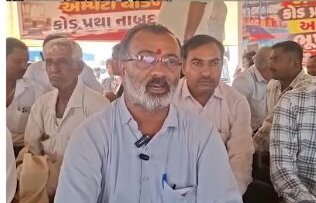
MUNDRA: The long-running dispute over the handling of empty containers at Mundra has entered a fresh phase, with nine persons beginning a hunger strike demanding reconsideration of the decision to freeze codes of empty container yards operating outside the Mundra Port and Special Economic Zone (SEZ) premises.
The latest development has brought renewed attention to the concerns of independent empty-container yard operators and allied stakeholders, even as the port ecosystem continues to adjust to a new framework for handling empty containers.
The dispute primarily revolves around the decision to move towards a more centralised arrangement for empty-container handling at Mundra. Under the new system, shipping lines are expected to utilise designated facilities within the Mundra SEZ for handling empty containers, while codes associated with yards located outside the designated area have been frozen.
The affected operators have been seeking withdrawal or reconsideration of the code-freezing decision, arguing that the change has consequences beyond the empty-container yards themselves. They contend that transport operators, container owners, repair and maintenance businesses, workers and several other small and medium-sized service providers form part of the wider ecosystem that has developed around Mundra’s container trade.
Dispute Over New Empty-Container Framework
The issue has its roots in a decision by Adani Ports and Special Economic Zone Ltd (APSEZ) to introduce a dedicated and more integrated mechanism for empty-container operations at Mundra.
The port operator has maintained that a structured empty-container facility can help streamline operations, reduce unnecessary movement of empty boxes, improve traffic management and strengthen operational controls.
The move, however, has created apprehension among operators of existing facilities outside the port and SEZ boundaries. Their principal demand is that the transition should take into account the investments already made by existing operators and the economic interests of the wider logistics community dependent on these facilities.
The current hunger strike is therefore being seen as an escalation of a dispute that has continued despite earlier discussions between stakeholders.
Earlier Operational Disruption
The issue had already affected container logistics at Mundra earlier this month when empty-container yard operators suspended operations in protest.
The disruption subsequently led to discussions among stakeholders and the operations were resumed. However, the resumption of activity did not result in a complete resolution of the underlying differences concerning the future role of external empty-container yards.
The latest protest indicates that the operators continue to seek a mutually acceptable solution.
SoP Becomes Key Point of Discussion
Another important aspect of the dispute is the proposed framework for empanelment and operation of empty-container yards.
The stakeholders have been discussing a Standard Operating Procedure covering issues such as yard infrastructure, capacity, location, operational standards and container maintenance and repair services.
While a structured framework could bring greater standardisation to the sector, operators have raised concerns about the investment and infrastructure requirements that may accompany the proposed system.
Smaller operators, in particular, are seeking a framework that recognises different operational capacities and allows existing businesses to participate without imposing requirements that could make their operations commercially difficult.
Why the Issue Matters to India’s EXIM Trade
The developments at Mundra are significant because empty containers form an essential part of the export-import logistics chain.
An imbalance between import and export container flows makes efficient repositioning, storage, inspection and repair of empty containers critical for shipping lines and cargo stakeholders. Any prolonged disruption in this segment can potentially have a cascading effect on transport planning, equipment availability and cargo movement.
Mundra is also one of India’s major container gateways, making the smooth functioning of its supporting logistics ecosystem important for exporters, importers, freight forwarders, shipping lines, customs brokers, transporters and container service providers.
Need for Stakeholder Dialogue
The latest development underlines the need for continued dialogue between the port operator, empty-container yard operators, shipping lines, transporters and other affected stakeholders.
The central challenge is to find a framework that can simultaneously address operational efficiency, safety, traffic management and regulatory requirements, while also providing a workable transition path for businesses that have been part of Mundra’s logistics ecosystem for years.
With nine persons now undertaking a hunger strike, the issue has acquired renewed urgency. The trade community will be watching closely for further discussions and any decision that could bring the two sides closer to a sustainable solution.