



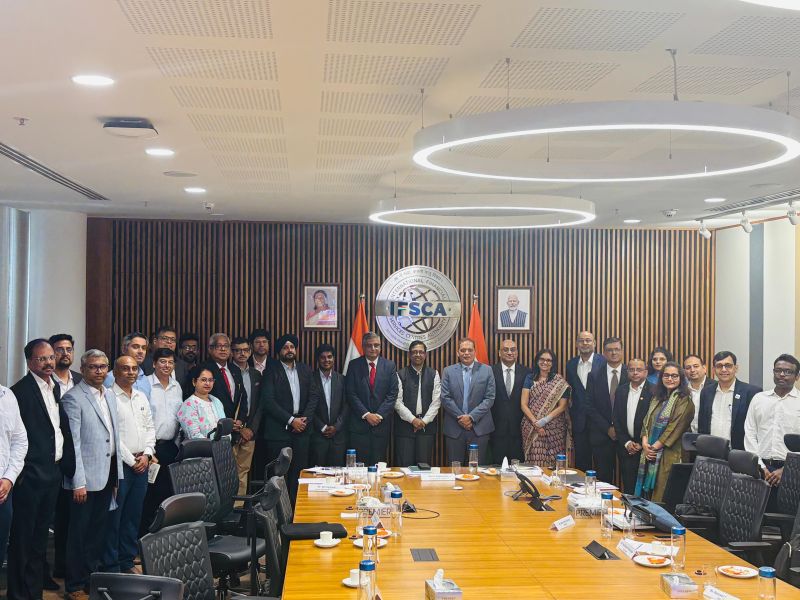
High-Level Workshop Explores GIFT IFSC’s Role in Unlocking Competitive Trade Finance for Indian MSME Exporters and Advancing the Viksit Bharat@2047 Vision
GANDHINAGAR: The International Financial Services Centres Authority (IFSCA), in collaboration with the Asian Development Bank (ADB), convened a high-level workshop on October 1, 2026, at IFSCA Tower, GIFT City, to explore new avenues for strengthening access to trade finance for India’s Micro, Small and Medium Enterprises (MSMEs).
The workshop, titled “Unlocking Trade Finance for MSMEs – The Role of GIFT IFSC in Viksit Bharat@2047,” brought together key stakeholders from India’s trade finance, credit guarantee, export insurance, banking and financial services ecosystem to deliberate on ways to bridge the financing gap faced by MSME exporters.
The initiative assumes particular significance as Indian MSMEs continue to play a crucial role in strengthening the country’s export competitiveness and integrating domestic businesses with global value chains. Access to affordable, competitive and timely trade finance remains an important enabler for MSMEs seeking to expand their international footprint.
The workshop saw participation from leading institutions and industry stakeholders, including CGTMSE-India, National Credit Guarantee Trustee Company Ltd. (NCGTC), ECGC Limited, India Exim Bank, Small Industries Development Bank of India (SIDBI), IFSC Banking Units, International Trade Finance Services (ITFS) platforms, factoring companies, insurers and industry associations.
Competitive Trade Finance Key to Export Competitiveness
A key message emerging from the discussions was the importance of competitive export finance in enhancing the ability of Indian MSMEs to compete in international markets.
For smaller exporters, financing constraints can affect their ability to accept larger orders, manage working-capital requirements, offer competitive payment terms and withstand longer international trade cycles. Strengthening the availability of trade finance, therefore, can have a direct impact on the scalability and global competitiveness of MSME businesses.
The workshop highlighted the potential of factoring and ITFS platforms to unlock working capital and provide greater liquidity to MSME exporters. By enabling businesses to convert receivables into immediate liquidity, such mechanisms can help address one of the most persistent challenges faced by smaller enterprises engaged in international trade.
Risk-Sharing Mechanisms Can Crowd-In Capital
The deliberations also underlined the importance of creating an enabling risk-sharing ecosystem involving credit guarantees, export insurance, risk-sharing arrangements and blended finance.
Such mechanisms can help reduce perceived risks for lenders and investors while encouraging greater participation of private capital in financing MSME trade. A coordinated approach involving financial institutions, insurers, guarantee providers and international financing institutions could potentially expand the pool of capital available to India’s smaller exporters.
The participation of institutions such as ECGC, Exim Bank, SIDBI and CGTMSE, alongside financial institutions operating through GIFT IFSC, reflects the importance of collaboration across different segments of the trade-finance ecosystem.
GIFT IFSC Emerging as a Global Gateway
A major theme of the workshop was the potential of GIFT IFSC to emerge as a global gateway connecting Indian MSMEs with international sources of trade finance.
With its international financial ecosystem and growing presence of banking and financial services institutions, GIFT IFSC can play an important role in facilitating cross-border financing solutions for Indian businesses.
The workshop explored how the international financial architecture available through GIFT IFSC could be leveraged to provide MSMEs with wider access to global capital, innovative financing structures and internationally oriented trade-finance solutions.
Exploring New Avenues Through Niryat Protsahan
The discussions also explored opportunities to extend initiatives such as Niryat Protsahan through GIFT IFSC, potentially creating additional avenues for supporting Indian exporters and strengthening their access to international financial resources.
The integration of such initiatives with the broader GIFT IFSC ecosystem could contribute to developing a more connected and efficient trade-finance framework, particularly for MSMEs that may otherwise face difficulties accessing international financing.
Strengthening the Foundation for Viksit Bharat@2047
The workshop ultimately reaffirmed the shared commitment of participating institutions towards building a globally integrated, accessible and resilient trade-finance ecosystem for Indian MSMEs.
As India advances towards the vision of Viksit Bharat@2047, improving the availability of trade finance for MSMEs will be critical to expanding exports, creating employment, strengthening domestic enterprises and enabling Indian businesses to participate more effectively in global value chains.
The IFSCA-ADB initiative at GIFT IFSC represents an important step towards bringing together regulators, financial institutions, insurers, guarantee providers, technology platforms and industry bodies to address the structural challenges surrounding MSME trade finance.
With GIFT IFSC positioned at the intersection of India’s domestic economy and global financial markets, the workshop highlighted its growing potential to become a strategic gateway for international trade finance and a catalyst for India’s next phase of export-led MSME growth.