


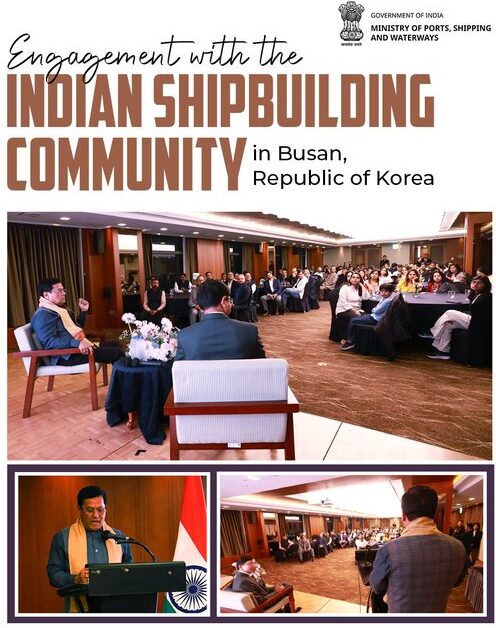
BUSAN : Union Minister of Shipping,Ports and Waterways Shri Sarbananda Sonowal said that, India has reaffirmed its commitment to strengthening maritime cooperation with South Korea, with a focus on shipbuilding, marine equipment manufacturing, green shipping and digitalisation. Shri Sonowal interacted with members of the Indian shipbuilding community in Busan, Republic of Korea, a global hub of maritime industry.
He appreciated their contributions and global expertise across leading maritime organisations, recognising them as a source of immense pride for India and an important asset in advancing the nation’s maritime ambitions During a productive meeting in Busan with the Korea Marine Equipment Association (KOMEA), led by its Chairman, Mr. Ho-il Kang, India invited Korean maritime industry leaders to explore new investment opportunities and deepen industrial collaboration in the country’s rapidly expanding maritime sector.
Representing more than 300 leading Korean marine equipment manufacturers and shipbuilding companies, KOMEA plays an important role in South Korea’s maritime industrial ecosystem. The planned establishment of its first office in Mumbai marks a significant milestone in bilateral maritime relations and is expected to facilitate closer industry engagement, technology collaboration and business partnerships between the two countries.
India Opens New Opportunities for Korean Maritime Industry
India’s maritime manufacturing sector is witnessing significant growth under the leadership of Prime Minister Shri Narendra Modi, supported by the government’s $7.8 billion shipbuilding package and the development of greenfield mega shipbuilding clusters.
Against this backdrop, Korean companies have been encouraged to leverage India’s expanding domestic vessel requirements through joint ventures, technology partnerships and local manufacturing. The collaboration aims to combine South Korea’s established expertise in marine equipment and shipbuilding with India’s growing manufacturing capabilities and market opportunities.
The initiative also aligns with the national vision of “Make in India, Make for the World,” with the potential to strengthen domestic supply chains, promote technology transfer, generate employment and enhance India’s competitiveness in the global maritime industry.
India Highlights Green Shipping and Maritime Digitalisation at IMO Event
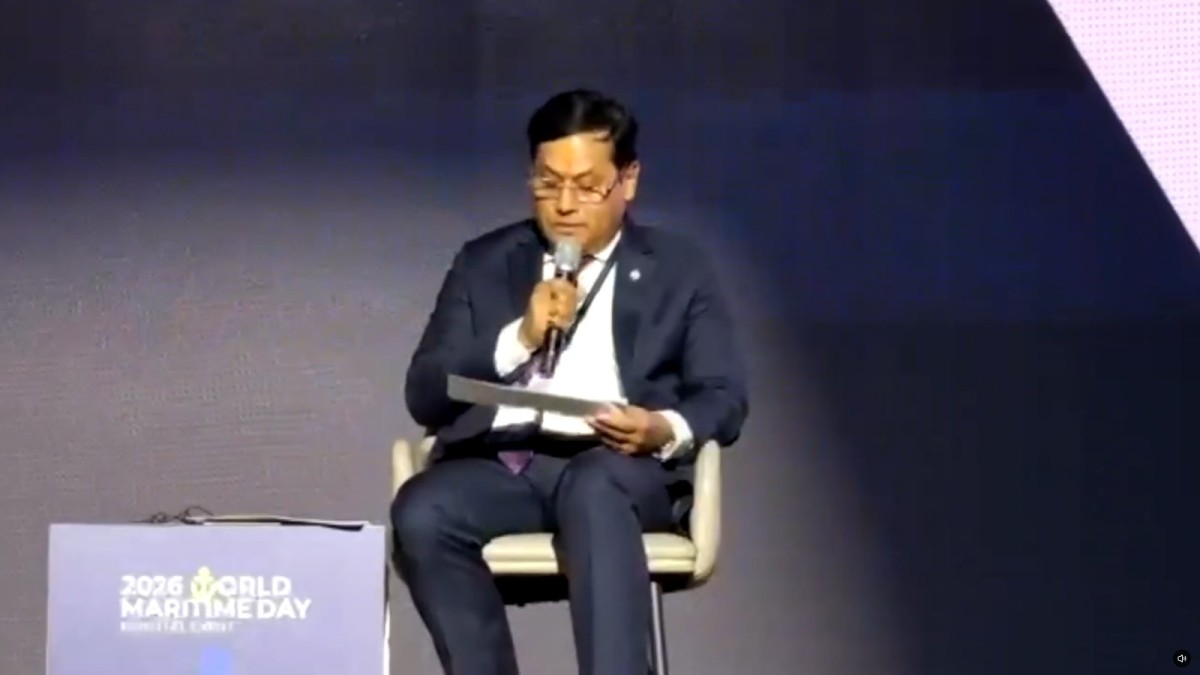
India also highlighted its initiatives in maritime decarbonisation and digitalisation during the Government High-Level Roundtable held as part of the IMO 2026 World Maritime Day Parallel Event in Busan.
Emphasising the importance of sustainable and technology-driven shipping, India outlined its efforts to prepare the maritime sector for the global transition towards cleaner fuels, advanced technologies and smarter operations. These initiatives are aimed at supporting the decarbonisation of shipping while improving operational efficiency and strengthening the resilience of maritime supply chains.
A key priority is the upskilling of India’s maritime workforce in alternative green fuels and emerging technologies. India is also working towards its ambition of ensuring that one in every five seafarers globally is Indian, reinforcing the country’s position as a major contributor to the international maritime workforce.
Building a Sustainable and Future-Ready Maritime Ecosystem
India’s engagement with KOMEA and its participation in the high-level IMO roundtable reflect a broader commitment to strengthening international maritime partnerships. By combining manufacturing cooperation with green technology, digital innovation and workforce development, India aims to contribute to a more sustainable, efficient and resilient global maritime ecosystem.
The planned opening of KOMEA’s Mumbai office, alongside India’s expanding shipbuilding ambitions and green maritime initiatives, provides fresh opportunities to deepen India–South Korea cooperation and build a stronger foundation for long-term industrial collaboration.
These developments reaffirm India’s growing role in shaping the future of global shipping through innovation, international partnerships and sustainable maritime development.