



DUBAI: Despite ongoing efforts to de-escalate tensions in the Middle East, there is growing anticipation of renewed fighting between Iran, the United States, and Israel.
If another round of intense strikes takes place in the next weeks, the repercussions will once again be felt across the region’s energy and shipping sectors. This would come as some transits have been gradually recovering, and regional exporters adapting to an extremely challenging security situation by relying on workarounds and new ways of trading. These two sectors have been at the heart of the eight-month war and key targets for Iran as it seeks to maintain pressure on regional and international markets.
Crude oil flows have gradually recovered in recent months. Data from Kpler shows that at least 16.5 million barrels per day (bpd) of crude were exported from the Middle East in September. The commodities data and analytics firm describes these volumes as matching the pre-war average, excluding Iranian exports. However, the flows no longer follow the same route they did before the war, namely the traditional outbound lane in the middle of the Strait of Hormuz. Some volumes are also reliant on Saudi and Emirati pipelines, which are themselves vulnerable to attacks, as the Saudi East-West pipeline has demonstrated. Other volumes require ship-to-ship transfers in the Gulf of Oman, where infrastructure constraints have caused bottlenecks and delays – discussed in a previous article.
This crude recovery also remains inconsistent due to geopolitical risks, sustaining risk premiums in crude prices and freight rates. Iran-led attacks this month suggest that Tehran has sought to slow the recovery and sustain pressure on these flows. Preventing a stable recovery and keeping risks elevated are key objectives of Iran’s maritime campaign, knowing that regional countries are resorting to different measures to keep energy supplies flowing despite the sustained security risks.
Yet while attention has focused overwhelmingly on crude, it’s crucial to remember that flows of other commodities, such as liquefied natural gas (LNG) and refined products, are recovering slowly. Additional challenges could emerge in the event of another round of escalation.
The following shows the gradual recovery in some energy flows out of the region and highlights four developments to watch if fighting resumes.
Ship attacks expand, crude recovery slows down
This will depend on what Iranian infrastructure any possible US and Israeli strikes target, and Iran’s response to that. Since crude exports have been driving the gradual oil recovery in the region, these volumes will be closely watched. Any transit disruption will likely be the outcome of both strikes within Iran, as some vessels may pause transit to assess the geopolitical risks, as well as Iran’s direct ship attacks.
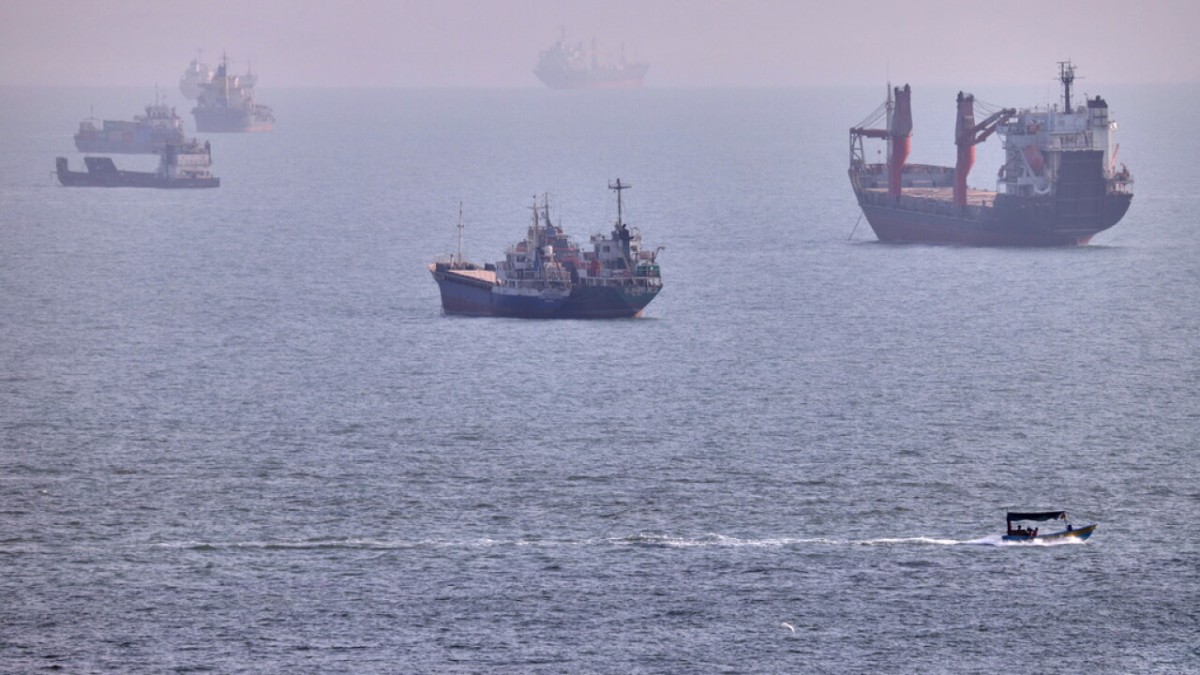
Attacks on ships are expected to be maintained along the Omani corridor and probably expand deep inside the Persian Gulf close to terminals that have seen an increase in loadings. So far in October, there have been at least 30 reported and confirmed ship attacks in the Strait of Hormuz and surrounding waterways, the highest monthly total recorded during this war.
A brief halt in loadings could occur in case of attacks similar to those that took place in March. For instance, that month Iraq had to halt oil loadings following an attack against two oil tankers in Iraqi waters. Loadings from Iraq along with Saudi Arabia and the UAE have been driving crude oil exports from the region higher over the past months. In Iraq’s case, southern loadings from export outlets in the Gulf were approaching 3 million bpd as of October 28, compared to around 3.5 million bpd in February and before the war started, based on data from Kpler. Unlike Saudi Arabia and the UAE, Iraq’s southern crude exports rely on tanker loadings and stable transits via the Strait of Hormuz due to the absence of a pipeline system in the country.
Non-crude commodities experience further pressure
The challenges facing the recovery of LNG transits, particularly from Qatar, a top LNG exporter prior to the war, have been overshadowed by coverage of regional crude oil flows. Before the war broke out, the number of overall LNG tankers (laden with Qatari and non-Qatari LNG) exiting the Strait of Hormuz stood at over 80 LNG tankers in February, according to data from Bloomberg and Kpler. This number collapsed in March as LNG exports tumbled and Iran attacked Qatar’s Ras Laffan, the world’s largest LNG export facility. Transits remained in single digits in April and May before increasing slightly in June amid a brief ceasefire, although they remained below 20 per month. Since September, these outbound transits have been in the range of 20 to 30 tankers, data shows. Prior to the war, 20 percent of global LNG supply transited through the Strait of Hormuz.
With respect to Qatar specifically, QatarEnergy has been seeking LNG supplies from other regions, including the US, to maintain its supplies to customers as the war in the region has severely impacted its exports to long-term buyers. In addition to being a top LNG producer and exporter, Qatar possesses a large LNG tanker fleet which the country was on a mission to expand up to 200 vessels prior to the war in anticipation of rising LNG supplies. This fleet is now seen as being utilized by QatarEnergy to source LNG supplies from different regions outside the Middle East.
Like other regional producers and exporters, Qatar has been adapting to the challenging energy and maritime environment, and has resorted to new ways of LNG trading, as well as workarounds to keep some tanker transits via the Strait of Hormuz, including the shuttle trade. However, even these workarounds cannot guarantee a stable recovery amid the high-risk security situation, and if fighting resumes.
Next, the recovery of refined products
This has been also slow compared to crude, reportedly due in part to more complex logistical operations when it comes to STS transfers, and lower refinery runs following attacks during the war. One case to look at is exports of very low sulphur fuel oil (VLSFO) from Kuwait’s Mina al-Zour refinery which market reports, including from Kpler and Argus, said resumed exports of VLSFO between late August and early September after a months-long pause. This refinery is described as a major exporter of VLSFO including to the Asian market. A major escalation in the region could reverse this slow recovery. This could also impact shipping globally, restricting bunker supplies in major hubs with the disruption of marine fuel supplies a major concern for shipowners and managers in the early months of the war.
Iran amplifies its maritime disinformation campaign
In October, Iran intensified its attacks against commercial vessels while also escalating its media campaign. One of the key objectives has been to create the perception that tankers have been hitting mines in the Strait. For instance, the Islamic Revolutionary Guard Corps (IRGC) Navy claimed that two supertankers struck mines in the Strait of Hormuz, yet the Joint Maritime Information Center (JMIC) said in an advisory note that there was “no substantiation to these claims.” However, when fake images of vessels on fire and videos of attacks that pro-Iran media falsely claim took place in the region go viral on social media, it becomes difficult to maintain a clear picture of events. Reassuring the shipping and energy communities becomes especially challenging once that disinformation has spread. Iran should be expected to rely on this media campaign as it has contributed to keeping the war risks high.
Lastly, the double whammy: Iranian attacks joined by attacks from Yemen and Iraq
Over the past few days, there have been efforts to de-escalate the conflict in the region. These included a meeting in Tehran between top officials from Iran, Saudi Arabia, Turkey and Pakistan – the latter three countries being parties to the Mecca Joint Defense Agreement reached in August. Meanwhile, the Wall Street Journal cited US officials on October 28 as saying that US Vice President JD Vance had reached out to Iranian officials to revive negotiations.
If efforts to resume talks between the warring sides fail and intensive strikes against Iran resume, Iranian retaliation could intersect with ongoing Houthi-led attacks on Saudi infrastructure, including energy facilities, and as part of the Houthi-Saudi conflict. Possible pressure from Iran-aligned armed groups in Iraq could also compound the threats. Together, these would serve Iran’s plan since the war started of sustaining risks to regional oil and gas value chains, complicating recovery efforts and keeping global markets on edge.
Source: Seatrade Maritime News